Introduction
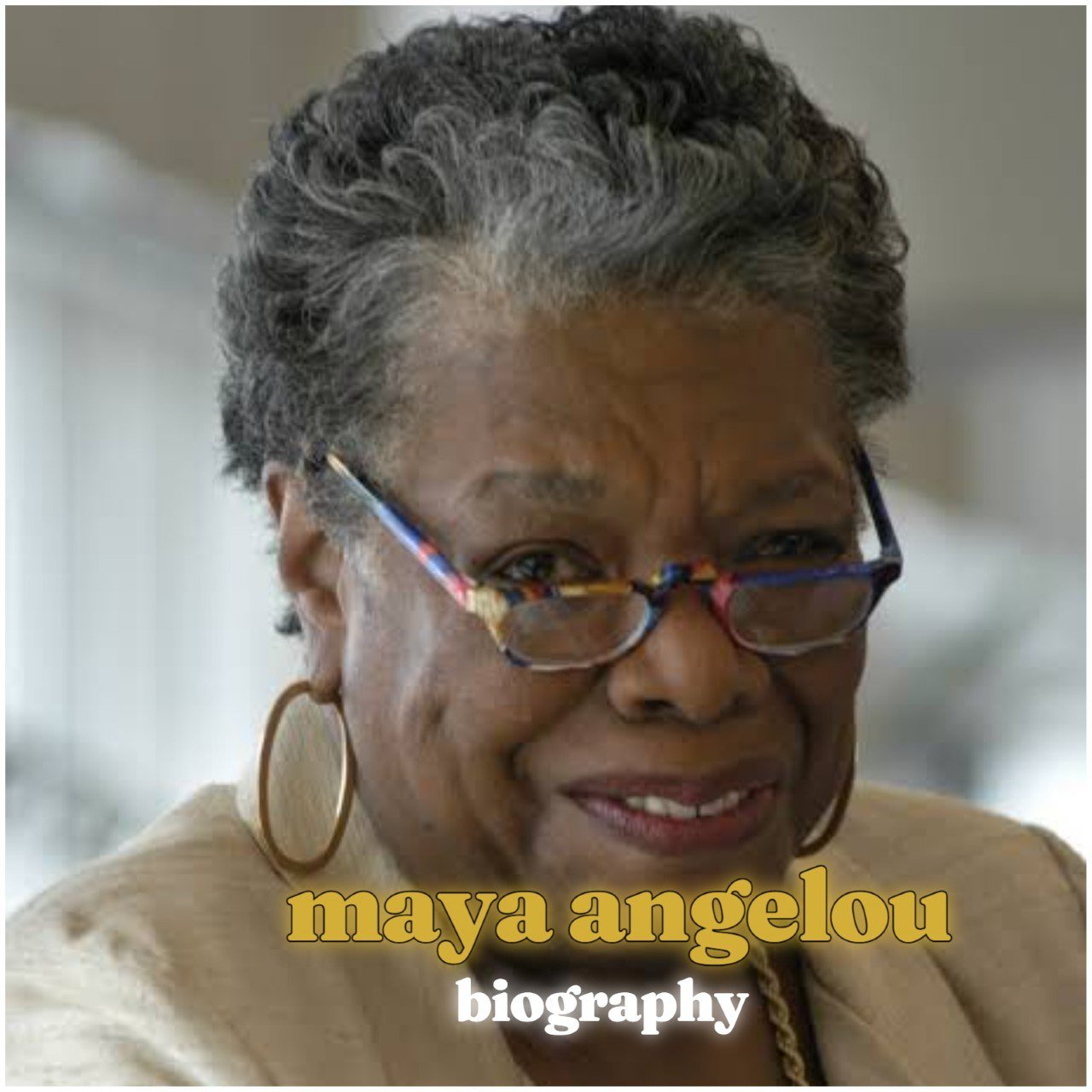
Maya Angelou was an acclaimed American poet, author, memoirist, actress, and civil rights activist whose powerful voice left an enduring mark on literature and society. Born Marguerite Annie Johnson on April 4, 1928, in St. Louis, Missouri, she rose from a challenging childhood to become one of the most respected and influential literary figures of the twentieth century. Through her writing, speeches, and activism, Angelou inspired millions of people around the world with messages of courage, resilience, equality, and self-discovery.
Angelou gained international recognition with the publication of her groundbreaking autobiography, I Know Why the Caged Bird Sings, in 1969. The book was praised for its honest portrayal of racism, trauma, and personal growth, breaking barriers in American literature and opening doors for future generations of writers. Over the course of her career, she published numerous autobiographies, poetry collections, essays, and plays, earning widespread acclaim for her ability to transform personal experiences into universal lessons about humanity and hope.
Beyond her literary achievements, Maya Angelou was a dedicated advocate for civil rights and social justice. She worked alongside influential leaders such as Martin Luther King Jr. and Malcolm X while using her platform to promote equality and human dignity. Even after her death in 2014, her legacy continues to thrive through her books, inspirational quotes, educational programs, and cultural influence. As of 2026, Angelou remains a celebrated icon whose words continue to empower readers, students, activists, and leaders across the globe.
Early Life and Background
Maya Angelou was born as Marguerite Annie Johnson on April 4, 1928, in St. Louis, Missouri, United States. Her parents, Bailey Johnson and Vivian Baxter Johnson, separated when she was very young, leading to significant changes in her childhood. Along with her older brother, Bailey Jr., she was sent to live with her paternal grandmother in the small rural town of Stamps, Arkansas. Growing up in the segregated American South exposed Angelou to the harsh realities of racial discrimination from an early age, experiences that would later become central themes in her writing.
Despite the challenges of living in a racially divided society, Angelou found comfort in her family and developed a strong appreciation for literature and storytelling. Her grandmother instilled in her the values of hard work, faith, and perseverance, while her brother remained one of her closest companions and greatest sources of support. The close-knit community of Stamps played an important role in shaping her understanding of identity, culture, and resilience, providing her with experiences that would later enrich her autobiographical works.
Angelou’s childhood was also marked by profound personal struggles that tested her emotional strength. After returning to live with her mother for a period, she experienced a traumatic event that deeply affected her and led her to become almost completely silent for several years. During this time, she immersed herself in books, poetry, and language, developing a deep love for literature that would eventually define her career. Through reading the works of renowned authors and observing the world around her, Angelou transformed a difficult chapter of her life into the foundation for her future success as one of the most celebrated writers and poets in American history.
Education
Maya Angelou’s educational journey was shaped by both formal schooling and a lifelong commitment to self-education. During her childhood, she attended schools in Arkansas and later in California, where she continued her studies while adapting to different environments and challenges. Although her early years were marked by personal hardships and periods of instability, she remained curious and eager to learn. Her passion for reading developed at a young age, and books became an important source of knowledge, comfort, and inspiration throughout her life.
Angelou attended George Washington High School in San Francisco, where she balanced her academic studies with vocational training. While still a student, she enrolled in classes at the California Labor School, an institution known for offering courses in labor relations, social issues, and the arts. During this period, she explored various interests, including music, drama, dance, and literature. Her exposure to diverse subjects helped broaden her perspective and contributed to the development of the creative talents that would later define her career.
Although Maya Angelou did not pursue a traditional university education, she became one of the most respected intellectual and literary figures of her generation. Her extensive reading, international experiences, and dedication to learning enabled her to acquire knowledge far beyond the classroom. Over the years, numerous colleges and universities recognized her extraordinary contributions to literature, education, and society by awarding her more than fifty honorary degrees. These honors reflected the profound impact of her work and underscored her belief that education is a lifelong journey of growth, discovery, and self-improvement.
Career
Maya Angelou built a remarkable career that spanned more than five decades and encompassed literature, poetry, journalism, acting, directing, education, and civil rights activism. Before achieving worldwide recognition as an author, she worked in a variety of professions that reflected her diverse talents and determination. During her early adult years, she was employed as a cook, waitress, dancer, and performer, gaining valuable life experiences that later enriched her writing. Her ability to adapt to different circumstances and pursue creative opportunities helped lay the foundation for a career that would eventually make her one of the most influential voices in American culture.
In the 1950s and early 1960s, Angelou established herself as a performer and artist. She toured internationally as a singer and dancer, appearing in theatrical productions and musical performances that showcased her creativity and stage presence. Her growing interest in storytelling and communication also led her to work as a journalist and editor while living abroad. During this period, she spent time in countries such as Egypt and Ghana, where she broadened her understanding of global cultures and political movements. These international experiences deepened her perspective on race, identity, and human rights, themes that would become central to her later work.
Angelou’s literary breakthrough came in 1969 with the publication of I Know Why the Caged Bird Sings. The autobiographical work recounted her childhood experiences with extraordinary honesty and emotional depth, addressing issues such as racism, trauma, family, and personal resilience. The book became an immediate success and received widespread critical acclaim, earning a place among the most important autobiographies in American literature. Its popularity introduced Angelou to a global audience and established her reputation as a gifted writer capable of transforming personal experiences into powerful universal narratives.
Following the success of her first memoir, Angelou continued to expand her literary achievements by publishing six additional autobiographies, numerous poetry collections, essays, children’s books, and screenplays. Her celebrated works include Gather Together in My Name, Singin’ and Swingin’ and Gettin’ Merry Like Christmas, The Heart of a Woman, and the poetry collection And Still I Rise. She also made history as the first Black woman to have a screenplay produced for a major motion picture with Georgia, Georgia in 1972. Throughout her career, her writings explored themes of self-worth, perseverance, freedom, love, and social justice, resonating with readers across generations.
Beyond literature, Angelou became a respected educator, public speaker, and cultural icon. She served as a professor at Wake Forest University, where she taught American Studies and inspired countless students through her wisdom and experience. Her influence reached an even wider audience in 1993 when she recited her poem On the Pulse of Morning at the presidential inauguration of Bill Clinton, becoming one of the few poets in American history to receive such an honor. Through her books, speeches, activism, and educational work, Maya Angelou created a lasting legacy that continues to inspire people around the world long after her passing in 2014.
Personal Life and Family
Maya Angelou’s personal life was as rich and complex as the stories she shared through her writing. Born Marguerite Annie Johnson, she was the daughter of Bailey Johnson, a naval dietitian and doorman, and Vivian Baxter Johnson, a nurse and card dealer. Following her parents’ separation during her early childhood, Angelou and her older brother, Bailey Johnson Jr., spent much of their youth living with her paternal grandmother, Annie Henderson, in Stamps, Arkansas. Angelou often spoke about the profound influence these family members had on her life, and many of them appeared prominently in her autobiographical works. Her close relationship with her brother Bailey Jr. was especially significant, as he was the person who gave her the nickname “Maya,” which eventually became the name by which she was known worldwide.
Angelou became a mother at a young age when she gave birth to her only child, Guy Johnson, in 1944 while she was still a teenager. Raising her son as a single mother presented many challenges, but she remained deeply devoted to him throughout her life. Guy Johnson would later build a successful career of his own and remained one of the most important people in Angelou’s life. Their relationship was frequently discussed in her memoirs, where she reflected on the struggles and joys of motherhood. Despite the demands of her expanding career, Angelou consistently emphasized the importance of family and maintained a close bond with her son and extended relatives.
Angelou’s romantic life included several significant relationships and marriages. She was married to Greek sailor and electrician Tosh Angelos, whose surname inspired her professional name, Maya Angelou. She later married South African freedom fighter and attorney Vusumzi Make, with whom she shared part of her life in Africa. Although these marriages eventually ended, the experiences broadened her cultural understanding and influenced many of the themes found in her books. While she did not have a publicly known fiancé at the time of her death, her experiences with love, companionship, family, and motherhood enriched her writing and helped readers connect with her deeply personal stories.
Age, Religion, Tribe, Height and Physical Appearance
Maya Angelou was born on April 4, 1928, in St. Louis, Missouri, United States, and died on May 28, 2014, at the age of 86. During her lifetime, she became one of the most celebrated writers, poets, and civil rights activists in American history. Her experiences growing up in the segregated American South and overcoming personal hardships shaped the perspectives that made her literary works both powerful and enduring. Even years after her death, her influence continues to be felt through her books, poems, and inspirational messages.
Regarding religion, Maya Angelou was a Christian whose faith played a significant role in her life and writings. Themes of spirituality, redemption, hope, and human dignity frequently appeared throughout her work. As for tribe, the concept is not commonly applied in the United States in the same way it is in many African countries. Maya Angelou was an African American woman, with her family roots tracing back to the African diaspora in the United States. She often explored African American culture, history, and identity in her writings, making these themes central to her literary legacy.
Maya Angelou was widely recognized for her striking physical presence and graceful demeanor. She stood approximately 6 feet (183 cm) tall and carried herself with confidence and elegance. Her expressive eyes, warm smile, and distinctive voice made her instantly recognizable to audiences around the world. Whether speaking at public events, teaching students, or appearing in interviews, Angelou projected wisdom, strength, and charisma. Her dignified appearance and commanding presence complemented her reputation as one of the most respected literary and cultural figures of her generation.
Net Worth
Maya Angelou’s exact net worth was never publicly disclosed, and because she passed away in 2014, no official financial records detailing her personal wealth are available. However, based on her long and successful career as a bestselling author, poet, actress, screenwriter, educator, and public speaker, many biographical and financial publications have estimated that her net worth was likely between $5 million and $10 million at the time of her death. These estimates are based on earnings generated from book sales, speaking engagements, teaching positions, television appearances, and other professional activities throughout her lifetime.
A significant portion of Angelou’s wealth came from her literary career. Her groundbreaking autobiography, I Know Why the Caged Bird Sings, became an international bestseller and remained widely read for decades. In addition to her seven autobiographies, she published numerous poetry collections, essays, and children’s books that continued to generate royalties long after their initial release. Her works have been translated into multiple languages and are frequently included in educational curricula, ensuring a steady stream of income from book sales and licensing agreements.
Beyond writing, Angelou earned substantial income through public speaking, academic appointments, media appearances, and cultural projects. She served as a professor at Wake Forest University and was a highly sought-after speaker whose lectures attracted audiences worldwide. Her recitation of On the Pulse of Morning at President Bill Clinton’s inauguration further elevated her public profile and increased demand for her appearances. Although her exact financial worth remains unknown, Maya Angelou’s true legacy extends far beyond monetary value, as her contributions to literature, education, civil rights, and global culture continue to inspire millions of people around the world.
Death and Cause of Death
Maya Angelou passed away on May 28, 2014, at the age of 86 in her home in Winston-Salem, North Carolina, United States. News of her death was met with widespread sadness across the world, as readers, political leaders, educators, artists, and activists paid tribute to her extraordinary life and accomplishments. At the time of her passing, Angelou was widely regarded as one of America’s most influential literary voices, and her death marked the end of a remarkable career that had inspired generations through poetry, memoirs, and advocacy for social justice.
According to reports released following her death, Angelou had been experiencing health-related challenges in the years leading up to her passing. She had recently canceled several public appearances due to health concerns and reduced her professional activities. While no specific terminal illness was publicly identified as the sole cause, it was widely reported that she died from natural causes associated with her advanced age. Her family, friends, and admirers remembered her not for her final days but for the strength, wisdom, and resilience that defined her life and work.
Following her death, tributes poured in from around the globe. Former U.S. President Barack Obama, civil rights leaders, fellow authors, and countless admirers praised her contributions to literature, education, and human rights. Memorial services and celebrations of her life highlighted her enduring influence as a poet, storyteller, educator, and activist. More than a decade after her passing, Maya Angelou’s legacy continues to thrive through her books, speeches, poems, and inspirational messages, ensuring that her voice remains a powerful source of guidance and encouragement for future generations.
Legacy
Maya Angelou’s legacy is rooted in her extraordinary contributions to literature, poetry, and the struggle for civil rights. Through her groundbreaking autobiographies, particularly I Know Why the Caged Bird Sings, she gave voice to experiences that had often been ignored or overlooked in mainstream literature. Her willingness to write openly about racism, trauma, identity, and personal growth helped transform autobiographical writing and inspired countless authors to share their own stories. Today, her books remain widely read and studied in schools, colleges, and universities around the world, ensuring that her influence continues to reach new generations of readers.
Beyond her literary achievements, Angelou left a lasting impact as an advocate for equality, justice, and human dignity. Throughout her life, she worked alongside influential civil rights leaders such as Martin Luther King Jr. and Malcolm X, using her talents and public platform to challenge discrimination and promote social change. Her speeches, essays, and poems encouraged people to confront injustice while maintaining hope and compassion. Many activists, educators, and community leaders continue to draw inspiration from her words, viewing her as a symbol of resilience, courage, and perseverance in the face of adversity.
Angelou’s cultural influence extends far beyond the written word. Her memorable quotations, powerful poetry readings, and public appearances made her one of the most respected voices of her generation. She received numerous honors during her lifetime, including the Presidential Medal of Freedom, and her achievements continue to be celebrated through documentaries, educational programs, literary awards, and public commemorations. More than a decade after her death, Maya Angelou remains a global icon whose wisdom and artistry continue to inspire people of all backgrounds to embrace their potential, overcome challenges, and strive for a more just and compassionate world.
Conclusion
Maya Angelou remains one of the most influential literary and cultural figures in modern history, celebrated for her remarkable achievements as a poet, author, educator, actress, and civil rights activist. From overcoming a challenging childhood to becoming a global symbol of resilience and empowerment, she used her voice to inspire millions through her writings, speeches, and advocacy for equality and human dignity. Her bestselling autobiographies, powerful poetry, and unwavering commitment to social justice continue to resonate with readers across generations. Although she passed away in 2014, Maya Angelou’s legacy lives on through her timeless works and enduring message of courage, hope, self-respect, and perseverance, ensuring that her impact will be felt for many years to come.
Frequently Asked Questions (FAQs) About Maya Angelou
Who was Maya Angelou?
Maya Angelou was an American poet, author, memoirist, educator, actress, and civil rights activist. She is best known for her autobiographical book I Know Why the Caged Bird Sings and is regarded as one of the most influential literary figures of the twentieth century.
What was Maya Angelou’s real name?
Maya Angelou was born as Marguerite Annie Johnson on April 4, 1928, in St. Louis, Missouri, United States. The nickname “Maya” was given to her by her older brother, Bailey Johnson Jr.
When was Maya Angelou born?
Maya Angelou was born on April 4, 1928, in St. Louis, Missouri, USA.
When did Maya Angelou die?
Maya Angelou died on May 28, 2014, at her home in Winston-Salem, North Carolina, United States.
How old was Maya Angelou when she died?
Maya Angelou was 86 years old at the time of her death in 2014.
What was Maya Angelou’s cause of death?
Maya Angelou died from natural causes associated with age-related health complications. She had experienced health challenges in the years leading up to her passing.
What is Maya Angelou famous for?
Maya Angelou is famous for her autobiography I Know Why the Caged Bird Sings, her poetry collections, her civil rights activism, and her inspirational speeches that addressed themes of resilience, equality, and human dignity.
What was Maya Angelou’s nationality?
Maya Angelou was American and was proud of her African American heritage.
What religion was Maya Angelou?
Maya Angelou was a Christian, and her faith often influenced her writings, speeches, and personal philosophy.
Did Maya Angelou have children?
Yes, Maya Angelou had one son, Guy Johnson, whom she gave birth to as a teenager. He remained an important part of her life throughout her career.
How tall was Maya Angelou?
Maya Angelou was approximately 6 feet (183 cm) tall, making her known for her commanding and graceful presence.
What was Maya Angelou’s net worth?
Although her exact net worth was never officially disclosed, estimates suggest that Maya Angelou’s net worth was between $5 million and $10 million at the time of her death, earned through her successful career as an author, poet, educator, and public speaker.
What is Maya Angelou’s most famous book?
Maya Angelou’s most famous book is I Know Why the Caged Bird Sings, published in 1969. The memoir is considered a classic of American literature and has been widely studied around the world.
What awards did Maya Angelou receive?
Maya Angelou received numerous honors, including the Presidential Medal of Freedom, the National Medal of Arts, more than 50 honorary degrees, and three Grammy Awards for her spoken-word recordings.
What is Maya Angelou’s legacy?
Maya Angelou’s legacy lies in her contributions to literature, civil rights, education, and social justice. Her books, poems, and inspirational messages continue to empower people worldwide and remain influential long after her death.