Introduction
Edgar Allan Poe was one of the most influential writers in American literary history, celebrated for his contributions to poetry, short stories, and literary criticism. Born on January 19, 1809, in Boston, Massachusetts, Poe became a pioneering figure in Gothic literature, psychological horror, and detective fiction. His unique storytelling style, characterized by suspense, mystery, and emotional depth, continues to captivate readers around the world more than a century after his death.
Throughout his career, Poe produced some of the most recognizable works in English literature, including The Raven, The Tell-Tale Heart, The Black Cat, and The Fall of the House of Usher. His ability to explore themes such as fear, loss, madness, death, and the complexities of the human mind set him apart from many of his contemporaries. Beyond horror and poetry, Poe is also widely credited with laying the foundation for modern detective fiction through stories like The Murders in the Rue Morgue, which introduced analytical crime-solving techniques that influenced countless writers who followed.
Despite enduring financial hardship, personal tragedy, and professional challenges throughout his life, Poe’s literary legacy has only grown stronger over time. His works have been translated into numerous languages, adapted into films, television series, stage productions, and academic studies, making him one of the most enduring figures in world literature. Today, Edgar Allan Poe remains a symbol of creative innovation and artistic brilliance, inspiring generations of readers, writers, and scholars with his timeless exploration of the darker aspects of human nature.
Early Life and Childhood
Edgar Allan Poe was born as Edgar Poe on January 19, 1809, in Boston, Massachusetts, United States. He was the second child of professional actors David Poe Jr. and Elizabeth Arnold Poe. His early years were marked by tragedy and instability. Poe’s father abandoned the family when Edgar was still an infant, and his mother died of tuberculosis in 1811 when he was only two years old. Left orphaned at a very young age, Poe faced significant emotional challenges that would later influence many of the themes found in his literary works.
Following the death of his mother, Poe was taken into the home of John Allan, a successful tobacco merchant, and his wife Frances Allan of Richmond, Virginia. Although the Allans never formally adopted him, they provided him with financial support and educational opportunities during his childhood. Poe developed a close relationship with Frances Allan, who treated him with affection, while his relationship with John Allan became increasingly complicated as he grew older. The Allan family played a major role in shaping his upbringing and contributed to the inclusion of “Allan” in his name.
Poe received a quality education and spent part of his childhood in England and Scotland between 1815 and 1820, where he attended boarding schools and was exposed to British literature and culture. After returning to the United States, he continued his studies in Virginia and demonstrated strong academic abilities, particularly in languages and literature. These formative years helped nurture his love for reading, writing, and storytelling, laying the foundation for the remarkable literary career that would later make him one of the most celebrated authors in American history.
Education
Edgar Allan Poe received a solid education during his childhood, thanks largely to the financial support of John and Frances Allan. While living with the Allan family, he attended several schools in both the United States and the United Kingdom. Between 1815 and 1820, Poe accompanied the Allans to Britain, where he studied at boarding schools in Scotland and England. His exposure to classical literature, history, and languages during these years helped cultivate the intellectual curiosity and literary interests that would later define his career.
After returning to the United States, Poe continued his education in Richmond, Virginia, where he excelled academically. He developed a strong interest in poetry, literature, and ancient languages, demonstrating exceptional talent as a student. In 1826, he enrolled at the University of Virginia, one of the nation’s most prestigious institutions at the time. There, he studied classical and modern languages and earned recognition for his academic performance. Despite his success in the classroom, Poe struggled financially because the funds provided by John Allan were insufficient to cover his expenses.
The financial difficulties Poe faced at the University of Virginia eventually forced him to leave after only one year. Burdened by debt and frustrated by his strained relationship with John Allan, he was unable to continue his studies. Seeking a new direction, Poe enlisted in the United States Army in 1827 and later gained admission to the United States Military Academy at West Point in 1830. However, his interest in a military career was short-lived, and he deliberately sought dismissal from the academy in 1831. Although his formal education ended early, the knowledge and literary influences he gained during these years played a crucial role in shaping his future as one of America’s most influential writers.
Career
Edgar Allan Poe began his literary career in the late 1820s while serving in the United States Army. In 1827, he published his first collection of poetry, Tamerlane and Other Poems, under the pseudonym “A Bostonian.” Although the book received little attention at the time, it marked the beginning of Poe’s lifelong dedication to writing. After leaving the military and later departing from the United States Military Academy at West Point, he focused entirely on pursuing a career as an author and poet. During these early years, Poe faced significant financial challenges but remained determined to establish himself in the literary world.
Throughout the 1830s and 1840s, Poe worked as an editor, critic, and contributor for several prominent literary magazines and newspapers. His editorial positions at publications such as the Southern Literary Messenger, Burton’s Gentleman’s Magazine, Graham’s Magazine, and the Broadway Journal helped him gain recognition as one of the most respected literary critics of his time. Poe became known for his sharp reviews, attention to literary quality, and willingness to criticize even well-known authors. His work as an editor not only enhanced his reputation but also provided a platform for publishing many of his own poems, essays, and short stories.
Poe achieved widespread fame in 1845 with the publication of The Raven, a poem that became an immediate sensation and remains one of the most celebrated works in American literature. Alongside his poetry, he produced a remarkable collection of short stories that transformed the genres of horror, mystery, and detective fiction. Works such as The Tell-Tale Heart, The Black Cat, The Fall of the House of Usher, and The Murders in the Rue Morgue showcased his mastery of suspense, psychological depth, and innovative storytelling techniques. Through these achievements, Poe became a pioneering figure in Gothic literature and is widely credited with creating the foundation for modern detective fiction, influencing generations of writers around the world.
As his career progressed, Poe continued to experiment with different literary forms, including science fiction, satire, and literary criticism. Stories such as The Gold-Bug and The Narrative of Arthur Gordon Pym of Nantucket demonstrated the breadth of his imagination and his ability to captivate readers across various genres. Despite recurring financial struggles and personal hardships, Poe remained committed to his craft and consistently produced works that challenged literary conventions. His dedication to artistic excellence earned him a lasting place among the most important writers in literary history.
Today, Edgar Allan Poe’s career is remembered not only for the remarkable body of work he left behind but also for the profound influence he had on literature worldwide. His innovations in horror, mystery, and detective storytelling continue to inspire novelists, filmmakers, poets, and scholars. More than 175 years after his death, Poe’s writings remain widely read, studied, and adapted, confirming his status as one of the most enduring and influential figures in American and world literature.
Death and Cause of Death
The final days of Edgar Allan Poe’s life remain one of the greatest mysteries in literary history. In late September 1849, Poe left Richmond, Virginia, reportedly on his way to Philadelphia for business-related matters. However, he disappeared for several days under circumstances that have never been fully explained. On October 3, 1849, he was found in a confused and distressed condition outside a tavern known as Gunner’s Hall in Baltimore, Maryland. Witnesses reported that he appeared disoriented, weak, and unable to explain how he had arrived there or what had happened during the days he was missing.
After being discovered, Poe was taken to Washington College Hospital in Baltimore, where his condition continued to deteriorate. He drifted in and out of consciousness and was reportedly unable to provide a clear account of the events leading up to his hospitalization. Despite receiving medical care, his health worsened rapidly. Edgar Allan Poe died on October 7, 1849, at the age of 40. His reported final words were, “Lord help my poor soul,” though historians continue to debate the accuracy of this account due to limited documentation from the period.
The exact cause of Poe’s death has never been conclusively determined, making it one of the most discussed mysteries surrounding his life. Over the years, numerous theories have been proposed, including alcohol poisoning, rabies, heart disease, diabetes, cholera, epilepsy, tuberculosis, carbon monoxide poisoning, and even foul play. One of the most widely discussed theories involves “cooping,” a form of election fraud in which victims were kidnapped, drugged, and forced to vote multiple times while disguised in different clothing. This theory gained attention because Poe was found wearing clothes that reportedly did not belong to him. However, no definitive evidence has ever confirmed any single explanation.
The uncertainty surrounding Poe’s death has contributed significantly to his legendary status. Scholars, biographers, and medical researchers continue to study historical records in an effort to uncover the truth, but the mystery remains unsolved. The circumstances of his death, combined with the dark and mysterious themes that characterized much of his writing, have only deepened public fascination with his life and legacy. Today, Poe’s death remains one of the most enduring mysteries in American literary history, continuing to intrigue readers and researchers around the world.
Personal Life and Family
Edgar Allan Poe’s personal life was shaped by both deep affection and profound loss. He was born to David Poe Jr. and Elizabeth Arnold Poe, both professional actors. His father abandoned the family when Poe was still an infant, and his mother died of tuberculosis in 1811 when he was only two years old. After becoming orphaned, he was taken in by John Allan and Frances Allan of Richmond, Virginia. Although the Allans never legally adopted him, they raised him as part of their household. Poe developed a particularly close bond with Frances Allan, whose kindness and support greatly influenced his early years, while his relationship with John Allan was often strained due to disagreements over finances, education, and career choices.
One of the most significant relationships in Poe’s life was with his cousin, Virginia Eliza Clemm. The two were married on May 16, 1836, when Poe was 27 years old and Virginia was 13. Despite the unusual age difference by modern standards, historical accounts suggest that the couple shared a close and affectionate relationship. Virginia became a source of emotional support during Poe’s struggles as a writer, helping him endure periods of financial hardship and professional uncertainty. The couple lived in several cities, including Baltimore, Philadelphia, and New York, as Poe pursued opportunities in literature and publishing.
Poe’s family life was marked by recurring tragedy. Virginia Clemm contracted tuberculosis and suffered from declining health for several years before her death on January 30, 1847, at the age of 24. Her passing devastated Poe and had a profound impact on his emotional well-being and literary work, inspiring themes of grief, loss, and mourning that appeared in many of his later writings. Following Virginia’s death, Poe became involved with several women, including poet Sarah Helen Whitman and his childhood sweetheart Sarah Elmira Royster. Shortly before his death in 1849, Poe and Sarah Elmira Royster reportedly became engaged and were planning to marry. However, his sudden and mysterious death in Baltimore ended those plans and brought a tragic conclusion to a life marked by both extraordinary literary achievement and personal sorrow.
Age, Religion, Tribe, Height, and Physical Appearance
Edgar Allan Poe was born on January 19, 1809, in Boston, Massachusetts, United States, and passed away on October 7, 1849, in Baltimore, Maryland. He was 40 years old at the time of his death. Despite his relatively short life, Poe became one of the most influential writers in literary history, leaving behind a body of work that continues to shape modern horror, mystery, and detective fiction. His poems and short stories remain widely read and studied in schools, universities, and literary circles around the world.
Regarding religion, Poe was generally associated with Christianity, having been raised in a society where Christian beliefs and values were prominent. His writings frequently explored themes related to mortality, the soul, the afterlife, and the existence of a higher power. While there is no definitive record of Poe being deeply involved in any particular church denomination throughout his adult life, many scholars agree that Christian concepts and spiritual questions influenced parts of his literary work. As for tribe, the concept of a tribe does not traditionally apply to Edgar Allan Poe in the same way it is used in many African societies. Ethnically, he was of primarily English ancestry and belonged to the broader European-American heritage common among many Americans of his era.
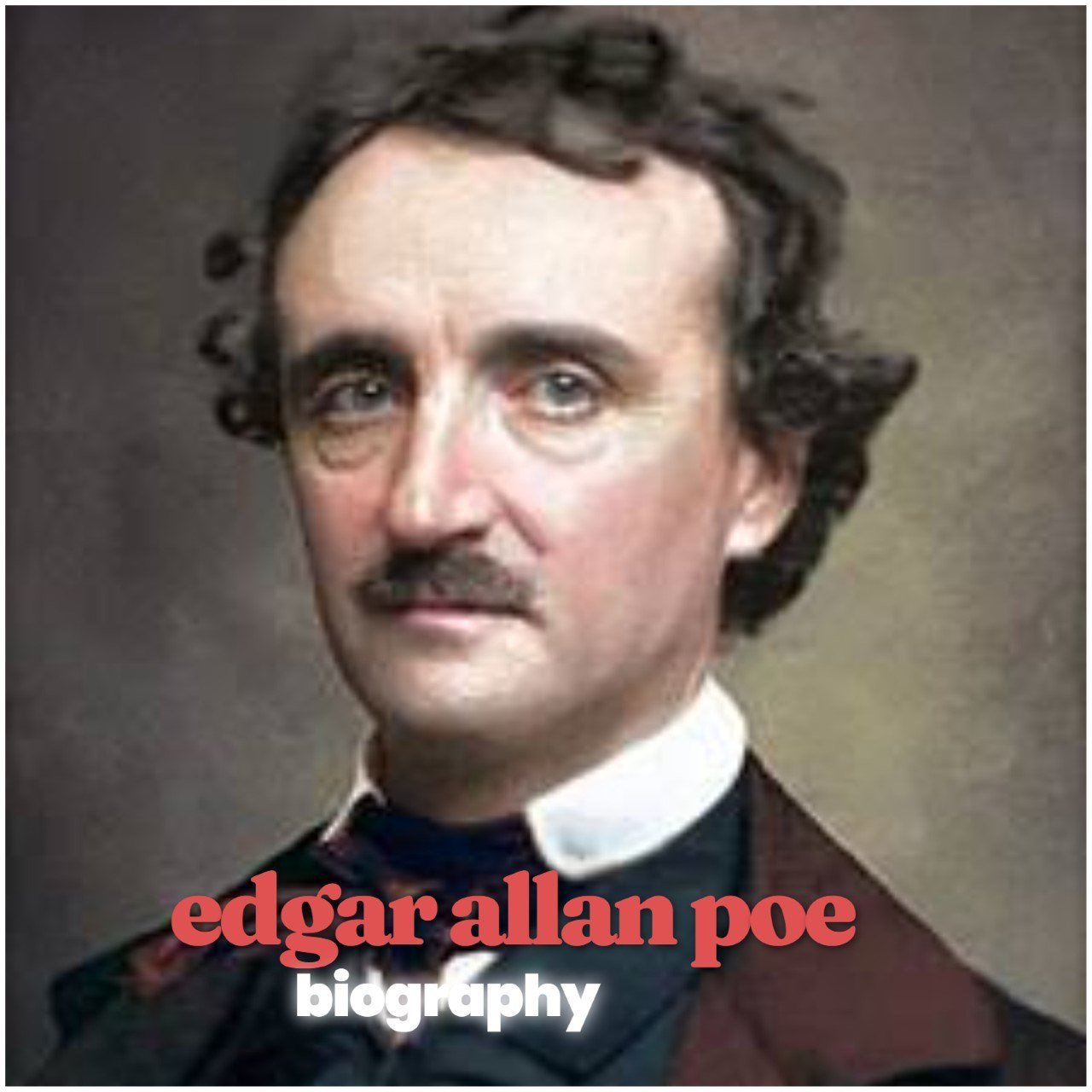
Edgar Allan Poe was an American by nationality and was known for his distinctive and memorable appearance. Historical records and portraits suggest that he stood at approximately 5 feet 8 inches (173 cm) tall. He had dark brown hair, a fair complexion, and striking gray-blue eyes that contributed to his intense and thoughtful look. Poe often wore formal nineteenth-century clothing, including tailored coats and waistcoats, giving him the appearance of a refined intellectual and literary gentleman. His serious expression and penetrating gaze have become iconic features in the many portraits that continue to represent him in literary history today.
Net Worth
Determining Edgar Allan Poe’s exact net worth is impossible because detailed financial records from the nineteenth century are limited, and the modern concept of celebrity net worth did not exist during his lifetime. Unlike many successful authors today, Poe earned income primarily through writing, editing literary magazines, publishing poetry, and contributing short stories to newspapers and journals. Despite his literary brilliance, he frequently struggled financially and often found it difficult to earn a stable living from his work.
Based on historical accounts of his earnings and professional status, Edgar Allan Poe’s wealth during his lifetime would generally be considered modest. Even after achieving fame through works such as The Raven, the financial rewards were relatively small. For example, Poe reportedly received only a modest payment for the poem that made him famous. If his career earnings and assets were converted into modern values, some historians and literary commentators estimate that his financial standing would be roughly equivalent to a middle-class professional rather than a wealthy public figure. As a result, an estimated modern-equivalent net worth of between $100,000 and $500,000 is often considered a reasonable approximation, although no official figure exists.
While Poe may not have accumulated substantial wealth during his lifetime, his literary legacy has generated enormous cultural and economic value long after his death. His books continue to sell worldwide, and his works have inspired countless films, television adaptations, stage productions, academic studies, and artistic interpretations. If Edgar Allan Poe were alive today and earning modern royalties from the continued popularity of his writings, many experts believe his net worth could have reached several millions of dollars. Therefore, although Poe died with limited financial resources, his enduring influence has made him one of the most valuable and celebrated literary figures in history.
Legacy
Edgar Allan Poe’s legacy is one of the most enduring and influential in the history of world literature. He is widely recognized as a pioneer of Gothic fiction, psychological horror, and detective storytelling, genres that continue to captivate readers across generations. Through masterpieces such as The Raven, The Tell-Tale Heart, The Black Cat, and The Fall of the House of Usher, Poe transformed the way writers explored fear, suspense, guilt, madness, and the darker aspects of human nature. His innovative approach to storytelling established literary standards that continue to shape modern fiction, poetry, and popular culture.
One of Poe’s most significant contributions was his role in creating the modern detective story. His character C. Auguste Dupin, featured in stories such as The Murders in the Rue Morgue, introduced deductive reasoning and investigative techniques that later inspired famous fictional detectives like Sherlock Holmes and Hercule Poirot. In addition to detective fiction, Poe’s imaginative works helped lay the foundation for early science fiction and psychological literature. His influence can be seen in the writings of countless authors, including Arthur Conan Doyle, H. P. Lovecraft, Jules Verne, Stephen King, and many others who have acknowledged his impact on their creative development.
More than 175 years after his death, Edgar Allan Poe remains a cultural icon whose works are studied in schools, universities, and literary institutions around the world. His stories and poems have been translated into numerous languages and adapted into films, television series, stage plays, operas, and works of art. Literary scholars continue to analyze his writings for their depth, symbolism, and psychological insight, ensuring that his relevance endures in modern times. Although Poe experienced financial hardship and personal tragedy during his life, his literary achievements have secured his place as one of the greatest and most influential writers in American and world literature.
Conclusion
Edgar Allan Poe remains one of the most celebrated and influential figures in literary history, renowned for his groundbreaking contributions to poetry, horror fiction, mystery writing, and literary criticism. Despite a life marked by personal tragedy, financial hardship, and an untimely death, he produced a remarkable body of work that continues to captivate readers around the world. His masterpieces, including The Raven, The Tell-Tale Heart, and The Fall of the House of Usher, have stood the test of time and inspired generations of writers, filmmakers, and scholars. Through his innovation, creativity, and exploration of the human mind’s darkest corners, Poe established a literary legacy that remains as powerful and relevant today as it was during the nineteenth century, securing his place among the greatest authors in American and world literature.
Frequently Asked Questions (FAQs) About Edgar Allan Poe
Who was Edgar Allan Poe?
Edgar Allan Poe was an American writer, poet, editor, and literary critic best known for his Gothic tales, horror stories, and poems such as The Raven, The Tell-Tale Heart, and The Black Cat. He is also credited with pioneering modern detective fiction.
When and where was Edgar Allan Poe born?
Edgar Allan Poe was born on January 19, 1809, in Boston, Massachusetts, United States.
How old was Edgar Allan Poe when he died?
Edgar Allan Poe was 40 years old when he died on October 7, 1849, in Baltimore, Maryland, United States.
What is Edgar Allan Poe famous for?
Edgar Allan Poe is famous for his contributions to Gothic literature, horror fiction, mystery stories, and poetry. His most famous works include The Raven, The Tell-Tale Heart, The Black Cat, and The Fall of the House of Usher.
What was Edgar Allan Poe’s nationality?
Edgar Allan Poe was American. He was born in Boston, Massachusetts, and spent most of his life in the United States.
Who were Edgar Allan Poe’s parents?
Edgar Allan Poe’s parents were David Poe Jr. and Elizabeth Arnold Poe, both of whom were professional actors.
Who was Edgar Allan Poe’s wife?
Edgar Allan Poe was married to Virginia Eliza Clemm, his first cousin. They married in 1836 and remained together until her death in 1847.
Did Edgar Allan Poe have children?
No, Edgar Allan Poe and Virginia Clemm did not have any children.
What was Edgar Allan Poe’s religion?
Edgar Allan Poe was generally associated with Christianity and often explored religious, spiritual, and philosophical themes in his writings.
How tall was Edgar Allan Poe?
Edgar Allan Poe was approximately 5 feet 8 inches (173 centimeters) tall.
What was Edgar Allan Poe’s net worth?
There is no official record of Edgar Allan Poe’s net worth. However, historical estimates suggest that his modern-equivalent financial standing may have ranged between $100,000 and $500,000, although he struggled financially throughout much of his life.
What caused Edgar Allan Poe’s death?
The exact cause of Edgar Allan Poe’s death remains unknown. Various theories have suggested alcohol-related illness, rabies, heart disease, cholera, and other medical conditions, but no definitive explanation has ever been confirmed.
What is Edgar Allan Poe’s most famous poem?
Edgar Allan Poe’s most famous poem is The Raven, published in 1845. The poem became an instant success and remains one of the most recognized works in American literature.
Why is Edgar Allan Poe important?
Edgar Allan Poe is important because he helped shape modern horror, mystery, detective fiction, and psychological literature. His innovative storytelling techniques continue to influence writers and creators worldwide.
What is Edgar Allan Poe’s legacy?
Edgar Allan Poe’s legacy lies in his lasting influence on literature, particularly in the genres of horror, mystery, and detective fiction. His works remain widely studied, adapted, and celebrated more than a century after his death.