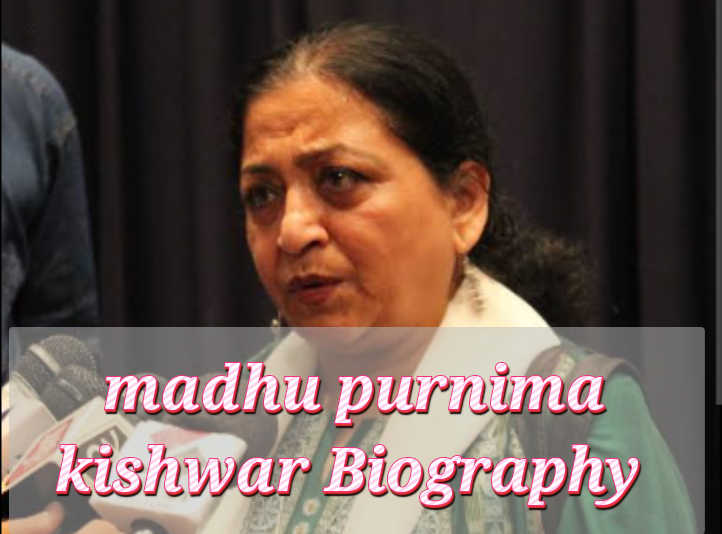
Madhu Purnima Kishwar Biography
Madhu Purnima Kishwar is an Indian academic, writer, and social activist. She founded and edits Manushi, a journal about women and society that started in 1978. This Madhu Purnima Kishwar biography looks at her journey from a family of Partition refugees to her work in gender issues, policy reforms, and public discussions. She has spent decades studying and writing about Indian society, women’s rights, and cultural traditions. Her ideas often focus on practical solutions that fit India’s own context rather than ideas from outside. This article explains her life in simple words so readers can easily understand her contributions and the debates around her work.
Madhu Purnima Kishwar Early Life
Madhu Purnima Kishwar was born in 1951 in Delhi. Her family came as refugees during the Partition of India in 1947. Her father’s side moved from Lahore, which is now in Pakistan. Her mother’s side came from Peshawar, also now in Pakistan. Like many Partition families, they faced displacement and had to build a new life in India after leaving their homes.
These early experiences shaped her views on identity, resilience, and Indian civilizational continuity. Growing up in post-Independence Delhi, she saw the challenges of rebuilding after a major historical event. Her family background gave her a deep sense of connection to India’s past and the strength needed to face difficulties. She often speaks about how these roots influenced her interest in studying Indian society and traditions from within.
Madhu Purnima Kishwar Education
Kishwar completed her early studies in Delhi. She graduated from Miranda House at Delhi University. There, she showed leadership skills and served as President of the Students’ Union. This role helped her gain experience in student activities and public speaking during her college years.
After her undergraduate studies, she went to Jawaharlal Nehru University (JNU) for further education. She pursued postgraduate work there, which included M.Phil. level studies with a focus on history and social issues. The 1970s at JNU exposed her to lively intellectual discussions and the political atmosphere of that time, including the period of the Emergency. These years built her ability to think critically and engage with complex social questions.
Her education combined academic learning with real-world awareness. It prepared her for a career that mixes research, writing, and activism. She later taught at a Delhi University college before moving into full-time research roles.
Madhu Purnima Kishwar Personal Life
Details about Madhu Purnima Kishwar’s personal and family life remain mostly private. Public records do not provide confirmed information about her marriage, husband, or children. She has not shared much about these aspects in interviews or writings available to the public.
She lives in Delhi and continues her work through the Manushi Trust. Her focus stays on professional and public activities rather than personal matters. This privacy allows her to direct attention toward her research and writings on broader social issues.
Madhu Purnima Kishwar Net Worth
No reliable public information exists on Madhu Purnima Kishwar’s net worth. As an academic, writer, and researcher associated with institutions like the Centre for the Study of Developing Societies (CSDS) and the Indian Council of Social Science Research (ICSSR), her income likely comes from fellowships, writing, and related work. She has not disclosed financial details, and estimates found online lack verification from official sources. Discussions about her net worth remain speculative and are not based on confirmed facts.
Madhu Purnima Kishwar Career
Kishwar began her career in teaching at a Delhi University college. In 1978, she co-founded Manushi: A Journal about Women and Society with Ruth Vanita. The journal aimed to connect academic ideas with ground-level activism. It focused on women’s issues while integrating them into wider national concerns instead of treating them separately. The name “Manushi” comes from a Sanskrit word meaning human being, showing a broad humanistic approach. The print version ran for many years before shifting to an online edition in 2008.
In 1993, she started Manushi Sangathan, a forum for democratic reforms. This group worked to make governance more accountable, especially for vulnerable sections like street vendors, cycle-rickshaw pullers, and traditional artisans. Her research led to practical efforts that influenced policies on livelihoods and economic rights for people in the unorganized sector.
She joined the Centre for the Study of Developing Societies (CSDS) as a Senior Fellow and directed the Indic Studies Project until her retirement around 2016. She organized conferences and studies on topics such as religion, culture, conversions, Kashmir, and honor-related issues. Later, she took up the role of Maulana Azad National Professor at the Indian Council of Social Science Research (ICSSR). In this position, she continues research on Indic faith traditions and civilizational studies.
Her work also includes campaigns for better laws supporting self-employed workers. She served on government committees, such as those for street vendors and non-motorized vehicles in Delhi. These efforts resulted in some legal and policy changes that helped improve conditions for urban poor workers.
Kishwar has written several books. Key ones include “In Search of Answers” (co-authored with Ruth Vanita in 1984), “Off the Beaten Track” (1999), “Zealous Reformers, Deadly Laws” (2008), “Modi, Muslims and Media” (2014), and “The Girl from Kathua” (2023). Her writings examine gender justice, pro-poor policies, media coverage of events, and Indian traditions. She received awards like the Chameli Devi Jain Award for Outstanding Women Mediaperson in 1985, the Haldi Ghati Award in 1993, and others for her contributions to women’s causes and journalism.
Her career shows a shift from early focus on women’s studies to broader work on Indic civilization, policy reforms, and public commentary. She appears on television and social media to discuss current issues.
Madhu Purnima Kishwar Controversies
Madhu Purnima Kishwar has faced criticism for her changing political views over time. In her early years, she took part in feminist and civil rights activities. Later, she became known for comments that some describe as aligned with Hindutva perspectives. Critics point to her support for certain policies and leaders as a departure from her previous positions.
She conducted fieldwork in Gujarat and wrote the book “Modi, Muslims and Media” in 2014. In it, she examined claims about the 2002 Gujarat riots and presented voices from the ground. The book defended aspects of Narendra Modi’s governance at that time and compared his approach to development with inclusive models. Some readers praised it for challenging media narratives, while others criticized it as overly favorable.
She has also made public statements on social media and in writings that drew backlash. In 2020, comments related to a high-profile case led to accusations of misogynistic remarks from some quarters. She has shared views on topics like Kashmir, religious conversions, and interfaith issues that polarize opinions. Some former colleagues and left-leaning observers see her ideological evolution as a major shift, while supporters view it as independent thinking based on facts and fieldwork.
Institutional matters, such as her time at CSDS and involvement in academic councils, also sparked debates. A few legal cases or complaints against her statements were reported, but details show some were addressed through due process. Kishwar maintains that her positions rest on evidence from research rather than fixed ideologies. She describes herself as avoiding strict “isms” and preferring culturally rooted solutions for Indian problems.
These controversies highlight how public figures can attract strong reactions when their views evolve or challenge dominant narratives. Factual records show her work includes both early acclaim for women’s journalism and later criticism for political commentary.
Madhu Purnima Kishwar Legacy
Madhu Purnima Kishwar leaves a mark as a long-running voice in Indian public life. Through Manushi journal, she helped shape discussions on gender and society for over four decades. The journal stood out for linking women’s rights to everyday national issues and avoiding a narrow focus. It influenced activism around topics like dowry, sati laws, and women’s quotas by bringing in evidence-based critiques.
Her efforts for the unorganized sector supported rights of street vendors and rickshaw pullers. Some of these campaigns contributed to policy talks and small changes in urban governance. In Indic studies, she promoted research on Indian traditions, Bhakti movements, and civilizational aspects, encouraging scholars to examine culture from an insider perspective.
She received recognition through awards such as the Chameli Devi Jain Award in 1985 for her media work on women. Other honors include the Prabha Puruskar in 1997 and the Deshasnehi Award in 1998. Her books continue to be referenced in debates on feminism, governance, and media.
Her legacy includes showing the value of independent research and willingness to question mainstream views. Readers and students can learn from her emphasis on fieldwork, cultural context, and practical reforms. While opinions about her differ, her sustained output as a writer and editor adds to the record of ideas in modern India.
Conclusion
The Madhu Purnima Kishwar biography presents the story of an academic who started with roots in a Partition refugee family and built a career around writing, research, and activism. From founding Manushi in 1978 to her roles at CSDS and ICSSR, she focused on issues that matter to Indian society. Her work covers gender justice, livelihoods for the poor, and studies of Indic traditions.
She faced praise for early contributions and criticism for later positions. This journey shows how thinkers can evolve based on new experiences and research. Her life encourages readers to examine facts, respect cultural contexts, and seek solutions suited to India’s realities.
By studying her writings and the debates around them, people gain a better view of changes in Indian feminism and public discourse. Kishwar’s efforts remind us that lasting impact often comes from consistent work over many years.
FAQs
Who is Madhu Purnima Kishwar and what is she known for?
Madhu Purnima Kishwar is an Indian academic and writer born in 1951. She is best known as the founder and editor of Manushi journal since 1978 and for her research on women’s issues, policy reforms, and Indic studies.
What is Manushi journal and her role in it?
Manushi is a journal about women and society that Kishwar co-founded in 1978 with Ruth Vanita. She has served as its main editor, guiding its focus on integrating gender concerns into broader social and national topics.
Is Madhu Kishwar a feminist or does she support Hindutva views?
She began her work in women’s studies and activism. Over time, her writings emphasized culturally rooted approaches to gender justice and Indian traditions. Some observers describe her later positions as aligned with Hindutva perspectives, while she prefers fact-based analysis over strict labels.
What are her major books?
Key books include “In Search of Answers” (1984, with Ruth Vanita), “Zealous Reformers, Deadly Laws” (2008), “Modi, Muslims and Media” (2014), and “The Girl from Kathua” (2023). They cover topics from women’s voices to media and governance.
What controversies surround Madhu Kishwar?
She has drawn criticism for her views on political leaders, media coverage of events like the 2002 Gujarat riots, and certain social media statements. These reflect differences in how people interpret her evolving public commentary.
What awards has she received?
She won the Chameli Devi Jain Award in 1985 for outstanding women mediaperson, along with other honors like the Haldi Ghati Award (1993) and Prabha Puruskar (1997) for contributions to women and journalism.
Where does she currently work?
She serves as Maulana Azad National Professor at the Indian Council of Social Science Research (ICSSR) and continues work through the Manushi Trust.