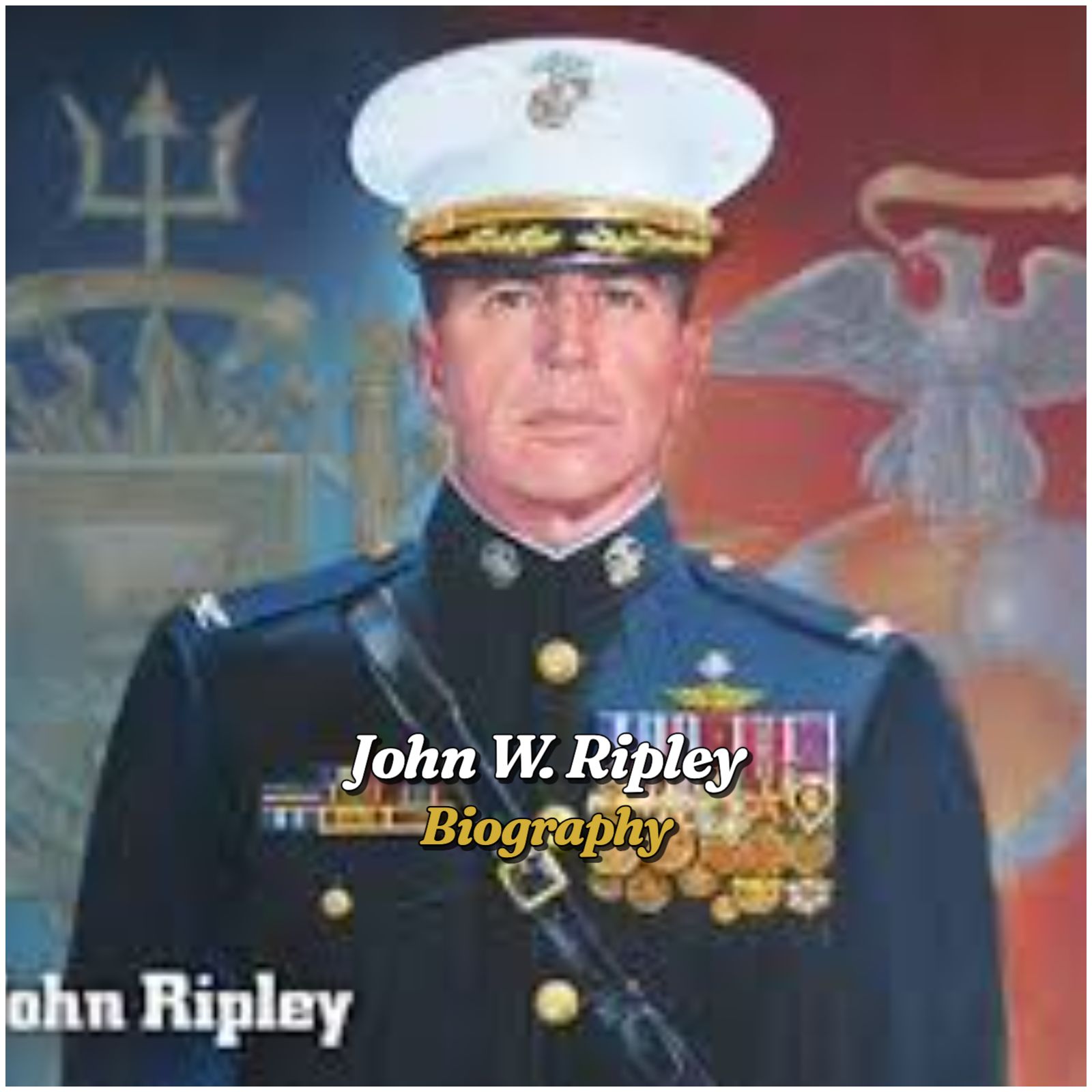
Who is John W. Ripley?
Marine Corps Col. John W. Ripley was an American military officer, war hero, and one of the most respected figures in United States Marine Corps history. He became famous for his extraordinary bravery during the Vietnam War, particularly during the Battle of Dong Ha Bridge in 1972. His actions under intense enemy fire helped stop a major North Vietnamese advance and saved countless lives. Throughout his military career, Ripley earned a reputation as a fearless leader, a highly skilled combat officer, and a dedicated servant of his country.
Born on June 29, 1939, in Virginia, John W. Ripley dedicated more than three decades of his life to military service. After graduating from the United States Naval Academy, he embarked on a distinguished career that took him to some of the most challenging assignments in the world. His qualifications included elite military training in airborne operations, combat diving, Ranger tactics, and commando warfare. These achievements made him one of the most accomplished officers of his generation and a role model for future military leaders.
Recently, John W. Ripley has returned to national attention after being posthumously awarded the Medal of Honor in 2026. The award recognized his heroic actions at Dong Ha Bridge during the Vietnam War, an act of courage that military historians consider one of the greatest examples of battlefield leadership in American military history. Although Ripley passed away in 2008, his legacy continues to inspire Marines, soldiers, and citizens across the United States. His story remains a powerful example of courage, sacrifice, duty, and unwavering commitment to service.
John W. Ripley Early Life and Background
John Walter Ripley was born on June 29, 1939, in the city of Radford, Virginia, in the United States. He grew up during a period when military service was highly respected in American society. Raised in a disciplined environment, Ripley developed strong values of hard work, responsibility, and patriotism from an early age. His childhood years were shaped by the close-knit community of Radford, where he built the character traits that would later define his military career.
As a young boy, Ripley displayed a strong interest in physical challenges and outdoor activities. He was known for his determination, competitive spirit, and willingness to push himself beyond ordinary limits. Friends and teachers recognized his leadership qualities long before he entered military service. These early experiences helped prepare him for the demanding challenges he would later face as a Marine officer and combat leader.
Ripley attended Radford High School, where he excelled academically and participated in various activities that strengthened his leadership skills. He graduated in 1957 and soon began pursuing his dream of serving his country. His commitment to military service led him to enlist in the United States Marine Corps before receiving an appointment to the United States Naval Academy. This important step marked the beginning of a remarkable journey that would eventually make him one of the most respected and decorated officers in Marine Corps history.
John W. Ripley Education and Qualifications
John W. Ripley received his early education in Virginia, where he developed a strong academic foundation and demonstrated leadership potential from a young age. After graduating from Radford High School in 1957, he pursued a path that combined higher education with military service. His dedication, discipline, and commitment to excellence helped him secure an appointment to the prestigious United States Naval Academy, one of the most respected military institutions in the United States.
At the United States Naval Academy in Annapolis, Maryland, Ripley underwent rigorous academic and military training designed to prepare future leaders of the American armed forces. He successfully completed the demanding program and graduated on June 6, 1962. As part of his academic qualifications, he earned a Bachelor of Science degree in Electrical Engineering. His education provided him with strong analytical, technical, and leadership skills that would prove valuable throughout his military career.
Beyond his university qualification, Ripley continued to expand his professional military education throughout his years of service. He completed numerous elite military training programs, including Army Airborne School, Ranger School, Combat Diver training, Jumpmaster qualification, and Royal Marines Commando training. These advanced qualifications made him one of the most highly trained Marine officers of his generation. His commitment to continuous learning and professional development played a major role in shaping him into a respected combat leader and military strategist.
John W. Ripley Military Career
John W. Ripley began his military career after graduating from the United States Naval Academy in 1962 and receiving his commission as a Second Lieutenant in the United States Marine Corps. From the beginning of his service, he distinguished himself through exceptional leadership, physical toughness, and professional competence. His qualifications included Airborne, Ranger, Combat Diver, Jumpmaster, and Royal Marines Commando training, achievements that placed him among the most highly qualified Marine officers of his era. These qualifications prepared him for a wide range of operational assignments throughout his military career.
During the early years of his service, Ripley served in various infantry and reconnaissance assignments both in the United States and overseas. His ability to lead troops under demanding conditions earned him the respect of both his superiors and fellow Marines. He gained valuable experience in combat operations, military planning, and leadership development. As his reputation grew, he was entrusted with increasingly important responsibilities within the Marine Corps.
Ripley’s most famous military achievement occurred during the Vietnam War on April 2, 1972, during the North Vietnamese Easter Offensive. Serving as an advisor to South Vietnamese forces near Dong Ha, he recognized the critical importance of preventing enemy armored units from advancing across the Dong Ha Bridge. Under intense enemy fire, Ripley repeatedly climbed beneath the bridge structure carrying heavy explosives. Working for several hours while exposed to extreme danger, he successfully placed demolition charges that destroyed the bridge. His actions delayed the enemy advance and provided valuable time for allied forces to reorganize their defenses. The operation became one of the most celebrated acts of heroism in Marine Corps history.
Following his Vietnam service, Ripley continued to build an impressive military career through a series of leadership and command assignments. He commanded infantry units at various levels and served in key positions involving military education and strategic planning. His expertise in combat leadership and professional military development made him a respected figure throughout the armed forces. He also contributed to the training and mentorship of future military officers, helping shape the next generation of Marine leaders.
One of Ripley’s notable achievements was becoming the first Marine Corps officer inducted into the U.S. Army Ranger Hall of Fame. This recognition reflected the respect he earned across multiple branches of the American military. Throughout his career, he served in locations including Vietnam, Britain, Singapore, Malaya, and Norway, gaining extensive international military experience. His leadership style emphasized discipline, courage, accountability, and mission accomplishment, qualities that defined his service for more than three decades.
As he advanced through the ranks, Ripley commanded the 1st Battalion, 2nd Marines and later the 2nd Marine Regiment. These command positions represented some of the most important leadership roles available to Marine Corps officers. His success in these assignments further strengthened his reputation as an exceptional commander and military professional. He became respected for his ability to inspire confidence among his troops while maintaining the highest professional standards.
After thirty-five years of distinguished service, Ripley retired from the United States Marine Corps in 1992 with the rank of Colonel. His military qualifications, leadership achievements, and combat record made him one of the most respected officers of his generation. His career was recognized through numerous decorations, including the Navy Cross, Silver Star, Legion of Merit, Bronze Star Medal, Purple Heart, and, in 2026, the Medal of Honor. Today, his military career remains a lasting example of courage, leadership, sacrifice, and dedication to duty.
Posthumous Medal of Honor Award in 2026
John W. Ripley became a major topic of national attention in 2026 after the United States government announced that he would receive the Medal of Honor posthumously for his heroic actions during the Vietnam War. The award recognized his extraordinary bravery at the Dong Ha Bridge on April 2, 1972, where he risked his life to destroy a critical bridge and stop a large North Vietnamese armored advance. Military historians and veterans had long argued that his actions met the highest standard for the nation’s most prestigious military decoration.
The decision to award the Medal of Honor more than fifty years after the battle brought renewed public interest to Ripley’s remarkable story. News of the award generated widespread discussion among military organizations, veterans’ groups, historians, and members of the public. Many viewed the recognition as a long-overdue honor for a Marine officer whose courage, determination, and leadership helped change the course of a significant military engagement during the Vietnam War.
The posthumous award further strengthened Ripley’s place among the most respected figures in Marine Corps history. His actions at Dong Ha Bridge are frequently studied in military leadership programs and are often cited as one of the greatest examples of individual heroism in modern warfare. The 2026 Medal of Honor award ensured that a new generation would learn about his sacrifice, dedication to duty, and unwavering commitment to mission accomplishment under some of the most dangerous conditions imaginable.
Personal Life
Despite his reputation as a fearless combat leader, John W. Ripley was known by family and friends as a devoted husband, father, and mentor. He was married to Moline Blaylock Ripley, and together they built a strong family life throughout his years of military service. Like many military families, they experienced frequent relocations and long periods of separation due to deployments and assignments. Through these challenges, Ripley remained deeply committed to his family and valued the support they provided throughout his distinguished career.
John W. Ripley and his wife were blessed with four children, including three sons and one daughter. Family played an important role in his life, and he worked to balance the demands of military service with his responsibilities as a husband and father. Those who knew him often described him as a man of strong character, discipline, and integrity. His leadership qualities were evident not only in uniform but also in the way he guided and supported his family and those around him.
Following his retirement from the Marine Corps in 1992, Ripley remained active in military education, leadership development, and veteran-related activities. He frequently shared his experiences with younger generations of military officers and students, helping preserve important lessons from his years of service. He was also known for his strong Christian faith, which influenced his personal values and outlook on life. Until his passing in 2008, Ripley continued to inspire others through his dedication to service, leadership, and lifelong commitment to the principles he had upheld throughout his career.
John W. Ripley Age, Religion, Nationality, Height and Physical Appearance
John W. Ripley was born on June 29, 1939, in Radford, Virginia, United States. If he were alive today in 2026, he would be 86 years old. He lived a life dedicated to military service and leadership before passing away on October 28, 2008, at the age of 69. His accomplishments during his lifetime continue to be remembered and celebrated by military personnel, historians, and patriotic Americans.
In terms of religion, Ripley was a Christian and was known for having a strong faith throughout his life. His religious beliefs played an important role in shaping his values, leadership style, and personal character. During the famous Dong Ha Bridge operation in Vietnam, he reportedly relied on prayer while carrying out his dangerous mission under enemy fire. His faith remained a source of strength during both his military service and personal life.
John W. Ripley was an American citizen by nationality and proudly served the United States for more than three decades in the Marine Corps. Although no official records publicly confirm his exact height, he was widely recognized for his exceptional physical fitness and endurance. He maintained the high physical standards required of elite military personnel and successfully completed some of the world’s most demanding military qualification courses. He had a strong athletic build, a commanding presence, and the disciplined appearance commonly associated with senior Marine Corps officers. His military bearing, confidence, and professionalism made him an instantly recognizable figure among those who served alongside him.
Legacy
John W. Ripley’s legacy is built upon extraordinary courage, selfless service, and exceptional leadership. His actions during the Battle of Dong Ha Bridge in 1972 remain one of the most remarkable examples of battlefield heroism in modern military history. By risking his life to destroy the bridge and slow a major enemy advance, he demonstrated a level of bravery that continues to inspire military personnel around the world. His story has become a symbol of determination, sacrifice, and unwavering commitment to duty.
Beyond his famous combat achievements, Ripley left a lasting impact through his leadership and mentorship. Throughout his military career, he trained, guided, and influenced countless Marines and military officers. His qualifications, professional standards, and dedication to excellence set an example for future generations of service members. Military academies, leadership programs, and professional military education courses continue to study his decisions and actions as valuable lessons in courage, leadership, and mission accomplishment under extreme pressure.
The posthumous award of the Medal of Honor in 2026 further strengthened Ripley’s place among America’s greatest military heroes. More than five decades after his heroic actions at Dong Ha Bridge, the nation’s highest military decoration ensured that his sacrifices would never be forgotten. His legacy lives on through military history, leadership education, veteran organizations, and the countless individuals who draw inspiration from his life. Today, John W. Ripley is remembered not only as a decorated Marine Corps colonel but also as a lasting example of honor, integrity, and service to country.
Conclusion
John W. Ripley remains one of the most respected and admired figures in United States Marine Corps history. From his early years in Virginia to his distinguished military career, he demonstrated exceptional courage, leadership, and dedication to service. His heroic actions at the Dong Ha Bridge during the Vietnam War became a defining moment that secured his place among America’s greatest combat leaders. Through his military qualifications, command experience, commitment to mentoring others, and lifelong devotion to duty, Ripley left a lasting impact on the Marine Corps and the nation. The posthumous award of the Medal of Honor in 2026 further affirmed the significance of his sacrifice and achievements, ensuring that his legacy of bravery, honor, and patriotism will continue to inspire future generations.
Frequently Asked Questions (FAQs) About John W. Ripley
1. Who was John W. Ripley?
John W. Ripley was an American military officer, Vietnam War hero, and United States Marine Corps colonel best known for his heroic actions at the Dong Ha Bridge in 1972.
2. Why is John W. Ripley famous?
He is famous for destroying the Dong Ha Bridge during the Vietnam War under heavy enemy fire, helping stop a major North Vietnamese armored advance.
3. What qualifications did John W. Ripley have?
He earned a Bachelor of Science degree in Electrical Engineering from the United States Naval Academy and completed elite military qualifications, including Airborne, Ranger, Combat Diver, Jumpmaster, and Royal Marines Commando training.
4. What rank did John W. Ripley hold?
He retired from the United States Marine Corps in 1992 with the rank of Colonel.
5. Why is John W. Ripley trending in 2026?
He is trending because he was posthumously awarded the Medal of Honor in 2026 for his extraordinary heroism during the Vietnam War.
6. What awards did John W. Ripley receive?
His military decorations include the Medal of Honor, Navy Cross, Silver Star, Legion of Merit, Bronze Star Medal, and Purple Heart.
7. Was John W. Ripley married?
Yes. He was married to Moline Blaylock Ripley and had four children.
8. When did John W. Ripley die?
He passed away on October 28, 2008, at the age of 69.