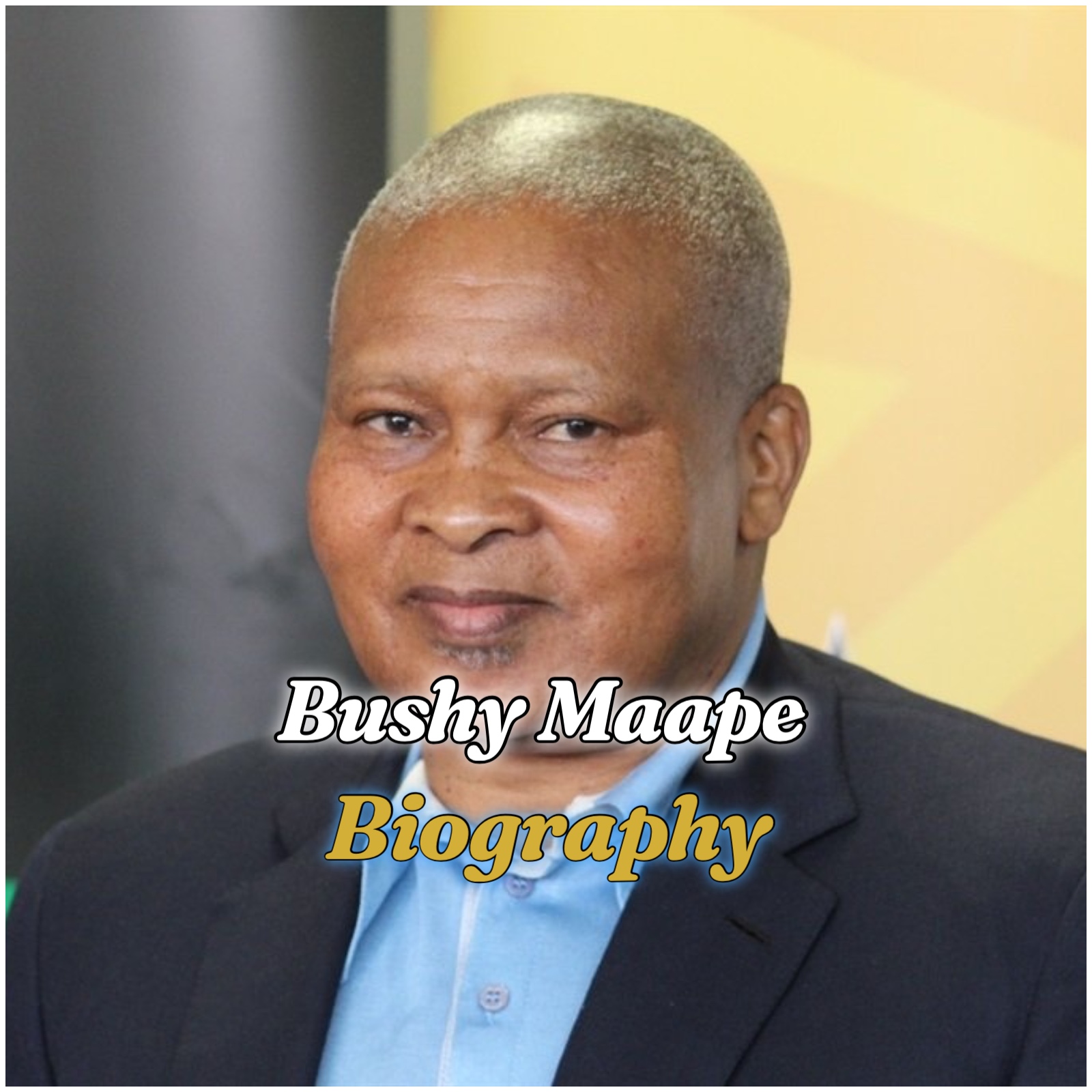
Introduction to Bushy Maape Biography
Bushy Maape, whose full name was Kaobitsa Abel Bushy Maape, was a respected South African politician, anti-apartheid activist, freedom fighter, and former Premier of the North West Province in South Africa. He became widely known for his lifelong dedication to public service, liberation politics, and community development in South Africa. From his years as a freedom fighter during the apartheid era to his leadership role in government, Bushy Maape built a reputation as a disciplined and principled leader who remained committed to the ideals of democracy and social justice.
Maape rose to national prominence after becoming the 7th Premier of the North West Province in September 2021 under the leadership of the African National Congress. Before serving as premier, he spent decades working in government administration, development planning, and ANC political structures. His experience as a former Robben Island political prisoner also made him one of the respected veterans of South Africa’s liberation struggle.
In May 2026, Bushy Maape returned to public attention following news of his death at the age of 69 after a short illness in Johannesburg. His passing triggered tributes from political leaders, colleagues, and citizens across South Africa who praised his contributions to education, governance, and the anti-apartheid struggle. He is remembered as a freedom fighter, educator, and public servant whose impact stretched from the liberation era into democratic South Africa’s modern leadership history.
Bushy Maape Early Life and Background
Bushy Maape was born around 1956 or 1957 in Vryburg, located in the North West Province of South Africa. He grew up during the harsh years of apartheid, a period marked by racial segregation, political oppression, and limited opportunities for Black South Africans. His early experiences in this environment shaped his political consciousness and inspired his commitment to justice, equality, and freedom from a young age.
As a young man, Maape became actively involved in political activities during one of the most turbulent periods in South African history. Following the 1976 Soweto uprising and the growing resistance against apartheid, he reportedly left South Africa and joined underground liberation structures linked to the African National Congress. During this period, he received political and military training that prepared him for activism and underground operations against the apartheid government.
After returning to South Africa, Bushy Maape became deeply involved in underground resistance activities across several regions including Mahikeng, Kuruman, Taung, Kimberley, and Vryburg. He later emerged as a commander within the ANC underground network in the Kgalagadi region. His political involvement eventually led to his arrest by apartheid authorities, and he was imprisoned on the infamous Robben Island alongside other anti-apartheid activists and freedom fighters.
Despite the hardships of imprisonment, Maape remained focused on personal growth and education. His years during the liberation struggle helped shape the leadership qualities, discipline, and resilience that later defined his political and administrative career in democratic South Africa.
Bushy Maape Education and Academic Qualifications
Bushy Maape remained strongly committed to education despite the difficult circumstances he faced during the apartheid era. Even while imprisoned on Robben Island for his anti-apartheid activities, he continued his academic pursuits and used education as a tool for personal development and empowerment.
During his time in prison, Bushy Maape studied through the University of South Africa and successfully earned a Bachelor of Arts degree in Psychology and Economics. His determination to continue learning while incarcerated reflected his discipline, resilience, and belief in the importance of knowledge and leadership development.
After his release, Maape further expanded his academic qualifications. He obtained two honours degrees from the University of the Western Cape in Developmental Studies and Economics. These academic achievements strengthened his understanding of governance, economic planning, and social development, areas that later became central to his work in government administration and provincial leadership.
Reports also indicated that Bushy Maape was pursuing a Master of Management degree in Governance at the University of the Witwatersrand before his death in 2026. His educational journey demonstrated his lifelong commitment to learning, public administration, and national development.
Bushy Maape Career and Political Journey
Bushy Maape built a long and respected career in politics, public administration, and governance in South Africa. After the end of apartheid, he became actively involved in rebuilding democratic institutions and supporting development programs aimed at improving the lives of ordinary citizens. His years of experience in political activism and underground resistance helped shape his leadership style and commitment to public service.
In the early years of democratic South Africa, Bushy Maape worked in several government and administrative positions within the North West Province. He served in strategic planning and development roles and became known for his involvement in policy implementation and provincial governance. He also worked as Director for the Reconstruction and Development Programme (RDP), a major initiative introduced to address inequality and improve living conditions after apartheid.
Maape later rose through the ranks of the African National Congress and became an influential figure within the party’s regional structures. He served as regional chairperson of the ANC in the Kgalagadi region and gained recognition as a disciplined organizer and experienced administrator. Over the years, he earned respect for his calm leadership approach, political maturity, and focus on governance rather than political controversy.
In August 2021, the ANC selected Bushy Maape to replace former North West Premier Job Mokgoro during a period of political instability within the province. On September 7, 2021, he officially became the 7th Premier of the North West Province. His appointment marked one of the most important moments of his political career and placed him at the center of provincial leadership in South Africa.
As premier, Maape focused on improving service delivery, stabilizing municipalities, supporting economic growth, and strengthening governance structures. His administration worked on projects related to education, infrastructure, healthcare, and youth empowerment. He also relaunched the provincial bursary scheme to assist students with educational opportunities and promoted development initiatives aimed at reducing poverty and unemployment in the province.
During his time in office, Bushy Maape was often described as a leader who preferred practical governance and administrative reform over political confrontation. Although his administration faced challenges linked to infrastructure problems, municipal instability, and service delivery complaints, supporters praised him for attempting to restore stability within the province.
Health challenges later affected his political activities. Reports revealed that he underwent medical treatment and orthopaedic surgery during his time as premier. Following the 2024 elections, he did not return as premier and was succeeded by Lazarus Mokgosi.
Bushy Maape’s career reflected decades of dedication to South Africa’s liberation struggle, democratic governance, and public administration. From his years as an anti-apartheid activist and Robben Island prisoner to becoming premier of an important South African province, his professional journey represented resilience, leadership, and service to the people.
Bushy Maape Health Challenges and Death
Bushy Maape experienced several health challenges during the later years of his political career. While serving as Premier of the North West Province, reports began to emerge about concerns regarding his physical condition and ability to fully carry out official duties. His health became a topic of public discussion, especially during periods when he was absent from some government activities.
In 2023, Bushy Maape reportedly underwent orthopaedic surgery as part of ongoing medical treatment. Additional reports later revealed that he traveled to Thailand in 2024 for further medical care. During this period, opposition parties and some political observers raised questions about his health status and leadership continuity within the province. Despite these challenges, Maape continued carrying out official responsibilities and remained involved in provincial governance until the end of his term.
Following the 2024 provincial elections, he did not return as premier and was succeeded by Lazarus Mokgosi. After leaving office, he largely stayed away from major public political activities while reportedly focusing on his health and personal life.
On May 16, 2026, Bushy Maape died in Johannesburg after a short illness at the age of 69. News of his death was officially confirmed on May 17, 2026 and quickly spread across South Africa. According to reports, he passed away while surrounded by family members.
His death triggered emotional tributes from members of the African National Congress, government officials, political allies, and citizens across South Africa. Many described him as a committed freedom fighter, ethical leader, educator, and loyal public servant who dedicated most of his life to the struggle for democracy and the development of his province.
Bushy Maape was remembered not only for his role in government but also for his sacrifices during the anti-apartheid struggle, including his imprisonment on Robben Island. His passing marked the end of a political journey that stretched from the liberation movement era into democratic South Africa’s modern leadership history.
Bushy Maape Personal Life and Family
Bushy Maape was known as a private and disciplined individual who kept much of his personal and family life away from public attention. Unlike many high-profile politicians, he rarely discussed his relationships, family matters, or personal lifestyle in the media. This reserved nature contributed to his image as a calm and focused public servant who preferred to concentrate on governance and community development rather than personal publicity.
Despite maintaining privacy, reports following his death confirmed that Bushy Maape was survived by six children and several siblings. Family members, friends, and political colleagues often described him as a caring father, humble leader, and respected elder who valued discipline, education, and family unity. Those close to him also spoke about his strong sense of responsibility and commitment to helping younger generations succeed through education and empowerment programs.
Maape’s personal experiences during the apartheid era also played a major role in shaping his values and worldview. His years as a political activist and prisoner on Robben Island taught him resilience, patience, and sacrifice. Even after entering government, he remained connected to the ideals of service, equality, and social justice that guided his early political life.
He was also known for supporting educational development and youth advancement within the North West Province. Colleagues often described him as someone who believed strongly in learning, leadership training, and creating opportunities for disadvantaged communities. His own educational achievements while imprisoned became an inspiration to many young South Africans.
Although Bushy Maape largely stayed away from a glamorous public lifestyle, he earned respect for his simplicity, professionalism, and dedication to public service. His personal life reflected the values of humility, discipline, and commitment that defined both his political journey and his reputation in South African society.
Bushy Maape Age, Religion, Tribe, Height and Physical Appearance
Bushy Maape was born around 1956 or 1957 in Vryburg, North West Province, South Africa. At the time of his death on May 16, 2026, he was 69 years old. His long political journey spanned the apartheid era, the liberation struggle, and democratic South Africa, making him one of the respected veteran leaders within the country’s political landscape.
Bushy Maape was South African by nationality and belonged to the Tswana ethnic group, one of the major tribes in the North West Province. His cultural roots and upbringing in the region played an important role in shaping his connection to local communities and provincial politics throughout his career.
Although Bushy Maape kept most aspects of his private life away from the media, he was believed to have followed Christian values, which are widely practiced within many communities in South Africa. However, he rarely made public statements about religion or personal spiritual practices, choosing instead to focus on governance, education, and public service.
In terms of physical appearance, Bushy Maape was known for his calm and mature presence. He had a medium-to-dark complexion, a clean and professional appearance, and was often seen wearing formal political attire during official events and government functions. In his later years, he appeared with a fuller physique and carried himself with the dignity and composure expected of a senior statesman and former anti-apartheid activist.
His appearance reflected his personality as a disciplined and experienced leader. Supporters and colleagues often described him as humble, respectful, and soft-spoken, qualities that contributed to the public image he maintained throughout his years in politics and administration.
Bushy Maape Legacy and Impact in South Africa
Bushy Maape left behind a legacy deeply connected to South Africa’s liberation struggle, democratic governance, and public service. From his early years as an anti-apartheid activist to his imprisonment on Robben Island, his life represented sacrifice, resilience, and commitment to justice. Many South Africans viewed him as part of the generation of leaders who dedicated their youth to fighting racial oppression and helping build a democratic nation after apartheid.
Throughout his political career, Bushy Maape earned respect for his calm leadership style, administrative experience, and focus on governance rather than political drama. As Premier of the North West Province, he worked on development programs, educational support initiatives, municipal stability, and service delivery reforms aimed at improving the lives of ordinary citizens. His support for youth empowerment and education also became an important part of how many communities remembered his contribution to provincial development.
Following his death in May 2026, tributes from the African National Congress, government officials, and members of the public described him as disciplined, ethical, and selfless. His journey from underground activist and political prisoner to provincial premier became a symbol of perseverance and dedication to national service. Bushy Maape is remembered as a freedom fighter and public servant whose impact stretched across both the liberation era and modern democratic South Africa.
Conclusion
Bushy Maape lived a life defined by sacrifice, resilience, leadership, and dedication to the people of South Africa. From his involvement in the anti-apartheid struggle and imprisonment on Robben Island to his years in government and eventual role as Premier of the North West Province, he remained committed to public service, education, and democratic development. His legacy continues to inspire many who remember him as a disciplined freedom fighter, respected statesman, and humble leader who devoted his life to building a better South Africa.
Frequently Asked Questions About Bushy Maape
1. Who was Bushy Maape?
Bushy Maape was a South African politician, anti-apartheid activist, former Robben Island prisoner, and former Premier of the North West Province who served in government and ANC leadership structures for many years.
2. How old was Bushy Maape when he died?
Bushy Maape was 69 years old at the time of his death in May 2026 after reports confirmed that he passed away following a short illness in Johannesburg.
3. What position did Bushy Maape hold in government?
Bushy Maape served as the 7th Premier of the North West Province in South Africa from September 2021 until June 2024 under the leadership of the African National Congress.
4. Was Bushy Maape involved in the anti-apartheid struggle?
Yes. Bushy Maape actively participated in underground anti-apartheid activities linked to the ANC and was later imprisoned on Robben Island because of his political activism.
5. What qualifications did Bushy Maape have?
Bushy Maape earned a Bachelor of Arts degree in Psychology and Economics through the University of South Africa and later obtained honours degrees in Developmental Studies and Economics.
6. Where was Bushy Maape born?
Bushy Maape was born in Vryburg in the North West Province of South Africa, where he also developed strong political and community connections during his early life.
7. What tribe was Bushy Maape?
Bushy Maape belonged to the Tswana ethnic group, one of the major tribes in South Africa’s North West Province and surrounding regions.
8. What was Bushy Maape known for?
He was widely known for his role in the anti-apartheid liberation struggle, his imprisonment during apartheid, and his later leadership as Premier of the North West Province.
9. Did Bushy Maape have children?
Yes. Reports following his death confirmed that Bushy Maape was survived by six children along with several siblings and extended family members.
10. When did Bushy Maape die?
Bushy Maape died on May 16, 2026, in Johannesburg after a short illness, and news of his death was publicly confirmed the following day.