Introduction
Ali Khamenei was an Iranian Shia Muslim cleric, political leader, and one of the most influential figures in the modern history of Iran. Born on April 19, 1939, in Mashhad, Iran, he rose from a religious scholarly background to become a central figure in the country’s political and religious establishment. Khamenei played an active role in the Iranian Revolution of 1979 and later held several high-ranking government positions, including President of Iran, before eventually becoming the nation’s Supreme Leader.
As Supreme Leader, a position he held from 1989 until his death in 2026, Khamenei exercised significant authority over Iran’s political, military, and religious institutions. His leadership shaped Iran’s domestic policies, foreign relations, and strategic direction for nearly four decades. During his tenure, he oversaw major events, including regional conflicts, economic sanctions, nuclear negotiations, and evolving relations with global powers, making him one of the most closely watched leaders in international affairs.
Throughout his life, Ali Khamenei remained a figure of both admiration and controversy. Supporters viewed him as a steadfast defender of Iran’s Islamic values, independence, and resistance to foreign influence, while critics pointed to restrictions on political freedoms and challenges related to human rights under his leadership. Regardless of differing opinions, his influence on Iran and the wider Middle East remains undeniable, and his legacy continues to be a subject of significant historical and political discussion following his death in 2026.
Early Life and Background
Ali Hosseini Khamenei was born on April 19, 1939, in the holy city of Mashhad, located in northeastern Iran. He grew up in a modest religious household as the son of Javad Khamenei, a respected Shia cleric of Azerbaijani descent, and Khadijeh Mirdamadi. Despite his family’s scholarly reputation, their financial circumstances were relatively humble, and Khamenei often spoke about experiencing a simple lifestyle during his childhood. His upbringing was deeply rooted in Islamic teachings, which played a significant role in shaping his worldview and future ambitions.
From an early age, Khamenei displayed a strong interest in religious studies and intellectual pursuits. He received his primary education in Mashhad while simultaneously studying the Quran, Arabic language, Islamic jurisprudence, and theology under the guidance of local scholars and his father. His dedication to learning earned him recognition among his teachers, and he quickly developed a reputation as a disciplined student with a passion for religious scholarship. In addition to his theological studies, he cultivated an appreciation for Persian literature, poetry, and history, interests that remained with him throughout his life.
As a young man, Khamenei continued his religious education in the prominent seminaries of Mashhad and later in Qom, Iran’s leading center of Shia Islamic learning. There, he studied under some of the most respected clerics of the era, including Ayatollah Ruhollah Khomeini, who would later become the leader of the Iranian Revolution. Exposure to revolutionary ideas and growing opposition to the rule of Shah Mohammad Reza Pahlavi influenced Khamenei’s political thinking. During this period, he became increasingly involved in religious and political activities that would eventually place him at the forefront of Iran’s revolutionary movement and set the stage for his future leadership role.
Education
Ali Khamenei’s educational journey began in Mashhad, Iran, where he received both formal schooling and traditional Islamic instruction during his childhood. Raised in a religious family, he was introduced to Quranic studies, Arabic grammar, Islamic jurisprudence, and theology at a young age. His father, a respected cleric, played an important role in guiding his early education and encouraging his interest in religious scholarship. These foundational studies helped shape Khamenei’s intellectual development and laid the groundwork for his future career as a religious leader.
After completing his elementary education, Khamenei devoted himself more fully to religious studies in the seminaries of Mashhad. There, he pursued advanced coursework in Islamic law, philosophy, logic, and religious interpretation under the supervision of notable scholars. His commitment to learning and academic discipline enabled him to progress through the ranks of clerical education. During this period, he also developed a strong interest in Persian literature and poetry, subjects that complemented his theological studies and contributed to his reputation as a well-rounded intellectual.
Seeking higher levels of religious training, Khamenei later moved to Qom, Iran’s most prominent center of Shia Islamic learning. In Qom, he studied under some of the leading clerics of the twentieth century, including Ayatollah Ruhollah Khomeini. His years in Qom exposed him to both advanced religious scholarship and the political ideas that were gaining momentum among opponents of the Shah’s government. The combination of rigorous theological education and growing political awareness played a crucial role in shaping Khamenei’s future leadership within the Islamic Republic of Iran and his eventual rise to national prominence.
Career
Ali Khamenei’s career was defined by his dual roles as a religious scholar and political leader. During the 1960s and 1970s, he became actively involved in the opposition movement against the rule of Shah Mohammad Reza Pahlavi. Inspired by the teachings of Ayatollah Ruhollah Khomeini, Khamenei participated in political and religious activities that challenged the monarchy. His activism led to multiple arrests by the Shah’s security forces, and he spent periods in prison due to his involvement in revolutionary movements. These experiences helped establish his reputation as a committed supporter of the Islamic Revolution and brought him closer to the inner circle of revolutionary leaders.
Following the success of the Iranian Revolution in 1979, Khamenei quickly rose through the ranks of the newly established Islamic Republic. He held several important positions, including membership in the Revolutionary Council and leadership roles within Iran’s military and political institutions. In 1981, he survived an assassination attempt that left his right arm permanently impaired. Later that same year, he was elected President of Iran, becoming one of the country’s most influential political figures. Khamenei served two consecutive presidential terms from 1981 to 1989, overseeing the nation during the challenging years of the Iran-Iraq War and helping shape the government’s post-revolutionary policies.
A major turning point in Khamenei’s career came in 1989 following the death of Ayatollah Ruhollah Khomeini. He was selected by the Assembly of Experts to become the second Supreme Leader of Iran, the highest political and religious office in the country. As Supreme Leader, he exercised authority over Iran’s armed forces, judiciary, state broadcasting system, and key aspects of domestic and foreign policy. Over nearly four decades in power, Khamenei became one of the most influential leaders in the Middle East, guiding Iran through periods of economic sanctions, regional conflicts, nuclear negotiations, and significant political changes. His leadership left a lasting impact on Iran’s political system and its role on the global stage.
Cause of Death and Death
Ali Khamenei, the longtime Supreme Leader of Iran, died on February 28, 2026, at the age of 86. According to reports from Iranian state media and multiple international news organizations, his death occurred during a large-scale military operation involving the United States and Israel that targeted senior Iranian leadership and strategic facilities. Iranian authorities officially confirmed his death on March 1, 2026, and declared a national mourning period in his honor.
The reported cause of death was fatal injuries sustained during an airstrike on Tehran. Various international reports stated that Khamenei was among the primary targets of the operation, which marked a major turning point in Middle Eastern geopolitics. His death ended a leadership tenure that had lasted nearly 37 years, making him one of the longest-serving and most influential political and religious leaders in the region. The event attracted worldwide attention and prompted reactions from governments, religious institutions, and political organizations across the globe.
Following his death, Iran organized extensive mourning ceremonies and funeral processions that took place across several cities in Iran and Iraq. Millions of supporters reportedly participated in commemorative events before his final burial in Mashhad, his birthplace and one of the holiest cities in Shia Islam. His funeral became one of the most significant state ceremonies in modern Iranian history, symbolizing the end of an era in the Islamic Republic and the beginning of a new chapter under his successor.
Personal Life and Family
Ali Khamenei maintained a relatively private personal life despite spending decades as one of the most powerful figures in Iran. He was married to Mansoureh Khojasteh Bagherzadeh, a woman from a respected religious family in Mashhad. Their marriage remained largely out of the public spotlight, reflecting Khamenei’s preference for keeping family matters separate from political affairs. Throughout his years in office, he frequently emphasized the importance of family values, religious devotion, and modest living, principles that he claimed guided both his personal and public life.
The couple had six children together, including four sons and two daughters. Among his children, Mojtaba Khamenei became the most widely known due to his influence within Iran’s political and religious circles. Other sons include Mostafa Khamenei, Masoud Khamenei, and Meysam Khamenei, while his daughters generally maintained a lower public profile. Members of the Khamenei family were often involved in religious, educational, and charitable activities, though most avoided direct participation in high-profile political positions. Over the years, speculation about the political influence of some family members, particularly Mojtaba, attracted significant attention both within Iran and internationally.
Family heritage played an important role in shaping Khamenei’s identity and worldview. His father, Ayatollah Javad Khamenei, was a respected Shia cleric whose teachings greatly influenced his son’s religious development. His mother, Khadijeh Mirdamadi, came from a family with strong religious traditions and was known for encouraging education and spiritual discipline within the household. Khamenei often spoke about his modest upbringing in Mashhad and credited his parents for instilling the values of faith, perseverance, and service. Following his death in 2026, members of the Khamenei family continued to play important roles in preserving his legacy and maintaining their influence within Iran’s religious and political establishment.
Age, Religion, Tribe, Height and Physical Appearance
Ali Khamenei was born on April 19, 1939, in Mashhad, Iran. At the time of his death on February 28, 2026, he was 86 years old. Throughout his lifetime, he witnessed and played a central role in many of the most significant events in modern Iranian history. From his involvement in the Islamic Revolution of 1979 to his nearly four decades as Supreme Leader, Khamenei remained one of the most influential political and religious figures in the Middle East.
Khamenei was a devoted follower of Twelver Shia Islam and held the religious title of Ayatollah, reflecting his status as a senior Islamic scholar. Ethnically, he was of Iranian Azerbaijani heritage through his father, Ayatollah Javad Khamenei, while his family also had roots connected to the broader Persian religious community. Although the concept of “tribe” is not commonly used in the same way in Iran as it is in some other countries, Khamenei is generally identified as belonging to the Iranian Azerbaijani ethnic group. His religious beliefs and scholarly background were fundamental to both his personal identity and his political leadership.
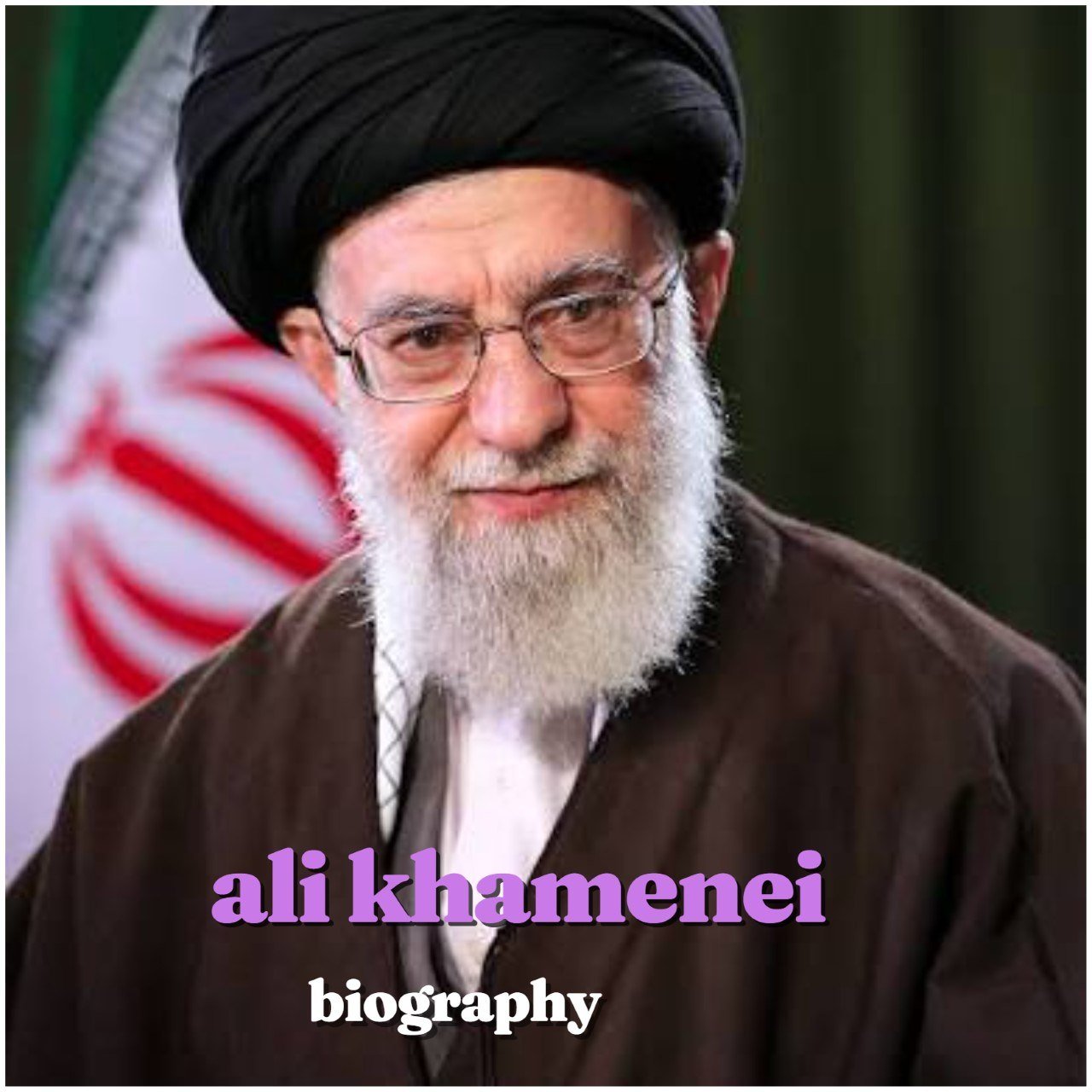
In terms of physical appearance, Ali Khamenei stood at an estimated height of about 5 feet 11 inches (180 cm). He was widely recognized for his black turban, which signified his status as a Sayyid, a descendant of the Prophet Muhammad according to family tradition. He typically wore traditional clerical robes, glasses, and maintained a neatly groomed gray-white beard. Following an assassination attempt in 1981 that seriously injured his right arm, he lived with a permanent impairment that became a noticeable aspect of his appearance. His distinctive clerical attire, composed demeanor, and recognizable facial features made him one of the most identifiable political and religious leaders in the world.
Social Media Presence
Although Ali Khamenei belonged to a generation of leaders that rose to prominence long before the digital age, he recognized the importance of online communication and maintained a significant presence across various social media platforms. Throughout his years as Supreme Leader of Iran, official accounts operated on his behalf shared speeches, religious messages, political statements, and updates regarding national and international affairs. These platforms allowed his office to communicate directly with millions of followers both inside and outside Iran.
One of the most prominent social media accounts associated with Khamenei was his official X (formerly Twitter) handle, @Khamenei_fa, which primarily published content in Persian. Additional accounts, including @Khamenei_ir and several language-specific profiles, were used to reach international audiences. His office also maintained an active presence on Instagram under @khamenei.ir, where photographs, official events, meetings with foreign dignitaries, and religious messages were regularly shared. These platforms became important tools for distributing official statements and promoting the viewpoints of Iran’s leadership.
Beyond social media, Khamenei’s office operated the official website Khamenei.ir, which served as the primary source for speeches, religious rulings, articles, books, and news related to his activities. The website was available in multiple languages, reflecting his global influence and the international interest in Iran’s policies. Even after his death in 2026, these digital archives continue to serve as important resources for researchers, journalists, and individuals seeking information about his life, leadership, and legacy.
Net Worth
Determining Ali Khamenei’s exact net worth has long been difficult because no official public financial disclosure detailing his personal assets was ever released. As Iran’s Supreme Leader from 1989 until 2026, Khamenei occupied a position of immense political and religious authority rather than a conventional income-generating profession. While various reports and analysts have speculated about the wealth connected to institutions operating under his authority, distinguishing between state-controlled assets, religious foundations, and his personal fortune has remained challenging.
Over the years, several international media outlets and research organizations suggested that institutions linked to the Office of the Supreme Leader controlled or influenced assets worth billions of dollars through foundations, investments, and charitable organizations. However, these assets were generally considered organizational or state-affiliated holdings rather than Khamenei’s personal wealth. Because of the lack of verified financial records, any estimate of his individual net worth should be treated as speculative rather than definitive.
Based on his decades-long position as Iran’s highest-ranking political and religious leader, some analysts have estimated Ali Khamenei’s personal net worth to be in the range of $5 million to $20 million USD, though no reliable evidence has conclusively confirmed these figures. His public image emphasized modest living and religious simplicity, and he rarely displayed signs of personal extravagance. As a result, while the institutions associated with his office may have overseen vast resources, his actual personal net worth remains unknown and continues to be the subject of debate among historians, political analysts, and media observers.
Legacy
Ali Khamenei’s legacy is deeply intertwined with the modern history of the Islamic Republic of Iran. Serving as Supreme Leader from 1989 until 2026, he became the longest-serving leader in the country’s post-revolutionary era and played a decisive role in shaping Iran’s political, religious, and strategic direction. During his tenure, he oversaw major national developments, including economic reforms, military modernization, regional diplomacy, and the country’s response to international sanctions. His influence extended far beyond Iran’s borders, making him one of the most consequential figures in Middle Eastern politics during the late twentieth and early twenty-first centuries.
Supporters remember Khamenei as a steadfast defender of Iran’s sovereignty, Islamic values, and resistance to foreign pressure. They credit him with preserving the principles of the 1979 Islamic Revolution, strengthening Iran’s regional influence, and maintaining the country’s independence amid decades of geopolitical challenges. Under his leadership, Iran expanded its scientific, technological, and military capabilities, while continuing to position itself as a major regional power. Many of his followers regard him as a symbol of resilience and ideological commitment who guided the nation through periods of war, sanctions, and international tensions.
Critics, however, view Khamenei’s legacy through a different lens, pointing to restrictions on political freedoms, limitations on dissent, and controversies surrounding elections, civil rights, and government policies. His leadership frequently attracted scrutiny from international human rights organizations and foreign governments. Despite these debates, historians generally agree that Khamenei left an enduring mark on Iran and the wider Middle East. His decades in power influenced generations of political leaders, religious scholars, and policymakers, ensuring that his legacy will remain a significant subject of study and discussion for years to come.
Conclusion
Ali Khamenei was one of the most influential and consequential leaders in modern Middle Eastern history. From his early years as a religious student in Mashhad to his rise as Iran’s Supreme Leader, he played a central role in shaping the political, religious, and strategic direction of the Islamic Republic for nearly four decades. His leadership inspired both strong support and significant criticism, reflecting the complex nature of his impact on Iran and the wider world. Whether viewed as a defender of revolutionary ideals or a controversial political figure, Khamenei’s influence on Iranian society, regional affairs, and global geopolitics remains undeniable, ensuring that his life and legacy will continue to be studied and debated for generations to come.
Frequently Asked Questions (FAQs) About Ali Khamenei
Who was Ali Khamenei?
Ali Khamenei was an Iranian Shia cleric and politician who served as the second Supreme Leader of Iran from 1989 until his death in 2026. He was one of the most influential figures in the Islamic Republic and played a major role in shaping Iran’s domestic and foreign policies.
When was Ali Khamenei born?
Ali Khamenei was born on April 19, 1939, in Mashhad, Iran. He spent his early years studying Islamic theology and later became involved in political activism against the government of Shah Mohammad Reza Pahlavi.
How old was Ali Khamenei when he died?
Ali Khamenei was 86 years old at the time of his death on February 28, 2026.
What was Ali Khamenei’s religion?
Ali Khamenei was a follower of Twelver Shia Islam. He was a senior Islamic scholar who held the religious title of Ayatollah and served as the highest religious and political authority in Iran for many years.
What was Ali Khamenei’s nationality?
Ali Khamenei was Iranian. He was born and raised in Iran and spent his entire political and religious career serving within the country’s institutions.
What tribe or ethnicity did Ali Khamenei belong to?
Ali Khamenei was primarily of Iranian Azerbaijani ethnic heritage through his father’s family. While Iran is home to many ethnic groups, he is generally identified as being part of the Azerbaijani community within Iran.
How tall was Ali Khamenei?
Ali Khamenei was estimated to be approximately 5 feet 11 inches (180 centimeters) tall.
Who was Ali Khamenei’s wife?
Ali Khamenei was married to Mansoureh Khojasteh Bagherzadeh. The couple maintained a largely private family life despite his prominent public role.
Did Ali Khamenei have children?
Yes. Ali Khamenei and his wife had six children, including four sons and two daughters. His son Mojtaba Khamenei became one of the most widely discussed members of the family due to his influence within Iran’s political and religious circles.
What was Ali Khamenei’s net worth?
Ali Khamenei’s exact net worth was never publicly disclosed. Various estimates suggested that his personal wealth may have ranged between $5 million and $20 million, although no official figures were ever confirmed.
What was the cause of Ali Khamenei’s death?
According to reports published in 2026, Ali Khamenei died after sustaining fatal injuries during a military strike targeting senior Iranian leadership. Iranian authorities later confirmed his death and held national mourning ceremonies.
What is Ali Khamenei’s legacy?
Ali Khamenei’s legacy remains one of the most debated in modern Middle Eastern history. Supporters credit him with defending Iran’s sovereignty and revolutionary ideals, while critics point to concerns regarding political freedoms and human rights. Regardless of perspective, his influence on Iran and regional politics was substantial and long-lasting.
Did Ali Khamenei use social media?
Yes. Official accounts associated with Ali Khamenei maintained a presence on several social media platforms. Some of the most notable handles included @Khamenei_fa, @Khamenei_ir, and the official Instagram account @khamenei.ir, which shared speeches, statements, and updates from his office.
Why is Ali Khamenei important in world history?
Ali Khamenei is important because he led Iran for nearly four decades and influenced major political, military, and diplomatic developments in the Middle East. His decisions affected regional conflicts, international relations, nuclear negotiations, and the direction of the Islamic Republic of Iran.