Introduction
Shirley Jackson was one of the most influential American writers of the twentieth century, celebrated for her masterful blend of psychological horror, Gothic fiction, mystery, and social commentary. Best known for her haunting short story “The Lottery” and the classic novels The Haunting of Hill House and We Have Always Lived in the Castle, Jackson transformed ordinary settings into unsettling landscapes filled with fear, suspense, and hidden darkness. Her unique storytelling style challenged readers to question human nature, societal traditions, and the thin line between normality and madness, earning her a permanent place among the greatest authors in American literary history.
Born on December 14, 1916, in San Francisco, California, Shirley Hardie Jackson developed a passion for writing from an early age. She later attended Syracuse University, where she met literary critic Stanley Edgar Hyman, who became both her husband and an important influence on her literary career. Throughout her lifetime, Jackson published numerous novels, short stories, children’s books, memoirs, and essays, showcasing remarkable versatility across multiple literary genres. Despite living with significant personal and health challenges, she maintained an exceptionally productive writing career that continues to inspire readers and writers around the world.
More than six decades after her death on August 8, 1965, Shirley Jackson’s legacy remains stronger than ever. Her works continue to be adapted into successful films, television series, stage productions, and audiobooks, introducing new generations to her timeless exploration of fear, isolation, family dynamics, and the darker aspects of everyday life. Literary scholars frequently recognize Jackson as a pioneer of modern psychological horror, while the annual Shirley Jackson Awards celebrate excellence in horror, suspense, dark fantasy, and speculative fiction in her honor. Her enduring influence ensures that she remains one of the most studied, admired, and widely read authors in contemporary literature.
Early Life
Shirley Hardie Jackson was born on December 14, 1916, in San Francisco, California, United States, to Leslie Hardie Jackson and Geraldine Bugbee Jackson. She was raised in a financially comfortable middle-class family during a period of significant social and cultural change in America. Her father worked as a business executive, while her mother placed considerable importance on appearance, etiquette, and social status. Jackson’s childhood was often marked by a complicated relationship with her mother, who was highly critical of her daughter and encouraged her to conform to conventional expectations of femininity. These early family dynamics later became recurring themes in Jackson’s fiction, particularly in her portrayals of domestic life, isolation, and psychological conflict.
During her childhood, Jackson developed a vivid imagination and an early love for reading and storytelling. She found comfort in books and frequently created imaginative stories that reflected her fascination with mystery, folklore, and the supernatural. Although she was a bright and creative child, she often felt like an outsider, struggling to fit into the social circles expected of her. Her experiences of loneliness, insecurity, and emotional isolation deeply influenced her literary voice, enabling her to write characters whose fears and anxieties felt remarkably authentic. Many critics have noted that the emotional depth of her fiction can be traced back to these formative years.
The Jackson family later relocated to Rochester, New York, where Shirley spent much of her adolescence. She attended local schools and continued to cultivate her passion for writing, contributing stories and essays to school publications whenever possible. Even as a teenager, she demonstrated an exceptional talent for observing human behavior and exposing the hidden tensions beneath ordinary life. These early experiences helped shape the distinctive style that would later make her one of America’s most celebrated writers of psychological horror and Gothic fiction, with works that continue to captivate readers around the world decades after they were first published.
Education
Shirley Jackson received her early education in California before her family relocated to Rochester, New York, where she continued her schooling. As a student, she displayed a natural aptitude for reading, writing, and creative expression, often producing stories and essays that reflected her vivid imagination. Although she excelled in literature, Jackson sometimes struggled socially and found greater comfort in books than in fitting into conventional social circles. Her growing interest in fiction during these years laid the groundwork for the distinctive literary voice she would later become famous for.
After graduating from high school, Jackson enrolled at the University of Rochester. Her time there was relatively brief, as she found the environment did not suit her academic and creative aspirations. Seeking a more supportive atmosphere for her writing, she transferred to Syracuse University in New York. The move proved to be a turning point in her life, providing opportunities to develop her literary talent while connecting with fellow students who shared her passion for literature and intellectual discussion.
At Syracuse University, Jackson flourished both academically and creatively. She became actively involved with the university’s literary magazine and campus publications, where her short stories and essays gained recognition for their originality and depth. It was also at Syracuse that she met Stanley Edgar Hyman, a fellow student, literary critic, and future husband. The couple married in 1940 after Jackson completed her Bachelor of Arts degree. Her university years not only strengthened her technical skills as a writer but also introduced her to the literary and intellectual influences that would shape her acclaimed career as one of America’s most important authors of psychological horror, Gothic fiction, and literary suspense.
Career
Shirley Jackson began her professional writing career in the early 1940s, publishing short stories, essays, and humorous pieces in newspapers and literary magazines while supporting her growing family. Shortly after marrying literary critic Stanley Edgar Hyman in 1940, the couple settled in North Bennington, Vermont, where Hyman joined the faculty of Bennington College. Jackson balanced the responsibilities of raising four children with a demanding writing schedule, often drawing inspiration from domestic life, small-town culture, folklore, and the complexities of human behavior. Her early publications quickly attracted attention for their originality, psychological depth, and ability to uncover the unsettling aspects of ordinary life.
Jackson achieved international fame in 1948 when The New Yorker published her short story “The Lottery.” The story, which depicts a seemingly peaceful village carrying out a shocking annual ritual, generated an unprecedented public response. Thousands of readers wrote letters to the magazine expressing confusion, outrage, curiosity, and admiration. Despite the controversy, “The Lottery” became one of the most influential short stories in American literature and remains widely taught in schools and universities across the world. The success of the story established Jackson as a leading voice in psychological fiction and demonstrated her remarkable talent for exposing fear, conformity, and violence hidden beneath everyday society.
Following the success of “The Lottery,” Jackson published a series of acclaimed novels that cemented her reputation as a master of Gothic and psychological horror. Her notable works include The Road Through the Wall (1948), Hangsaman (1951), The Bird’s Nest (1954), The Sundial (1958), The Haunting of Hill House (1959), and We Have Always Lived in the Castle (1962). Among these, The Haunting of Hill House is widely regarded as one of the greatest haunted-house novels ever written, praised for its psychological complexity and atmospheric storytelling. We Have Always Lived in the Castle likewise became a literary classic, admired for its exploration of family isolation, prejudice, and unreliable narration.
In addition to fiction, Jackson demonstrated remarkable versatility by writing memoirs and humorous accounts of family life. Her books Life Among the Savages (1953) and Raising Demons (1957) offered readers a witty and affectionate look at the challenges of raising children, revealing a lighter side of an author often associated with dark fiction. She also wrote essays, magazine articles, and children’s stories, proving her ability to succeed across multiple literary genres while maintaining her distinctive voice.
Throughout her career, Jackson received widespread critical acclaim for her originality and craftsmanship. Although she did not always enjoy the commercial success or recognition afforded to some of her contemporaries during her lifetime, her influence steadily grew after her death in 1965. Today, she is regarded as one of the founding figures of modern psychological horror and literary suspense. Her works continue to inspire bestselling authors such as Stephen King, Neil Gaiman, and Joyce Carol Oates, while numerous film, television, theatre, and radio adaptations have introduced her stories to new generations of audiences. The annual Shirley Jackson Awards, established in her honor, celebrate excellence in horror, dark fantasy, psychological suspense, and speculative fiction, ensuring that her extraordinary contribution to literature continues to be recognized worldwide.
Why Shirley Jackson Is Trending : Shirley Jackson Awards Continue to Celebrate Her Literary Legacy
Shirley Jackson is trending in 2026 because her enduring influence on horror, psychological suspense, and Gothic fiction has once again been highlighted through the 2025 Shirley Jackson Awards, which were presented on July 11, 2026, during Readercon 35 in Burlington, Massachusetts. Named in her honor, the awards recognize outstanding achievements in horror, dark fantasy, and psychological suspense, demonstrating that Jackson’s work continues to shape modern literature more than sixty years after her death. The announcement of the latest winners has sparked renewed discussions about her novels and short stories among readers, critics, authors, and literary scholars.
The continued success of the Shirley Jackson Awards reflects the remarkable longevity of Jackson’s literary legacy. Every year, the awards introduce new writers whose works embody the psychological tension, unsettling atmosphere, and emotional complexity that defined Jackson’s fiction. As readers explore the latest award winners and nominees, many also revisit Jackson’s own classics, including The Lottery, The Haunting of Hill House, and We Have Always Lived in the Castle. This recurring attention has helped keep her books among the most recommended works in horror and literary fiction.
In addition to the awards, Shirley Jackson’s popularity remains strong because of ongoing academic research, frequent inclusion in school and university curricula, and continued adaptations of her stories for film, television, theatre, and audio. Literary critics widely regard her as one of the pioneers of modern psychological horror, while new generations of readers continue to discover her timeless exploration of fear, conformity, isolation, and the hidden darkness within everyday life. These factors ensure that Shirley Jackson remains one of the most influential and widely discussed American authors in 2026.
Cause of Death and Death
Shirley Jackson died on August 8, 1965, at the age of 48, at her home in North Bennington, Vermont, United States. Her unexpected death brought an abrupt end to one of the most influential literary careers in American fiction. At the time of her passing, Jackson was still actively writing and had several literary projects underway, making her death a significant loss to the literary world. She was survived by her husband, Stanley Edgar Hyman, and their four children: Laurence Jackson Hyman, Sarah Hyman DeWitt, Joanne Hyman, and Barry Hyman.
The official cause of Shirley Jackson’s death was heart failure suffered while she was asleep. Medical historians have noted that she had experienced several health problems in the years leading up to her death, including chronic asthma, high blood pressure, and other conditions that affected her overall well-being. She was also a heavy smoker for much of her adult life, a factor believed to have contributed to her declining cardiovascular health. Although her death was sudden, there has never been any official evidence suggesting anything other than natural causes.
Following her death, tributes poured in from fellow writers, critics, publishers, and readers who recognized her extraordinary contribution to American literature. Jackson was laid to rest in North Bennington, Vermont, the town that had served as both her home and the inspiration for many of her unforgettable stories. Over the decades, her reputation has continued to grow, with works such as The Lottery, The Haunting of Hill House, and We Have Always Lived in the Castle becoming enduring classics. Today, Shirley Jackson is remembered not only for the circumstances of her passing but for the lasting literary legacy she left behind, which continues to influence authors and captivate readers around the world.
Personal Life and Family
Shirley Jackson married Stanley Edgar Hyman, a respected literary critic, professor, and writer, in 1940 after the two met while studying at Syracuse University. Their marriage became one of the defining aspects of Jackson’s personal life and literary career, as both shared a deep passion for literature and intellectual discussion. After their wedding, the couple settled in North Bennington, Vermont, where Hyman taught at Bennington College. Although their relationship was intellectually stimulating, biographers have described it as complicated, with Jackson balancing the demands of marriage, motherhood, and an increasingly successful writing career.
Together, Shirley Jackson and Stanley Hyman had four children: Laurence Jackson Hyman, Sarah Hyman DeWitt, Joanne Hyman, and Barry Hyman. Despite the responsibilities of raising a large family, Jackson remained remarkably productive, often writing while managing household duties. Her experiences as a wife and mother inspired many of her humorous essays and memoirs, particularly Life Among the Savages (1953) and Raising Demons (1957), which offered entertaining and insightful portrayals of everyday family life. These works revealed a warm, witty side of Jackson that contrasted with the unsettling atmosphere of her horror fiction.
Beyond her immediate family, Jackson maintained a relatively private personal life and preferred focusing on her writing rather than public appearances. She enjoyed reading, collecting books, studying folklore, and exploring myths, witchcraft, and supernatural traditions, interests that strongly influenced her fiction. Although she faced significant personal challenges, including health problems and the pressures of balancing domestic responsibilities with a demanding career, she remained devoted to her family and her craft. Following her death in 1965, her children—particularly Laurence Jackson Hyman and Sarah Hyman DeWitt—helped preserve and promote her literary legacy by editing, publishing, and supporting collections of her unpublished writings, ensuring that her remarkable contribution to American literature would endure for future generations.
Age, Religion, Nationality, Height and Physical Appearance
Had Shirley Jackson been alive in 2026, she would have been 109 years old, having been born on December 14, 1916. However, she passed away on August 8, 1965, at the age of 48. Jackson was an American by nationality, having been born in San Francisco, California, United States. Regarding her religion, there is no verified evidence that she publicly identified with a particular faith or denomination. Although her writings frequently explored themes involving witchcraft, folklore, superstition, and the supernatural, these literary interests should not be interpreted as reflecting her personal religious beliefs.
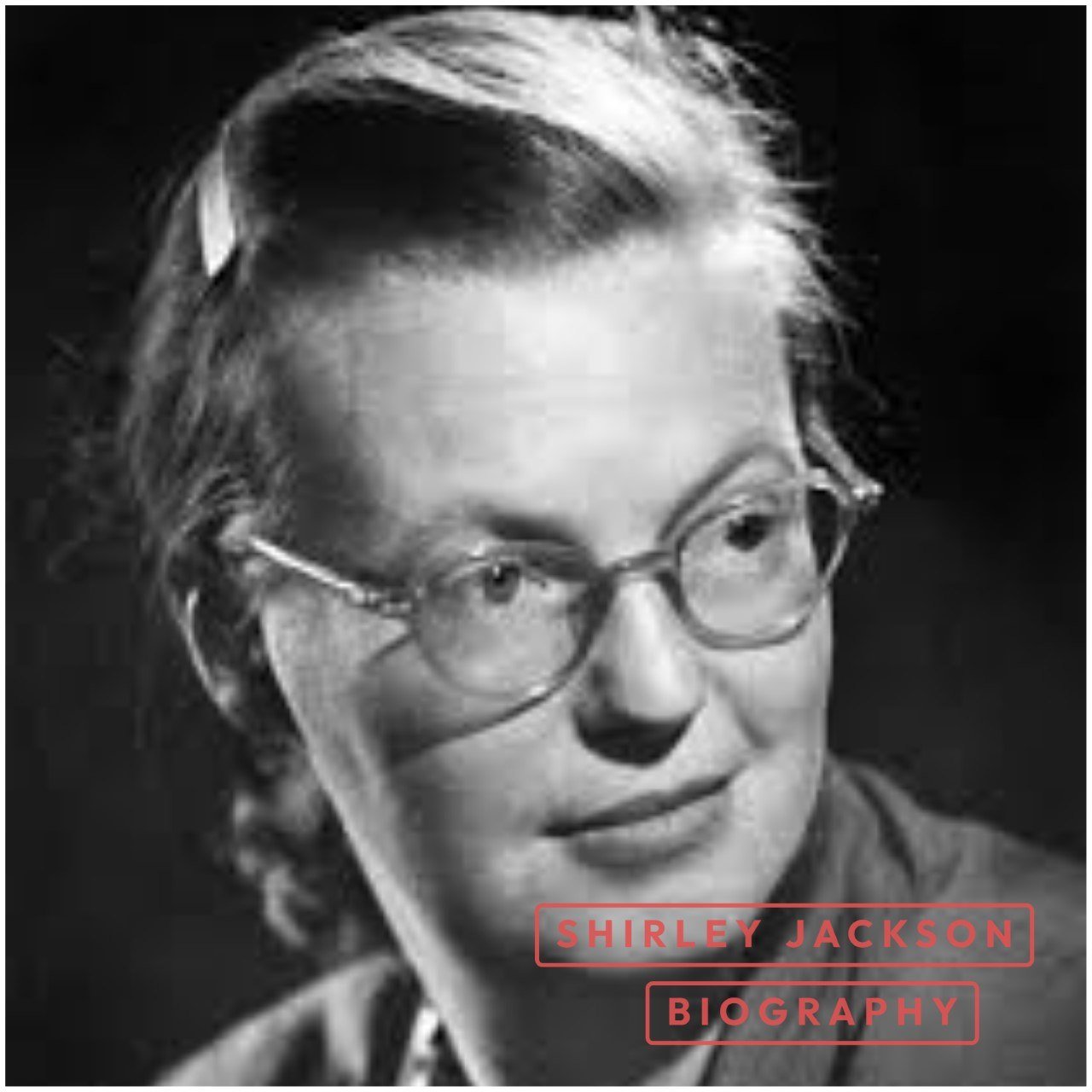
Shirley Jackson was estimated to have stood at approximately 5 feet 3 inches (160 cm) tall, though no official record confirms her exact height. She had a fuller figure, which became more noticeable in her later years, along with dark brown hair and brown eyes. She was known for her expressive facial features, warm smile, and thoughtful presence, often appearing modestly dressed in photographs rather than adopting the glamorous public image common among many writers of her era.
Jackson’s physical appearance reflected her preference for a private and comfortable lifestyle rather than celebrity status. Friends and colleagues often described her as intelligent, witty, observant, and quietly charismatic. While she rarely sought the spotlight, her confidence, sharp sense of humor, and remarkable storytelling ability left a lasting impression on everyone who knew her. Today, she is remembered not only for her literary achievements but also for the authenticity and originality that defined both her personality and her work.
Social Media Presence
Shirley Jackson lived from 1916 to 1965, decades before the emergence of social media platforms such as Facebook, X (formerly Twitter), Instagram, TikTok, and YouTube. As a result, she did not have any official social media accounts or handles. Readers should be cautious of profiles using her name on modern platforms, as these are fan pages, literary communities, or accounts managed by readers and are not official accounts belonging to Shirley Jackson.
Although Jackson has no official social media presence, her literary legacy remains highly active online. Publishers, universities, libraries, book clubs, and literary organizations regularly share discussions, quotations, and analyses of her work across social media. In particular, the Shirley Jackson Awards maintain an official online presence, including X (formerly Twitter): @shirljackawards, where updates about award nominees, winners, and events celebrating psychological horror, dark fantasy, and suspense fiction are shared.
Today, Shirley Jackson’s influence continues to thrive in the digital age through online reading communities, podcasts, book reviewers, and academic discussions dedicated to her works. Her classic stories, including The Lottery, The Haunting of Hill House, and We Have Always Lived in the Castle, are frequently recommended and discussed across social media, ensuring that her writing reaches new generations of readers even though she never personally used these platforms.
Net Worth
Shirley Jackson’s exact net worth was never publicly documented during her lifetime, as detailed financial records for authors of her era were rarely disclosed. Based on her successful career as a bestselling novelist, short story writer, essayist, and magazine contributor, literary historians estimate that her net worth at the time of her death in 1965 would have been in the range of $500,000 to $1 million (USD). This estimate is derived from her publishing success, magazine payments, book royalties, and other literary earnings rather than any official financial statement.
Throughout her career, Jackson earned income from multiple sources. Her works were published in leading magazines such as The New Yorker, Good Housekeeping, Mademoiselle, and The Saturday Evening Post, while her novels and short story collections generated royalties through book sales. She also received income from newspaper and magazine articles, memoirs, speaking engagements, and licensing agreements for adaptations of her stories. Following her death, her estate continued to benefit from ongoing book sales, reprints, translations, audiobook editions, and film, television, and stage adaptations, making her work a lasting source of literary revenue.
Although Shirley Jackson was never among the wealthiest authors of her generation, the enduring popularity of her writing has significantly increased the long-term value of her literary estate. Classics such as The Lottery, The Haunting of Hill House, and We Have Always Lived in the Castle remain continuously in print and are widely taught in schools and universities around the world. As a result, her estate continues to generate royalties and licensing income decades after her passing. While any specific net worth figure remains an informed estimate rather than an officially verified amount, Shirley Jackson’s lasting commercial and cultural success firmly establishes her as one of the most valuable and influential figures in American literary history.
Legacy
Shirley Jackson’s legacy is defined by her extraordinary contribution to American literature and her lasting influence on the genres of psychological horror, Gothic fiction, mystery, and literary suspense. Through timeless works such as The Lottery, The Haunting of Hill House, and We Have Always Lived in the Castle, she transformed the horror genre by demonstrating that true terror often lies within ordinary people, familiar places, and everyday social traditions rather than supernatural monsters alone. Her ability to explore fear, conformity, isolation, family conflict, and the darker aspects of human nature continues to resonate with readers across generations. Today, she is widely recognized as one of the greatest American writers of the twentieth century and a pioneer of modern psychological horror.
Jackson’s influence extends far beyond her own publications. Many of the world’s most celebrated authors, including Stephen King, Neil Gaiman, Joyce Carol Oates, Carmen Maria Machado, and Paul Tremblay, have acknowledged her impact on their writing. Her novels and short stories have inspired numerous film, television, theatre, radio, and audiobook adaptations, with The Haunting of Hill House remaining one of the most frequently adapted horror novels in history. Her works are also taught extensively in schools and universities around the world, where they are studied for their literary craftsmanship, symbolism, psychological insight, and social commentary. This continued academic and cultural relevance has ensured that her stories remain as powerful today as when they were first published.
Perhaps the greatest testament to Shirley Jackson’s enduring legacy is the establishment of the Shirley Jackson Awards, annual literary honors presented to outstanding works of horror, dark fantasy, psychological suspense, and speculative fiction. Named in her memory, these prestigious awards celebrate writers who embody the originality, imagination, and emotional depth that characterized Jackson’s work. More than six decades after her death in 1965, her books remain continuously in print, attract new readers every year, and continue to inspire scholars, filmmakers, and authors around the world. Shirley Jackson’s remarkable storytelling has secured her place as one of the most influential and enduring voices in modern literature, ensuring that her legacy will continue to shape the future of horror and literary fiction for generations to come.
Conclusion
Shirley Jackson remains one of the most influential and enduring figures in American literature, celebrated for her groundbreaking contributions to psychological horror, Gothic fiction, and literary suspense. From the shocking impact of The Lottery to the timeless brilliance of The Haunting of Hill House and We Have Always Lived in the Castle, her works continue to captivate readers with their exploration of fear, human psychology, and the hidden darkness beneath everyday life. Despite her untimely death in 1965, Jackson’s influence has only grown stronger through continued book sales, academic study, film and television adaptations, and the prestigious Shirley Jackson Awards established in her honor. Her extraordinary imagination, literary craftsmanship, and lasting cultural impact ensure that she will forever be remembered as one of the greatest writers of the twentieth century, with a legacy that continues to inspire readers, scholars, and authors around the world.
Frequently Asked Questions (FAQs) About Shirley Jackson
1. Who was Shirley Jackson?
Shirley Jackson was an American novelist, short story writer, and essayist best known for The Lottery, The Haunting of Hill House, and We Have Always Lived in the Castle. She is widely regarded as one of the pioneers of psychological horror and Gothic fiction.
2. When and where was Shirley Jackson born?
Shirley Jackson was born on December 14, 1916, in San Francisco, California, United States.
3. How old was Shirley Jackson when she died?
Shirley Jackson died on August 8, 1965, at the age of 48.
4. What was the cause of Shirley Jackson’s death?
Shirley Jackson died of heart failure while asleep at her home in North Bennington, Vermont, on August 8, 1965.
5. Who was Shirley Jackson’s husband?
Shirley Jackson was married to Stanley Edgar Hyman, a literary critic, professor, and writer. They married in 1940 after meeting at Syracuse University.
6. Did Shirley Jackson have children?
Yes. Shirley Jackson and Stanley Edgar Hyman had four children: Laurence Jackson Hyman, Sarah Hyman DeWitt, Joanne Hyman, and Barry Hyman.
7. What is Shirley Jackson’s most famous work?
Her most famous works include the short story The Lottery, the novel The Haunting of Hill House, and We Have Always Lived in the Castle.
8. What was Shirley Jackson’s nationality?
Shirley Jackson was American.
9. What religion was Shirley Jackson?
There is no verified public record confirming Shirley Jackson’s religious affiliation or denomination.
10. What was Shirley Jackson’s estimated net worth?
Although her exact wealth was never officially disclosed, her net worth is estimated to have been between $500,000 and $1 million (USD) based on her successful literary career and publishing royalties.
11. Did Shirley Jackson have social media?
No. Shirley Jackson passed away in 1965, long before social media platforms existed. She did not have any official social media accounts.
12. Why is Shirley Jackson still famous today?
Shirley Jackson remains famous because of her lasting influence on horror and psychological fiction. Her books continue to be read worldwide, adapted into films and television series, studied in universities, and celebrated through the annual Shirley Jackson Awards.