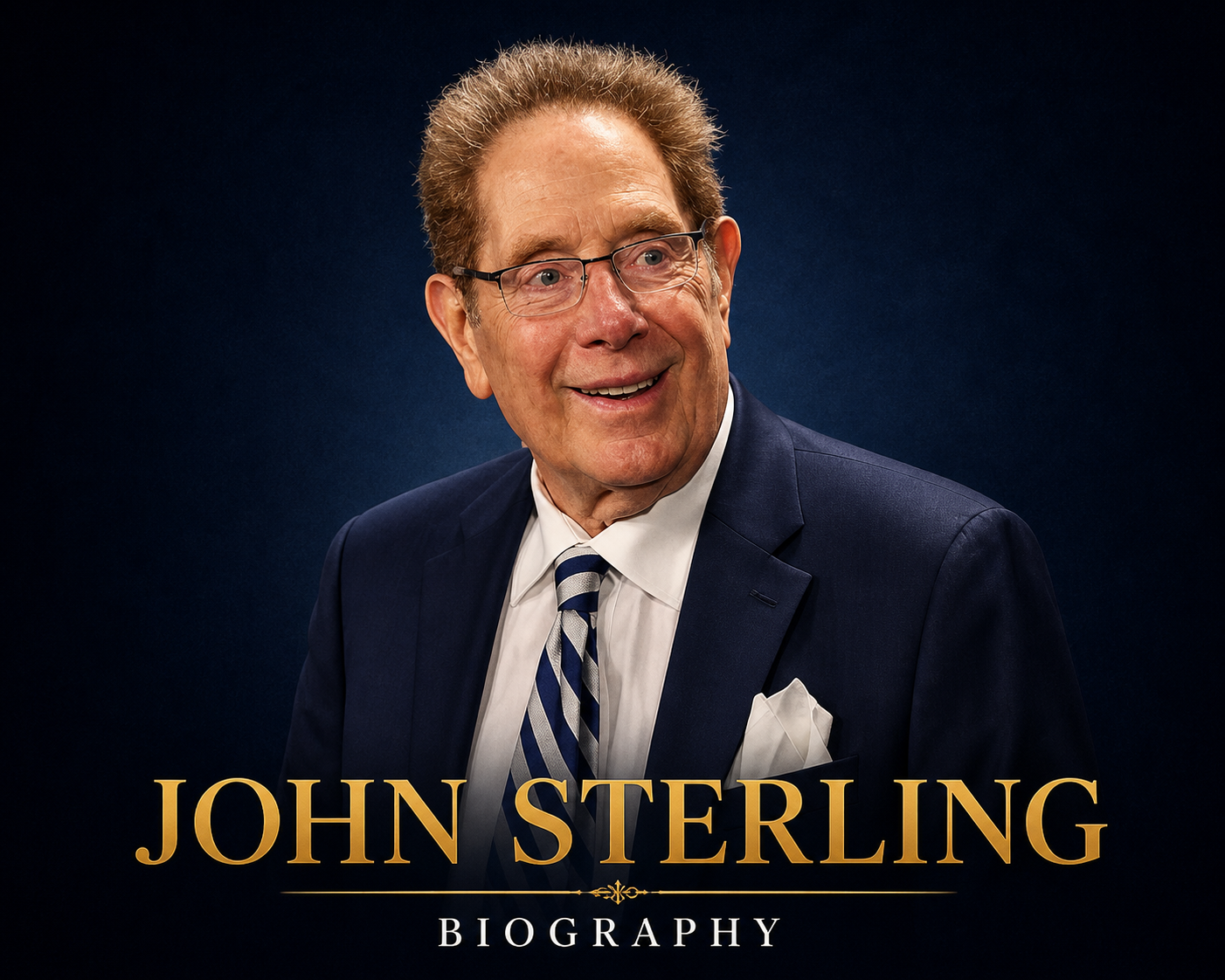
John Sterling Biography
John Sterling was an American sportscaster best known as the long-time radio voice of the New York Yankees, a role that made him one of the most recognizable figures in baseball broadcasting. Over a career that spanned more than six decades, he became famous for his energetic commentary, creative home run calls, and his iconic phrase, “The Yankees win,” which became a signature part of the team’s identity for fans around the world.
He built a reputation as a passionate and dedicated broadcaster, calling thousands of games and becoming deeply connected to generations of listeners who followed the Yankees through his voice. His style combined excitement, drama, and personality, making each game feel memorable and engaging for audiences both locally and nationally.
In May 2026, he returned to global attention following the confirmation of his death at the age of 87, marking the end of an era in sports broadcasting. His passing prompted widespread tributes from players, colleagues, and fans, highlighting his lasting influence and the significant role he played in shaping the experience of baseball for millions of people.
John Sterling Early Life and Background
John Sterling was born on July 4, 1938, in New York City, United States, where he grew up surrounded by a vibrant sports culture that would later shape his career. Being raised in a city known for its deep connection to baseball and professional sports exposed him early to the excitement of live games, commentary, and the atmosphere of competitive athletics, all of which played a significant role in developing his passion for broadcasting.
From a young age, he showed a strong interest in communication, storytelling, and sports, often drawn to the voices of radio announcers who brought games to life for listeners. This fascination with sports broadcasting inspired him to pursue a path where he could combine his love for athletics with his natural ability to speak and entertain.
His early experiences in New York, combined with his enthusiasm for media and performance, laid the foundation for a career that would eventually make him one of the most iconic voices in baseball history. These formative years helped shape his distinctive style and set him on a path toward becoming a legendary figure in sports broadcasting.
John Sterling Education
John Sterling pursued his education in New York, where he developed the communication skills and confidence that would later define his broadcasting career. While detailed academic records and specific institutions are not widely emphasized in public sources, his early educational experience played a role in shaping his ability to speak clearly, engage audiences, and present information in an entertaining and dynamic way.
During his formative years, he showed a strong interest in media, performance, and storytelling, which aligned closely with the demands of a future career in radio and sports commentary. Rather than relying heavily on formal academic credentials, he built his expertise through practical experience, training, and continuous involvement in broadcasting environments.
His path reflects a career shaped more by hands-on experience and natural talent than by traditional academic milestones, as he quickly transitioned into professional broadcasting where he refined his skills over time. This combination of early education and real-world experience laid the foundation for his long and successful career as one of the most recognizable voices in sports media.
John Sterling Career
John Sterling built a remarkable broadcasting career that spanned more than six decades, during which he became one of the most recognizable voices in American sports media. He began his professional journey in the 1970s, working across multiple sports including basketball, hockey, and baseball, where he gained valuable experience and developed his distinctive style. His early work included calling games for teams such as the Atlanta Hawks, Atlanta Braves, New York Islanders, and New Jersey Nets, establishing him as a versatile and energetic commentator.
His career reached its defining moment in 1989 when he became the radio play-by-play announcer for the New York Yankees, a role that would shape his legacy and connect him deeply with baseball fans around the world. Over the next 36 seasons, he became synonymous with the Yankees, calling thousands of games and rarely missing a broadcast. His incredible streak of more than 5,000 consecutive games demonstrated his dedication, endurance, and passion for the sport.
During his time with the Yankees, he covered some of the most successful periods in the team’s history, including multiple World Series championships. His energetic delivery, dramatic tone, and ability to create memorable moments made him a fan favorite. One of his most recognizable trademarks was his personalized home run calls for players, which added excitement and individuality to each game and became a signature feature of his broadcasts.
His unique broadcasting style combined enthusiasm, humor, and theatrical flair, making him stand out in the world of sports commentary. He had a remarkable ability to keep listeners engaged, even during routine plays, turning every moment into something memorable. His famous closing line, “The Yankees win,” became one of the most iconic phrases in baseball broadcasting, symbolizing victory and excitement for fans.
He officially retired from full-time broadcasting in 2024 after more than three decades with the Yankees, marking the end of a historic era. Although he stepped away from regular duties, his influence remained strong, and he occasionally returned for special appearances. Overall, his career is remembered for its longevity, passion, and lasting impact on sports broadcasting, particularly in shaping how baseball games are experienced on the radio.
John Sterling Death and Tributes
John Sterling passed away on May 4, 2026, at the age of 87, bringing an end to one of the most iconic careers in sports broadcasting. His death was confirmed by sources close to the New York Yankees organization, and the news quickly spread across the sports world, prompting an outpouring of emotion from fans, players, and fellow broadcasters who had followed and admired his work for decades. His passing marked not just the loss of a broadcaster, but the end of a voice that had become deeply intertwined with the identity of Yankees baseball.
Following the announcement, tributes poured in from across Major League Baseball and the broader sports community, with many describing him as the “voice of the Yankees” and a legend in the field of broadcasting. Former players, commentators, and colleagues shared heartfelt messages, recalling his energy, dedication, and ability to bring games to life with his unique style. His influence extended beyond the booth, as many credited him with inspiring future generations of sports broadcasters.
Fans also expressed their grief and appreciation, sharing memories of listening to his calls during unforgettable moments in Yankees history. His signature phrases, especially his iconic home run calls and his famous closing line, became part of the shared experience of baseball for millions of listeners. These tributes highlighted the emotional connection he built with audiences over the years, turning him into more than just a commentator.
Broadcast networks and sports organizations honored his contributions by revisiting classic moments from his career, showcasing the impact he had on the game and on sports media as a whole. His voice, style, and personality were celebrated as defining elements of an era that many fans hold dear.
Overall, the tributes emphasized his lasting legacy, recognizing him as a passionate storyteller, a dedicated professional, and a beloved figure whose voice will continue to echo in the memories of baseball fans for generations.
John Sterling Personal Life
John Sterling maintained a relatively private personal life despite his long and highly visible career in sports broadcasting. While his professional voice was widely recognized by millions of fans, he chose to keep much of his family life and personal affairs out of the public spotlight, focusing instead on his work and contributions to the world of sports media. This balance allowed him to maintain a sense of normalcy away from the attention that came with his role as a public figure.
He was a father of four children, including a set of triplets, and was known to value his role as a parent alongside his demanding career. Despite the intense schedule of calling games, particularly during his long tenure with the New York Yankees, he maintained close relationships with his family and made efforts to stay connected with them whenever possible. His ability to balance family life with a high-pressure profession reflected his discipline and commitment both at home and at work.
He spent much of his personal life living in New Jersey, where he maintained a relatively quiet and low-profile lifestyle outside of broadcasting. Away from the microphone, he was described by colleagues and those who knew him as personable, dedicated, and deeply passionate about his craft. His personality combined professionalism with a sense of humor, qualities that were also evident in his broadcasting style.
Despite his fame, he avoided excessive media attention regarding his private life, preferring to let his work speak for itself. This approach helped him maintain a level of privacy that is uncommon among public figures, especially those with such long and influential careers.
Overall, his personal life reflected simplicity, dedication, and a strong connection to both family and profession, shaping the man behind the iconic voice that defined an era of baseball broadcasting.
John Sterling Age, Religion, Tribe, Height & Physical Appearance
John Sterling was born on July 4, 1938, and was 87 years old at the time of his death on May 4, 2026, marking a long life that paralleled an equally long and distinguished career in sports broadcasting. He was American by nationality and of White American ethnicity, reflecting his background and upbringing in New York City. Tribal classification is not applicable in the American context, as his identity is more closely associated with cultural and national heritage rather than tribal affiliation.
His religious beliefs were not widely documented in public sources, as he maintained a private personal life and did not emphasize religion as part of his public identity. While there may have been personal beliefs that guided his life, they were not a central focus of his public persona or career, which was primarily defined by his work in broadcasting.
In terms of physical appearance, he was known for his classic and professional look, often seen in formal attire that reflected his role as a respected broadcaster. He had an average height and build, with a composed and confident presence that suited his position behind the microphone. His voice, more than his physical appearance, became his most defining characteristic, recognized instantly by fans across generations.
Over the years, his appearance evolved naturally with age, but he maintained a polished and dignified presentation throughout his career. His expressions, posture, and mannerisms conveyed confidence and experience, reinforcing his authority as a commentator and storyteller in sports media.
Overall, his age, background, and presentation reflected a lifetime of dedication to his craft, with his voice and personality becoming far more iconic than any physical attribute, solidifying his identity as one of the most memorable figures in baseball broadcasting.
John Sterling Net Worth
John Sterling had an estimated net worth of around $2 million at the time of his death in 2026, reflecting a long and consistent career in sports broadcasting rather than the massive earnings often associated with on-field athletes or top television personalities.
Throughout his decades-long career, he earned a steady income primarily from his role as the radio voice of the New York Yankees, where he reportedly received an annual salary of about $500,000 during his tenure. His financial success was built on consistency, longevity, and dedication to his craft rather than endorsements or business ventures, which are more common among high-profile sports figures.
Unlike many modern broadcasters who diversify into multiple media platforms, his earnings were largely tied to his broadcasting role, which he maintained for over three decades. His commitment to calling games, including an extraordinary streak of more than 5,000 consecutive broadcasts, contributed to a stable and respectable income over time.
Despite not having an extremely high net worth compared to some celebrities, his financial standing reflects a successful and sustained career in radio broadcasting. His wealth is best understood as the result of dedication, consistency, and a lasting presence in one of the most prestigious roles in sports media.
Overall, his net worth represents the career of a professional who prioritized passion and longevity over commercial expansion, leaving behind not just financial success but a legacy that far exceeds monetary value.
John Sterling Legacy
John Sterling is remembered as one of the most iconic voices in baseball history, particularly for his long and unforgettable association with the New York Yankees. Over more than three decades, his voice became inseparable from the experience of Yankees baseball, shaping how millions of fans followed the game on the radio. His energetic delivery, dramatic tone, and unique storytelling style turned ordinary moments into memorable experiences, leaving a lasting imprint on sports broadcasting.
One of the defining aspects of his legacy was his creativity, especially his personalized home run calls for players, which added excitement and individuality to each broadcast. These signature calls became a hallmark of his style and contributed to his widespread popularity among fans. His famous closing phrase, “The Yankees win,” became one of the most recognizable lines in sports, symbolizing victory and celebration for generations of listeners.
Beyond his on-air presence, he played an important role in inspiring future broadcasters, demonstrating how passion, consistency, and personality could transform sports commentary into an art form. His influence extended beyond records and achievements, as he became a cultural figure within baseball, representing an era of radio broadcasting that connected deeply with audiences and ensured his legacy would endure for generations.
John Sterling Conclusion
John Sterling leaves behind a lasting legacy as one of the most recognizable and influential voices in sports broadcasting, particularly through his decades-long association with the New York Yankees. His career was defined by passion, consistency, and a unique style that brought baseball to life for millions of listeners, making every game feel memorable and engaging. From his signature home run calls to his iconic closing phrase, his contributions shaped how fans experienced the sport, ensuring that his voice and impact will continue to resonate in baseball history for generations to come.
FAQ About John Sterling
1. Who was John Sterling?
John Sterling was an American sportscaster best known as the long-time radio voice of the New York Yankees, where he became one of the most recognizable voices in baseball history.
2. How old was John Sterling when he died?
He was born on July 4, 1938, and died on May 4, 2026, at the age of 87 after a long and successful broadcasting career.
3. What was John Sterling famous for?
He was famous for his energetic broadcasting style, personalized home run calls, and his iconic phrase “The Yankees win,” which became widely recognized among baseball fans.
4. How long did John Sterling work with the New York Yankees?
He served as the radio voice of the New York Yankees for over 30 years, beginning in 1989 and continuing until his retirement in 2024.
5. Did John Sterling retire before his death?
Yes, he officially retired from full-time broadcasting in 2024 after decades of service, although he made occasional appearances afterward.
6. What was John Sterling’s net worth?
His estimated net worth was around $2 million at the time of his death, reflecting a long and consistent career in sports broadcasting.
7. Did John Sterling have children?
Yes, he was a father of four children, including a set of triplets, and maintained a relatively private family life.
8. Where did John Sterling live?
He lived in New Jersey for many years while working closely with the New York Yankees organization.
9. What made John Sterling unique as a broadcaster?
His unique style, dramatic tone, and creative home run calls made him stand out, turning ordinary game moments into memorable experiences for listeners.