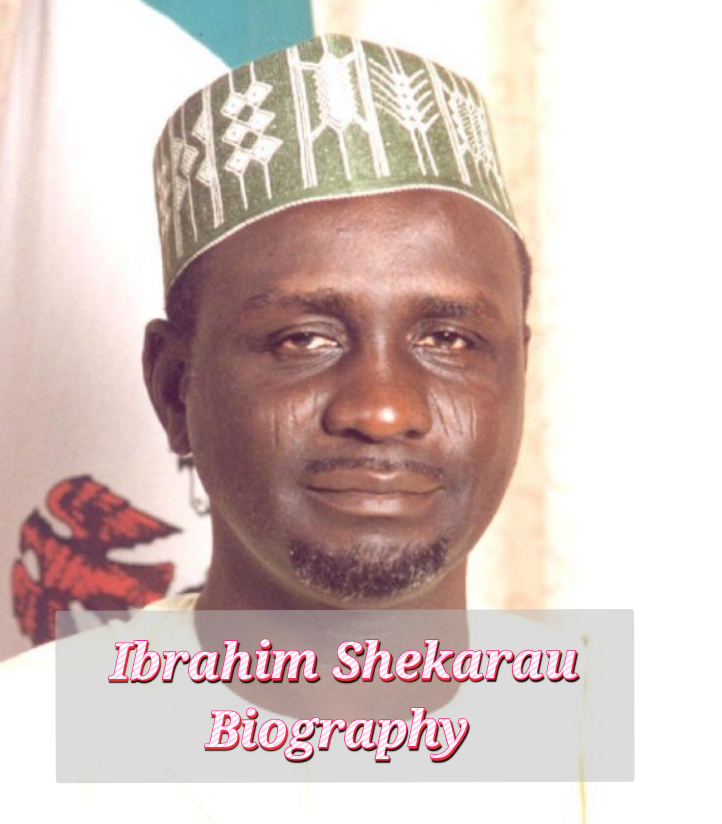
Ibrahim Shekarau Biography
Ibrahim Shekarau stands as one of Nigeria’s respected leaders. He started as a simple mathematics teacher and rose to become governor of Kano State for two full terms. Later he served the country as Minister of Education and then as a senator. Born in 1955, he has spent more than forty years in public service. His story shows how hard work, discipline, and focus on education can lead a person from the classroom to the highest offices in the land.
People respect him for his honest ways and his strong belief in good governance. During his time as governor from 2003 to 2011, he worked hard to improve schools, build roads, and create jobs. He also brought world leaders to Kano and helped make the state a better place for its people. Even after leaving office, he stayed active in politics. As of 2026, he continues to guide his party and speak on national issues. This biography explains his life step by step so readers can understand how one man used his teaching skills to serve millions of Nigerians. It covers his early days, education, long career, family, and the challenges he faced. You will learn clear facts with exact dates to see the real path he followed.
Ibrahim Shekarau Early Life and Background
Ibrahim Shekarau entered the world on 5 November 1955 in the Kurmawa quarters of Kano city. His father, Malam Shekarau, came from Biu in Borno State. He worked as a police officer in the Native Authority Police and reached the rank of chief inspector before he retired. The father died in 1979. His mother, Malama Maryam, came from Gundumawa village in Gezawa Local Government Area of Kano State. She passed away in 1998.
The family lived a simple life. Young Ibrahim grew up in a home that valued discipline and respect for rules. His parents taught him the importance of hard work and honesty. These early lessons stayed with him and shaped the way he led people later in life. Kano at that time was a busy commercial city with strong Islamic and traditional values. Shekarau learned both Western education and Islamic teachings from a young age.
Life in Kurmawa quarters was not rich, but it gave him a strong foundation. He saw how ordinary families struggled and learned to care for the needs of common people. This background helped him understand the problems of education and poverty when he later entered government. No fancy stories surround his childhood. It was a normal start that prepared him for bigger responsibilities ahead. These humble roots explain why he always spoke plainly and worked for the benefit of everyone, not just a few.
Ibrahim Shekarau Education
Shekarau began his formal learning at Gidan Makama Primary School in Kano. He attended from 1961 to 1967 and finished primary education there. Next, he moved to Kano Commercial College for secondary school. He studied from 1967 to 1973 and obtained his West African School Certificate along with a Royal Society of Arts certificate from London in 1972.
After secondary school, he gained admission to Ahmadu Bello University in Zaria. He studied there from September 1973 to July 1977 and earned a Bachelor of Science degree in Mathematics and Education. The university years taught him not only math but also how to teach others and solve problems with clear thinking. He completed his national youth service in Imo State right after graduation. During that time, he taught mathematics at Madonna Boys High School in Etiti. This experience showed him the value of education across different parts of Nigeria.
His education path was straight and focused. He chose subjects that would help him serve in schools and later in government planning roles. The degree in Mathematics and Education became the base for his entire career. Even today, people call him Malam, which means teacher, because of his strong roots in education. He never stopped learning. Later in life, he added a certificate in Guidance and Counselling from Bayero University in Kano. All these steps made him ready for leadership that puts knowledge first.
Ibrahim Shekarau Career
Shekarau started his working life in 1978 as a mathematics teacher at Government Technical College in Wudil, Kano State. He taught with care and soon earned respect for his discipline. In 1980, he became principal of Government Day Junior Secondary School in Wudil. From there, the government moved him to other schools as principal. He served at Government Secondary School in Hadejia, then at Government College in Birnin Kudu in 1986, followed by Government Secondary School in Gwammaja, and finally at Rumfa College in March 1988.
In 1992, he rose to Deputy Director of Education for the Bichi Zonal Education Area. One year later, in 1993, he became Director of Planning, Research, and Statistics in the Ministry of Education. By 1995, he reached the top civil service post as Director General, also known as Permanent Secretary, in the Ministry of Education and Youth Development. The state later moved him to other ministries as Permanent Secretary. He worked in the Ministry of Water Resources, Rural and Community Development, returned briefly to Education in 1997, served in the General Service Directorate of the Cabinet Office, and then in the Civil Service Commission.
In May 2000, he took a new role as Chief Lecturer in Mathematics at the State College of Arts, Science and Remedial Studies. He stayed in that position for seventeen months. On 2 October 2001, he chose to retire voluntarily from the Kano State Civil Service after twenty-three years of service. Shortly after, he worked as secretary to the businessman Aminu Dantata.
This long civil service career built his skills in planning, managing people, and solving education problems. He knew every level of school administration from teacher to permanent secretary. These experiences prepared him perfectly when he decided to join politics in 2002. He became a member of the All Nigeria Peoples Party that year. In April 2003, voters chose him as governor of Kano State. He defeated the sitting governor, Rabiu Musa Kwankwaso. Shekarau served from May 2003 to May 2011 after winning re-election in April 2007.
As governor, he focused on education and development. He built hundreds of new primary and secondary schools. He hired thousands of teachers and gave scholarships to over thirty-three thousand students. Before he took office, Kano was listed as one of the educationally less developed states. His work removed that label. He also started large infrastructure projects and created jobs in health, sanitation, and other areas. He launched the Hisbah Guard to support order under Sharia rules. During his time, he welcomed important visitors such as German Chancellor Gerhard Schroeder and Prince Charles. The Emir of Kano, Alhaji Ado Bayero, gave him the title Sardauna of Kano in recognition of his service. In 2011, he ran for president under the All Nigeria Peoples Party but did not win. His two terms as governor showed what a teacher-turned-leader could achieve with clear plans and honest effort.
Ibrahim Shekarau Post-Governorship Roles
After leaving office in 2011, Shekarau stayed involved in national matters. In 2014, he moved to the Peoples Democratic Party. On 9 July 2014, President Goodluck Jonathan appointed him as Minister of Education. He served until 2015. In that short period, he helped upgrade some federal colleges of education to full universities. This move improved higher learning opportunities for many young Nigerians.
He returned to elected office in 2019. Voters chose him as Senator for Kano Central Senatorial District. He served from 11 June 2019 to 11 June 2023. In the Senate, he used his education background to speak on youth development and northern issues. His time there followed his rival Rabiu Kwankwaso, who had held the seat before.
Party changes continued after the Senate term. He had joined the All Progressives Congress earlier but left it in May 2022 to move to the New Nigeria Peoples Party. Three months later, in August 2022, he returned to the Peoples Democratic Party. As of early 2026, he leads the Peoples Democratic Party in Kano State. Recent reports show the All Progressives Congress has reached out to him for possible cooperation ahead of future elections. In November 2025, on his seventieth birthday, he said he would stay in active politics for the rest of his life. He continues to offer advice on national unity and good leadership. These roles after 2011 prove his commitment to public service did not end with the governorship.
Ibrahim Shekarau Personal Life
Shekarau lives as a family man with strong Islamic values. He is married to four wives: Amina Shekarau, Zainab Shekarau, Halima Shekarau, and Gaji Dantata. The family keeps a low public profile and focuses on private life away from politics. In July 2016, he and his wife Halima welcomed a baby girl. The family celebrated the new child with close relatives and friends.
He remains close to his roots in Kano. Even with his busy schedule, he values time with his children and grandchildren. His wives support his work quietly. Shekarau often speaks about the importance of strong families in building a better society. He does not chase luxury or show off wealth. Friends and those who know him describe him as humble and simple in his daily habits. This personal style matches the discipline he learned as a young teacher. His family life shows balance between public duty and private responsibilities. No public scandals have touched his home. He sets an example of steady, responsible living for younger leaders to follow.
Ibrahim Shekarau Controversies
During his years as governor, Shekarau faced some public debates. One clear issue came in his stand on polio vaccination campaigns. He raised concerns that the vaccines might cause infertility among Muslim women. Health experts and the World Health Organization clearly denied these claims and continued their work. This position created strong discussion in Nigeria and outside the country at the time.
Another matter linked to his government was the launch of the Hisbah Guard. This group helped enforce Sharia law and maintain social order in Kano. Some people supported it as a way to keep peace and morality. Others questioned how it operated. Shekarau defended the guard as part of his duty to follow the wishes of the people who elected him.
These events happened between 2003 and 2011. He never hid his views and always explained them based on the needs of his state. No court cases or proven wrongdoing came from these issues. Shekarau handled them as part of open public service. He moved forward and kept working on education and development. Today, these points are part of his full record, but they do not change the many positive steps he took for Kano and Nigeria.
Conclusion
Ibrahim Shekarau’s life offers a clear lesson in service and steady progress. From his birth in 1955 to his active role in 2026, he has shown that a teacher can become a governor, minister, and senator through focus and honesty. He improved schools, created jobs, welcomed world leaders, and spoke for the people of Kano and Nigeria. His two terms as governor from 2003 to 2011 lifted education standards and built lasting projects. Later roles as Minister of Education in 2014 and Senator from 2019 to 2023 added to his record of national contribution.
Even with party changes and public debates, he stayed true to his principles. As a family man and lifelong politician, he continues to guide others with simple, clear advice. His story encourages young Nigerians to value education, work hard, and serve with integrity. Shekarau proves that real leadership comes from understanding ordinary people’s needs and acting on them with courage. His legacy will keep teaching future generations about the power of dedication in public life.
FAQs
Who is Ibrahim Shekarau?
Ibrahim Shekarau is a Nigerian politician and former teacher. He served as governor of Kano State from 2003 to 2011, Minister of Education from 2014 to 2015, and Senator for Kano Central from 2019 to 2023. He was born on 5 November 1955.
What is Ibrahim Shekarau known for?
He is known for strong education reforms as governor, creation of the Hisbah Guard, and honest leadership. He rose from mathematics teacher to top government positions and always put public service first.
Which political party does Ibrahim Shekarau belong to?
As of 2026, he belongs to the Peoples Democratic Party. He has moved between parties over the years, including the All Nigeria Peoples Party, Peoples Democratic Party, All Progressives Congress, and New Nigeria Peoples Party.
Who is Ibrahim Shekarau’s wife and family?
He is married to Amina Shekarau, Zainab Shekarau, Halima Shekarau, and Gaji Dantata. The family includes children, and in 2016 he and Halima welcomed a new baby girl.
What were Ibrahim Shekarau’s achievements as Kano governor?
He built hundreds of new schools, hired thousands of teachers, gave scholarships to over thirty-three thousand students, started major infrastructure projects, and hosted international leaders. He also removed Kano from the list of educationally less developed states.
Why did Ibrahim Shekarau oppose polio vaccination?
As governor, he expressed worries that the vaccines could affect Muslim women’s fertility. The World Health Organization denied the claims. This happened during his time in office between 2003 and 2011.
How does Ibrahim Shekarau compare to Rabiu Kwankwaso?
Both men served as Kano governors and have been political rivals. Shekarau defeated Kwankwaso in the 2003 election. Later, Shekarau succeeded him as senator in 2019. They represent different groups in Kano politics.
What is Ibrahim Shekarau doing now in 2026?
He leads the Peoples Democratic Party in Kano State and stays active in national politics. In 2025, he stated he would remain in politics for life. Recent news shows interest from other parties in working with him ahead of future elections.