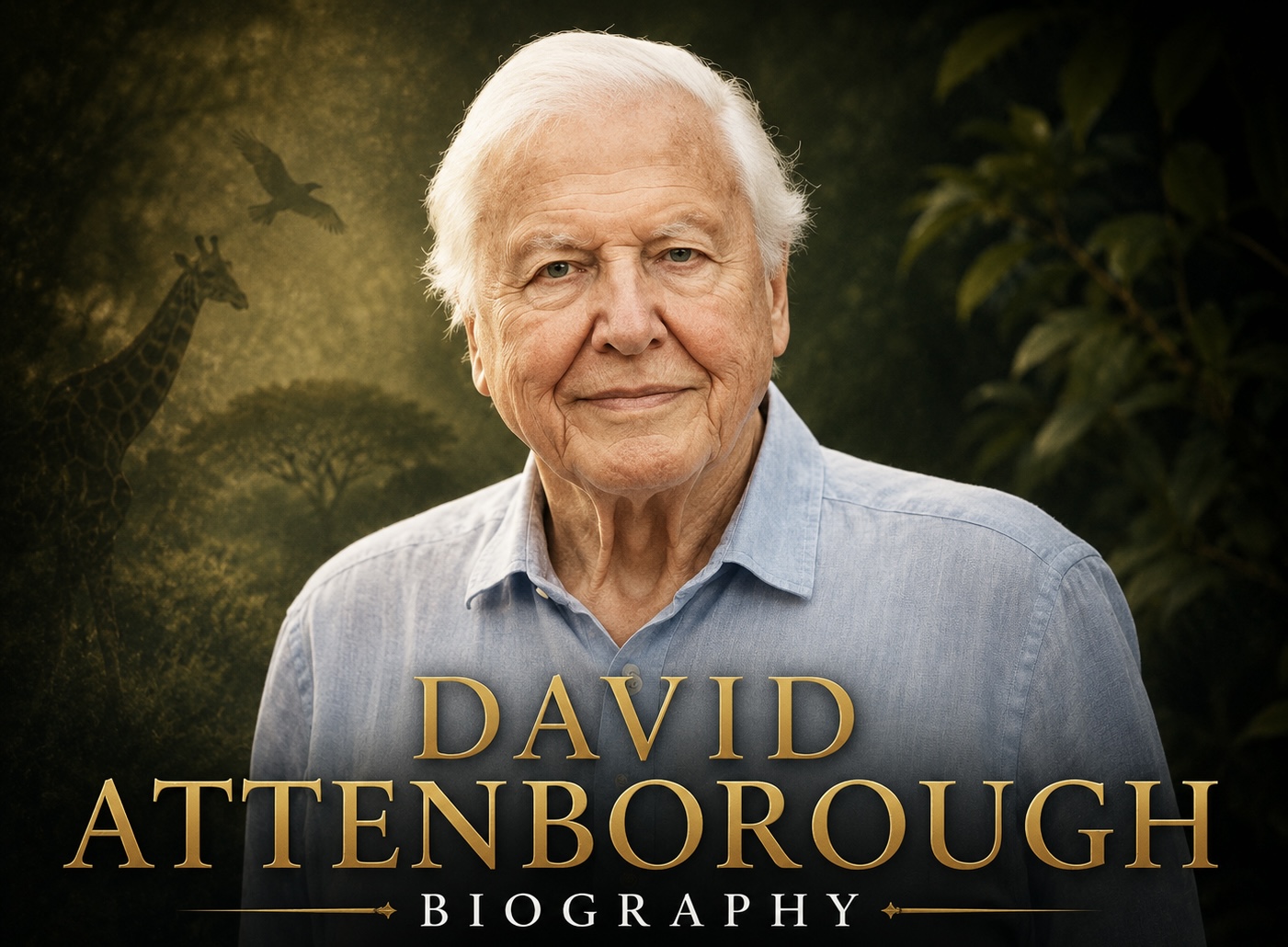
David Attenborough Biography
David Attenborough is one of the most respected wildlife broadcasters and environmental storytellers in modern history. Born on May 8, 1926, in London, England, he built a remarkable career spanning more than seven decades through groundbreaking nature documentaries that transformed how people understand the natural world. His calm narration style, deep scientific knowledge, and passion for conservation made him a global icon admired across generations.
He became internationally famous through legendary television series such as Planet Earth, The Blue Planet, and Life on Earth. Through these productions, David Attenborough introduced millions of viewers to rare animals, remote ecosystems, and the urgent realities of climate change and environmental destruction. His documentaries are widely praised for their breathtaking cinematography, educational value, and emotional storytelling.
In 2026, David Attenborough reached the historic milestone of turning 100 years old, making headlines worldwide. His centenary birthday was celebrated with special tributes, BBC broadcasts, conservation campaigns, and messages from world leaders and environmental organizations. Even at 100, he remains one of the strongest voices advocating for wildlife protection, sustainability, and global environmental awareness, continuing to inspire millions around the world through his lifelong dedication to nature and education.
Early Life and Background of David Attenborough
David Attenborough was born on May 8, 1926, in Isleworth, Middlesex, England. He grew up in Leicester, where his father, Frederick Attenborough, served as the principal of University College Leicester. David was raised in an academically rich environment alongside his brothers, including Richard Attenborough, who later became a famous actor and director.
From a very young age, David developed a deep fascination with nature and wildlife. As a child, he spent much of his time collecting fossils, stones, bird eggs, and other natural specimens. He often explored gardens and nearby countryside areas, showing an unusual curiosity about animals and the environment long before becoming famous. His childhood passion for discovery would later shape his entire career in broadcasting and conservation.
During World War II, the Attenborough family also helped care for two Jewish refugee girls who escaped Nazi-occupied Europe. This experience exposed David to global events and human struggles at an early age. Despite the challenges of wartime Britain, he remained deeply focused on science, nature, and learning.
David attended Wyggeston Grammar School for Boys in Leicester before earning a scholarship to Clare College, Cambridge. His early years were marked by discipline, curiosity, and a lifelong desire to understand the natural world. These experiences laid the foundation for the legendary wildlife broadcaster and environmental advocate he would later become.
David Attenborough Education and Academic Background
David Attenborough received his early education at Wyggeston Grammar School for Boys in Leicester, England. During his school years, he showed strong interest in science, geography, fossils, and the study of nature. His curiosity about the natural world continued to grow as he spent time reading scientific books and exploring wildlife around him.
After completing his secondary education, he earned a scholarship to Clare College, Cambridge, one of the colleges under the prestigious University of Cambridge. At Cambridge, he studied Natural Sciences and specialized in subjects related to geology and zoology. He graduated in 1947 with a degree that later became the academic foundation for his successful broadcasting and documentary career.
Following his university education, David Attenborough completed national service in the Royal Navy, where he served for two years in North Wales and the Firth of Forth. Although his military service interrupted his early career plans, it further strengthened his discipline, communication skills, and worldview.
His educational background played a major role in shaping his ability to explain complex scientific and environmental topics in simple language. The knowledge he gained from Cambridge later helped him become one of the most respected science communicators and wildlife presenters in television history.
David Attenborough Career Journey and Major Achievements
David Attenborough began his professional journey shortly after completing his studies and national service in the Royal Navy. Before entering television, he briefly worked in publishing and educational media. However, his life changed completely in 1952 when he joined the BBC as a trainee producer. At the time, television broadcasting was still developing, and Attenborough quickly stood out because of his intelligence, creativity, and passion for storytelling.
His major breakthrough came in 1954 with the wildlife television series Zoo Quest. The program followed Attenborough and zoologists as they traveled to remote parts of the world searching for rare animals. Unlike traditional studio programs, Zoo Quest brought real wildlife footage directly to audiences and became revolutionary for television at the time. The success of the show turned David Attenborough into one of Britain’s rising television personalities.
During the 1960s and 1970s, he moved into senior leadership roles at the BBC. He served as Controller of BBC Two and later Director of Programmes for BBC Television. In these positions, he helped modernize British television and played a major role in expanding color broadcasting in the United Kingdom. He also supported innovative educational and cultural programming that changed the future of television production.
Despite his executive success, Attenborough eventually returned to filmmaking and documentary presentation because of his passion for nature and exploration. This decision led to the creation of some of the greatest wildlife documentaries ever produced. In 1979, he released Life on Earth, a groundbreaking series that explored the history of evolution and life on Earth. The documentary became an international success and established him as the world’s leading natural history presenter.
Over the following decades, he created numerous iconic documentary series including The Blue Planet, Planet Earth, Frozen Planet, Africa, Dynasties, and Seven Worlds, One Planet. These productions became famous for their breathtaking cinematography, emotional storytelling, and scientific depth. His narration style, calm voice, and ability to explain nature in simple terms made his documentaries loved worldwide.
As technology advanced, Attenborough continued adapting his work to new generations. His documentaries began focusing more strongly on climate change, habitat destruction, biodiversity loss, and environmental conservation. He became one of the world’s most influential environmental advocates, using his platform to warn humanity about the dangers facing the planet.
In recent years, he released powerful projects such as David Attenborough: A Life on Our Planet, where he reflected on the environmental changes he witnessed throughout his lifetime. The documentary gained global attention for its urgent message about sustainability and the future of Earth.
Even after turning 100 years old in 2026, David Attenborough remained active in documentary narration and environmental campaigns. His career, spanning more than seven decades, is widely regarded as one of the most influential broadcasting careers in history. Through his work, he transformed wildlife filmmaking, educated billions of viewers, and inspired generations to care more deeply about nature and conservation.
Why David Attenborough Is Trending Today in 2026
David Attenborough is trending globally today because he officially turned 100 years old on May 8, 2026. The milestone birthday has sparked massive celebrations, tributes, and media coverage across the world. Major broadcasters, environmental organizations, celebrities, and political leaders are honoring his extraordinary contribution to wildlife filmmaking, environmental education, and conservation.
The BBC organized special television programming and tribute broadcasts to celebrate his centenary. A major gala event was also held at the Royal Albert Hall in London featuring music, documentary clips, and messages from public figures including members of the British royal family.
Another reason he is trending is the overwhelming number of public tributes appearing online. Social media platforms, news organizations, and environmental groups are sharing his most iconic documentary moments and praising his lifelong dedication to protecting nature. Scientists also recently named a newly discovered parasitic wasp genus called Attenboroughnculus in honor of his 100th birthday, highlighting the enormous influence he has had on science and environmental awareness worldwide.
In addition, his recent documentary projects and environmental campaigns continue to attract global attention. Even at 100 years old, David Attenborough remains active in wildlife narration and climate advocacy, making him one of the most respected and influential broadcasters in history.
David Attenborough Personal Life and Family
David Attenborough married Jane Elizabeth Ebsworth Oriel in 1950. Their marriage lasted for nearly five decades until Jane sadly passed away in 1997 after suffering a brain hemorrhage. David has often spoken about the deep impact her death had on his life, describing her as a major source of strength and support throughout his career.
The couple had two children together named Robert and Susan Attenborough. Robert later became a senior academic administrator in Australia, while Susan maintained a more private life away from public attention. Despite his global fame, David Attenborough has always tried to keep his family life quiet and protected from media publicity.
Outside broadcasting, Attenborough is known for his deep love for science, travel, fossils, natural history, and environmental conservation. Much of his life has been dedicated to exploring remote regions of the world and documenting wildlife. Even with decades of international fame, he has maintained a humble and disciplined lifestyle focused more on education and conservation than celebrity culture.
Over the years, he has received countless honors, awards, and recognitions for his contributions to broadcasting and conservation. Despite these achievements, he remains widely respected for his modest personality, calm demeanor, and lifelong commitment to protecting the planet. His personal life reflects dedication, discipline, curiosity, and a genuine passion for nature that continues to inspire millions around the world.
David Attenborough Age, Religion, Tribe, Height and Physical Appearance
David Attenborough was born on May 8, 1926, making him 100 years old as of 2026. He is British by nationality and comes from an English family background. Unlike the concept of “tribe” commonly discussed in some cultures, David Attenborough is ethnically English.
David Attenborough has publicly described himself as agnostic. Throughout his life, he has spoken more from a scientific and evidence-based perspective when discussing topics related to nature, evolution, humanity, and the environment. His views on science and conservation have strongly shaped his public image and educational work.
In terms of physical appearance, David Attenborough is estimated to stand at approximately 5 feet 10 inches tall. In his younger years, he was known for his slim build, sharp facial features, and energetic personality during wildlife expeditions around the world. As he grew older, his white hair, gentle expression, and calm voice became some of his most recognizable features globally.
Even at 100 years old, he remains admired for his elegant appearance, composed demeanor, and distinctive narration style. His soft-spoken personality, professional dressing style, and intellectual presence have contributed greatly to the respect and admiration he receives worldwide.
David Attenborough Net Worth and Sources of Income
David Attenborough has an estimated net worth believed to be between $15 million and $35 million as of 2026. His wealth comes mainly from his legendary broadcasting career, documentary narration, television production work, book publishing, and long-term partnerships with major media organizations including the BBC. Over the course of more than seventy years in television, he became one of the most recognized and respected voices in global broadcasting.
A significant portion of his earnings has come from internationally successful documentary series such as Planet Earth, The Blue Planet, and Frozen Planet. These productions generated enormous global viewership and were distributed across multiple countries and streaming platforms. In addition to television, Attenborough also earned income from bestselling books, public speaking engagements, interviews, and environmental projects connected to conservation awareness.
Despite his financial success and worldwide fame, David Attenborough is not known for a luxurious celebrity lifestyle. Instead, he is widely respected for his modest personality and lifelong dedication to science, education, and environmental protection. Much of his public image has focused on conservation advocacy rather than wealth, making his legacy far more associated with global impact and education than personal fortune.
David Attenborough Legacy and Global Impact
David Attenborough is widely regarded as one of the greatest wildlife broadcasters and environmental educators in history. Through his documentaries, he transformed how people around the world understand animals, ecosystems, climate change, and conservation. His storytelling style, calm narration, and ability to explain complex scientific ideas in simple language made nature documentaries more popular and accessible to global audiences than ever before.
Over the course of more than seven decades, Attenborough helped revolutionize wildlife filmmaking through groundbreaking series such as Planet Earth, The Blue Planet, and Life on Earth. His work inspired generations of filmmakers, scientists, conservationists, and environmental activists. Many species, research centers, and scientific discoveries have been named in his honor because of his extraordinary contribution to natural history and environmental awareness.
Beyond television, David Attenborough’s legacy is deeply connected to global conservation efforts and climate awareness. He used his influence to warn humanity about biodiversity loss, pollution, deforestation, and global warming, becoming one of the strongest voices for protecting the planet. Even after turning 100 years old in 2026, he remained a respected symbol of wisdom, education, humility, and environmental responsibility whose impact continues to shape conversations about the future of Earth worldwide.
Conclusion
David Attenborough remains one of the most influential figures in the history of television, science communication, and environmental conservation. From his early fascination with nature as a child to becoming the voice behind some of the world’s greatest wildlife documentaries, his life has been defined by curiosity, education, and a deep commitment to protecting the planet. Through decades of groundbreaking work, he inspired millions of people to appreciate and preserve the natural world, making his legacy one that will continue to influence future generations for many years to come.
Frequently Asked Questions About David Attenborough
1. Who is David Attenborough?
David Attenborough is a British broadcaster, natural historian, writer, and environmental advocate famous for creating and narrating some of the world’s most successful wildlife documentaries over several decades.
2. How old is David Attenborough in 2026?
David Attenborough is 100 years old as of 2026. He was born on May 8, 1926, in Isleworth, Middlesex, England, and recently celebrated his centenary birthday worldwide.
3. What is David Attenborough famous for?
He is famous for producing and narrating groundbreaking nature documentaries including Planet Earth, The Blue Planet, and Life on Earth, which changed wildlife filmmaking globally.
4. Is David Attenborough still alive?
Yes. David Attenborough is still alive as of 2026 and continues to participate in environmental campaigns, wildlife narration, and conservation awareness projects despite reaching 100 years old.
5. What is David Attenborough’s nationality?
David Attenborough is British. He was born and raised in England and has spent most of his life working with the BBC.
6. What religion does David Attenborough practice?
David Attenborough has publicly described himself as agnostic. He often approaches discussions about life, evolution, and nature from a scientific and evidence-based perspective rather than a religious viewpoint.
7. Who was David Attenborough’s wife?
David Attenborough was married to Jane Elizabeth Ebsworth Oriel in 1950. Their marriage lasted until her death in 1997, and they had two children together.
8. What is David Attenborough’s estimated net worth?
David Attenborough’s estimated net worth is believed to range between $15 million and $35 million, earned mainly through documentaries, television work, books, and broadcasting projects.
9. Why is David Attenborough trending today?
David Attenborough is trending because he turned 100 years old on May 8, 2026. His centenary birthday has been celebrated globally with tributes, documentaries, and special television broadcasts.
10. What are David Attenborough’s most famous documentaries?
Some of his most famous documentaries include Planet Earth, Frozen Planet, Dynasties, Seven Worlds, One Planet, and The Blue Planet.