Introduction
Paul Laurence Dunbar was one of the most influential American poets and writers of the late nineteenth century, widely recognized as the first African American author to achieve national and international literary fame. Born on June 27, 1872, in Dayton, Ohio, Dunbar emerged during a period when racial segregation and discrimination severely limited opportunities for Black Americans. Despite these barriers, his extraordinary literary talent enabled him to build a successful career as a poet, novelist, playwright, essayist, and short-story writer. His works explored themes of race, freedom, love, faith, hope, and the everyday experiences of African Americans, earning him admiration from readers across the United States and beyond.
Raised by parents who had both been enslaved before the American Civil War, Dunbar grew up with firsthand knowledge of the struggles and resilience of African Americans during the Reconstruction era. His passion for writing became evident while he was still a student at Central High School in Dayton, where he excelled academically and developed his reputation as a gifted poet. Although racial prejudice prevented him from securing professional employment after graduation, Dunbar continued writing while working as an elevator operator. His persistence eventually led to the publication of his poetry, attracting the attention of prominent literary critic William Dean Howells, whose endorsement launched Dunbar into national prominence.
Throughout his remarkably productive but brief career, Paul Laurence Dunbar published numerous collections of poetry, novels, short stories, and plays that helped redefine African American literature. His famous poem “Sympathy,” which includes the enduring line, “I know why the caged bird sings,” has inspired generations of writers, including Maya Angelou. Though his life was cut short by tuberculosis at the age of 33 on February 9, 1906, Dunbar’s literary achievements continue to influence modern authors, scholars, and readers. Today, he is celebrated as a pioneering voice whose work laid the foundation for future generations of African American writers and remains an essential part of American literary history.
Early Life
Paul Laurence Dunbar was born on June 27, 1872, in Dayton, Ohio, United States, at a time when the nation was still recovering from the effects of the American Civil War. He was the son of Joshua Dunbar and Matilda Murphy Dunbar, both of whom had been enslaved in Kentucky before gaining their freedom. His father had served in the 55th Massachusetts Infantry Regiment, one of the first African American units to fight for the Union Army during the Civil War, while his mother worked tirelessly as a laundress to support the family. Growing up in a household shaped by stories of slavery, perseverance, and the pursuit of freedom had a profound impact on Dunbar’s worldview and later became a recurring influence in his poetry and prose.
Dunbar’s childhood was marked by both hardship and inspiration. His parents separated when he was still young, leaving his mother to raise him largely on her own. Despite limited financial resources, Matilda placed a strong emphasis on education and encouraged her son’s love of reading and writing. She often shared traditional African American stories, songs, and memories of life under slavery, exposing Dunbar to the rhythms and dialects that would later distinguish many of his most celebrated poems. From an early age, he showed remarkable literary talent, writing his first poems as a child and developing an exceptional appreciation for language and storytelling.
As he grew older, Dunbar became deeply involved in his local community and developed friendships that would later prove historically significant. Among his classmates at Central High School in Dayton were Orville Wright and Wilbur Wright, who would later achieve worldwide fame as aviation pioneers. Dunbar’s intellectual curiosity, determination, and creative abilities earned him recognition from teachers and classmates alike long before he became a nationally acclaimed writer. Although he faced the social and racial barriers common to African Americans during the late nineteenth century, the experiences of his early life strengthened his resolve to succeed through education, literature, and artistic expression, laying the foundation for one of the most remarkable literary careers in American history.
Education
Paul Laurence Dunbar received his formal education in the public school system of Dayton, Ohio, where his remarkable academic ability became evident from an early age. He attended Central High School, one of the few schools in the area that admitted both Black and white students during the late nineteenth century. Dunbar excelled in literature, reading, writing, and public speaking, quickly establishing himself as one of the school’s brightest students. His teachers recognized his exceptional command of language and encouraged him to pursue his passion for poetry and creative writing, even though opportunities for African American students were limited because of widespread racial discrimination.
While at Central High School, Dunbar actively participated in numerous extracurricular activities that helped shape his literary career. He served as president of the school’s literary society, became editor of the school newspaper, The Tattler, and was chosen as the class poet, honors that reflected both his leadership abilities and his outstanding writing talent. During this period, he formed lasting friendships with classmates Orville Wright and Wilbur Wright, who later became world-famous as the Wright brothers. The Wright brothers supported Dunbar’s early literary ambitions by printing his first newspaper, The Dayton Tattler, on the printing press they owned, providing him with an important platform to publish his work and gain experience in journalism.
Dunbar graduated from Central High School in 1891 with an excellent academic record and a reputation as one of the school’s most gifted writers. Despite his educational achievements, racial prejudice prevented him from obtaining the professional career he had hoped for, forcing him to accept employment as an elevator operator to support himself financially. Nevertheless, his education had equipped him with the literary skills, confidence, and determination needed to continue writing during his spare time. The knowledge, discipline, and experiences he gained throughout his school years became the foundation of his successful career, ultimately enabling him to become the first African American writer to achieve widespread national and international recognition through literature.
Career
Paul Laurence Dunbar began his literary career while working as an elevator operator in Dayton, Ohio, after graduating from Central High School in 1891. Although his education and exceptional writing ability earned him widespread admiration, racial discrimination prevented him from securing professional employment in journalism or literature. Determined not to abandon his dream of becoming a writer, Dunbar devoted his evenings and free time to composing poetry, short stories, and essays. In 1892, he published his first collection of poems, Oak and Ivy, financing the book himself and selling copies directly to passengers while working at the elevator. The collection received encouraging reviews and marked the beginning of a remarkable literary journey.
A major turning point in Dunbar’s career came in 1895 when prominent American novelist and literary critic William Dean Howells praised his poetry in a widely read review. Howells was particularly impressed by Dunbar’s collection Majors and Minors, describing him as an extraordinary new literary voice. The endorsement immediately brought Dunbar national recognition and opened doors to publishers, lecture tours, and literary societies across the United States. Capitalizing on this momentum, Dunbar published Lyrics of Lowly Life in 1896, a collection that combined poems written in both standard English and African American dialect. The book became his greatest commercial success and established him as the first African American writer to gain widespread acceptance among both Black and white audiences during the late nineteenth century.
As his reputation grew, Dunbar embarked on extensive reading tours throughout the United States and the United Kingdom, captivating audiences with public poetry recitals and lectures. His popularity led to opportunities to work at the Library of Congress in Washington, D.C., where he served as a clerk for a period. However, the demands of his workload, combined with persistent health problems, made the position difficult, and he eventually resigned to focus on writing full-time. During this period, he continued producing poetry collections, essays, and fiction while earning praise from readers and critics alike.
Dunbar’s career extended far beyond poetry. He published several acclaimed novels, including The Uncalled (1898), The Love of Landry (1900), The Fanatics (1901), and The Sport of the Gods (1902), the latter considered one of the earliest important African American novels examining racism, migration, and social inequality in the United States. He also wrote numerous short stories, such as those collected in Folks from Dixie and The Strength of Gideon and Other Stories, along with essays and plays that explored the complexities of Black life, family, faith, and identity. His ability to write convincingly in both literary English and regional dialect demonstrated his remarkable versatility as an author.
Throughout his career, Dunbar faced criticism from some contemporaries who believed his dialect poetry reinforced racial stereotypes, even though many readers celebrated those works for preserving the authentic speech and culture of African American communities. Dunbar himself expressed a desire to be judged equally for his standard English poetry, which he believed better reflected the full range of his artistic abilities. Despite these challenges, his writings influenced countless authors who followed, including figures of the Harlem Renaissance and later generations of African American poets and novelists.
Although Paul Laurence Dunbar’s literary career lasted little more than a decade due to declining health caused by tuberculosis, his achievements were extraordinary. Before his death in 1906 at the age of 33, he had published more than a dozen poetry collections, four novels, several collections of short stories, essays, and plays. His famous poem “Sympathy,” with its unforgettable line, “I know why the caged bird sings,” became one of the most quoted works in American literature and later inspired Maya Angelou’s landmark autobiography. Today, Dunbar is remembered as a pioneering literary figure whose groundbreaking career paved the way for future generations of African American writers and secured his place among the most significant voices in American literary history.
Personal Life and Family
Paul Laurence Dunbar was born into a family whose experiences profoundly shaped his life and literary work. His father, Joshua Dunbar, had escaped slavery in Kentucky and later served in the 55th Massachusetts Infantry Regiment during the American Civil War, becoming one of the first African American soldiers to fight for the Union. His mother, Matilda Murphy Dunbar, had also been enslaved before gaining her freedom. After Joshua and Matilda separated during Paul’s childhood, Matilda raised him largely on her own in Dayton, Ohio. She worked as a laundress to provide for the family while encouraging her son’s education and love of literature. Dunbar remained deeply devoted to his mother throughout his life, often crediting her sacrifices and strength as major influences on his character and writing.
In his personal relationships, Dunbar married Alice Ruth Moore Dunbar (later known as Alice Dunbar-Nelson) on March 6, 1898. Alice was an accomplished poet, journalist, educator, and civil rights activist from New Orleans, and she was already gaining recognition in literary circles before their marriage. Their union initially attracted widespread attention because both were prominent African American writers, and many believed they would become one of the most influential literary couples of their generation. However, their marriage faced serious challenges, including financial difficulties, Dunbar’s declining health, alcoholism, and reports of domestic conflict. These problems eventually led to their separation in 1902, although they never legally divorced. Alice later became an important literary figure and preserved valuable accounts of Dunbar’s life and career through her memoirs and writings.
Paul Laurence Dunbar and Alice Ruth Moore Dunbar did not have any children. During the final years of his life, Dunbar returned to Dayton, where he lived with and was cared for by his mother, Matilda Murphy Dunbar, as his battle with tuberculosis worsened. Despite his physical suffering, he continued writing whenever his health allowed and remained dedicated to his literary legacy. Dunbar died on February 9, 1906, at the age of 33 in Dayton, Ohio. Although his personal life was marked by hardship and illness, the unwavering support of his mother and the literary partnership he briefly shared with Alice Dunbar-Nelson remain significant aspects of his story. His family relationships and personal experiences continue to provide valuable insight into the man behind the poetry and the enduring legacy he left to American literature.
Age, Religion, Nationality, Height, and Physical Appearance
Paul Laurence Dunbar was born on June 27, 1872, in Dayton, Ohio, United States, and died on February 9, 1906, at the age of 33 after a prolonged battle with tuberculosis. Although his life was tragically short, Dunbar accomplished more in just over three decades than many writers achieve in a lifetime. His literary contributions transformed American literature and established him as the first African American author to gain widespread national and international recognition. If Paul Laurence Dunbar were alive in 2026, he would have been 154 years old.
Paul Laurence Dunbar was an American by nationality, having been born and raised in the United States. He was raised in a Christian household, and his writings frequently reflected biblical themes, morality, faith, hope, forgiveness, and spiritual resilience. While there is no definitive record identifying his specific Christian denomination, his poetry and prose often drew upon Christian values and scripture, illustrating the important role that religion played in both his personal outlook and his literary works. As the son of formerly enslaved parents, his experiences also shaped his perspective on justice, equality, and human dignity.
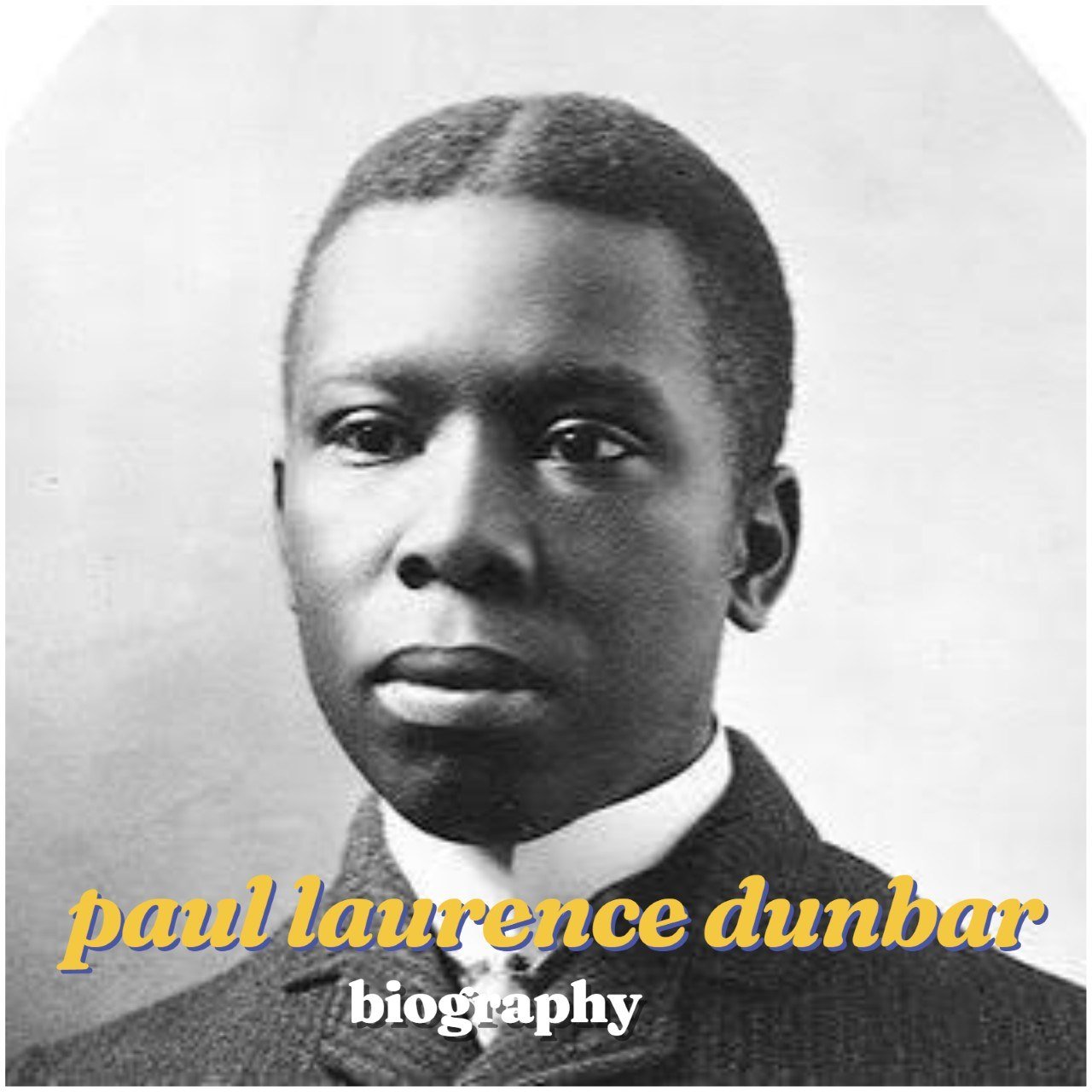
Although official records do not document Paul Laurence Dunbar’s exact height or weight, historical photographs portray him as a man of average height, estimated by many biographers to have been around 5 feet 6 inches to 5 feet 8 inches (168–173 cm). He had dark brown eyes, black hair, and a well-groomed appearance that reflected the fashion of the late nineteenth and early twentieth centuries. Dunbar was often photographed wearing tailored suits, ties, and formal attire during public appearances and literary events, presenting himself with dignity and professionalism. His thoughtful expression and composed demeanor became defining features of his public image, complementing his reputation as one of America’s most respected literary pioneers.
Age, Religion, Tribe, Height, and Physical Appearance
Paul Laurence Dunbar was born on June 27, 1872, in Dayton, Ohio, United States, and passed away on February 9, 1906, at the age of 33 after battling tuberculosis. Despite his brief life, he became one of the most celebrated poets and writers in American history, breaking racial barriers and opening doors for future generations of African American authors. If he were alive in 2026, Paul Laurence Dunbar would have been 154 years old, and his literary legacy would still be recognized around the world.
Paul Laurence Dunbar was an American by nationality and was raised in a Christian household. His writings frequently reflected Christian beliefs, biblical imagery, and themes of faith, hope, perseverance, and redemption. In terms of tribe or ethnicity, Dunbar did not belong to a tribe in the traditional sense. He was African American, born to formerly enslaved parents, Joshua Dunbar and Matilda Murphy Dunbar, whose roots traced back to enslaved African Americans in Kentucky. His family’s history and cultural heritage deeply influenced his writing, particularly his exploration of racial identity, freedom, and the experiences of Black Americans.
There are no verified historical records confirming Paul Laurence Dunbar’s exact height or weight. However, based on historical accounts and photographs, he is generally believed to have stood between 5 feet 6 inches and 5 feet 8 inches (168–173 cm). He had black hair, dark brown eyes, and a medium build. Dunbar was known for his polished and dignified appearance, often wearing well-tailored suits, waistcoats, ties, and formal hats that reflected the fashion of the late nineteenth century. His calm expression, refined manner, and professional presentation complemented his reputation as one of the most respected literary figures of his era.
Net Worth
There are no verified historical records documenting Paul Laurence Dunbar’s exact net worth at the time of his death in 1906. During his lifetime, authors generally earned income through book sales, magazine publications, newspaper contributions, public lectures, and poetry recitals rather than the large publishing contracts common today. Dunbar was among the most successful American writers of his era and the first African American author to achieve widespread commercial success, but he also faced financial challenges due to health problems, medical expenses, and the limited economic opportunities available to Black writers during the late nineteenth century.
Based on the popularity of his books, the demand for his public speaking engagements, and his earnings from literary publications, historians believe Dunbar enjoyed periods of financial stability, although he was never considered exceptionally wealthy. In modern terms, if his literary career and earning potential were compared with those of successful authors of similar influence, his estimated net worth would likely have been equivalent to between $500,000 and $1 million (USD). This estimate reflects the value of his published works, speaking engagements, royalties, and literary reputation rather than a documented historical financial statement.
Paul Laurence Dunbar’s greatest wealth ultimately lay in the enduring value of his literary legacy rather than in material possessions. His poems, novels, essays, and short stories continue to be published, studied, and celebrated more than a century after his death. His influence on American literature has inspired generations of writers, including those of the Harlem Renaissance and beyond, ensuring that his cultural and intellectual contributions far exceed any financial estimate. Today, Dunbar is remembered not only as a pioneering African American author but also as one of the most important literary figures in United States history.
Legacy
Paul Laurence Dunbar’s legacy is defined by his groundbreaking role as the first African American writer to achieve widespread national and international literary recognition. At a time when racial segregation and discrimination severely limited opportunities for Black authors, Dunbar proved that exceptional talent and determination could overcome many social barriers. His success opened doors for future generations of African American poets, novelists, and playwrights, demonstrating that Black voices deserved a prominent place in American literature. His pioneering achievements helped lay the foundation for the literary and cultural movements that followed, particularly the Harlem Renaissance of the 1920s.
Dunbar’s influence extends far beyond his own lifetime through the enduring popularity of his poetry, fiction, and essays. His famous poem “Sympathy,” which contains the unforgettable line, “I know why the caged bird sings,” inspired the title of Maya Angelou’s acclaimed autobiography and became a lasting symbol of resilience, hope, and the struggle for freedom. His works continue to be taught in schools, colleges, and universities across the United States and around the world, where students and scholars study his masterful use of both standard English and African American dialect. Modern literary critics increasingly recognize the depth, complexity, and historical significance of his writing, reaffirming his place among America’s greatest literary figures.
Today, Paul Laurence Dunbar is honored through numerous memorials, historic landmarks, educational institutions, and literary organizations dedicated to preserving his memory. His former home in Dayton, Ohio, is preserved as the Paul Laurence Dunbar House Historic Site, allowing visitors to learn about his life and achievements. Schools, libraries, parks, and annual literary events also bear his name, reflecting the lasting respect he has earned for his contributions to literature and African American history. More than a century after his death, Dunbar’s writings continue to inspire readers with their timeless messages of courage, dignity, equality, and the enduring power of the written word, ensuring that his legacy remains as relevant in 2026 as it was during his lifetime.
Conclusion
Paul Laurence Dunbar remains one of the most influential and celebrated figures in American literary history, whose remarkable achievements transformed the landscape of African American literature. Despite facing racial discrimination, financial hardship, and declining health throughout his life, he produced an extraordinary body of work that continues to resonate with readers around the world. His poetry, novels, essays, and short stories explored themes of identity, freedom, faith, love, and resilience with exceptional artistry and emotional depth. As the first African American writer to gain widespread national and international acclaim, Dunbar paved the way for countless authors who followed, leaving an enduring legacy that continues to inspire scholars, writers, and literature enthusiasts. More than a century after his death, his voice remains timeless, securing his place as one of the greatest literary pioneers in United States history.
Frequently Asked Questions (FAQs) About Paul Laurence Dunbar
Who was Paul Laurence Dunbar?
Paul Laurence Dunbar was an American poet, novelist, playwright, and short-story writer. He is widely recognized as the first African American author to achieve national and international literary fame through his published works.
When and where was Paul Laurence Dunbar born?
Paul Laurence Dunbar was born on June 27, 1872, in Dayton, Ohio, United States.
How old was Paul Laurence Dunbar when he died?
Paul Laurence Dunbar died on February 9, 1906, at the age of 33 after suffering from tuberculosis.
What is Paul Laurence Dunbar famous for?
Paul Laurence Dunbar is best known for his poetry collections, including Lyrics of Lowly Life and the poem “Sympathy,” which contains the famous line, “I know why the caged bird sings.” He is also known for his novels, short stories, and plays.
Who were Paul Laurence Dunbar’s parents?
His parents were Joshua Dunbar, a Civil War veteran and former enslaved man, and Matilda Murphy Dunbar, who was also formerly enslaved and raised Paul after separating from his father.
Who was Paul Laurence Dunbar’s wife?
Paul Laurence Dunbar married Alice Ruth Moore Dunbar (later known as Alice Dunbar-Nelson) on March 6, 1898. She was a respected poet, journalist, and educator.
Did Paul Laurence Dunbar have children?
No. Paul Laurence Dunbar and Alice Dunbar-Nelson did not have any children.
What was Paul Laurence Dunbar’s nationality?
Paul Laurence Dunbar was American. He was born and raised in Dayton, Ohio, United States.
What religion was Paul Laurence Dunbar?
Paul Laurence Dunbar was raised in a Christian household, and many of his writings reflect Christian values and biblical themes.
What was Paul Laurence Dunbar’s ethnicity?
Paul Laurence Dunbar was African American. He was the son of formerly enslaved parents whose experiences greatly influenced his life and literary works.
What was Paul Laurence Dunbar’s net worth?
There are no official historical records of Paul Laurence Dunbar’s wealth. Based on his successful literary career, modern estimates place the equivalent value of his lifetime earnings at approximately $500,000 to $1 million (USD).
Why is Paul Laurence Dunbar important?
Paul Laurence Dunbar is important because he broke racial barriers in American publishing and became the first African American writer to gain widespread literary recognition. His work influenced later generations of writers, including those of the Harlem Renaissance and authors such as Maya Angelou.
What are Paul Laurence Dunbar’s most famous works?
Some of his best-known works include Oak and Ivy, Majors and Minors, Lyrics of Lowly Life, The Sport of the Gods, Folks from Dixie, and the poem “Sympathy.”
What is Paul Laurence Dunbar’s legacy?
Paul Laurence Dunbar’s legacy lies in his pioneering contributions to American and African American literature. His writings continue to be studied worldwide, and he is remembered as one of the greatest literary figures in United States history.