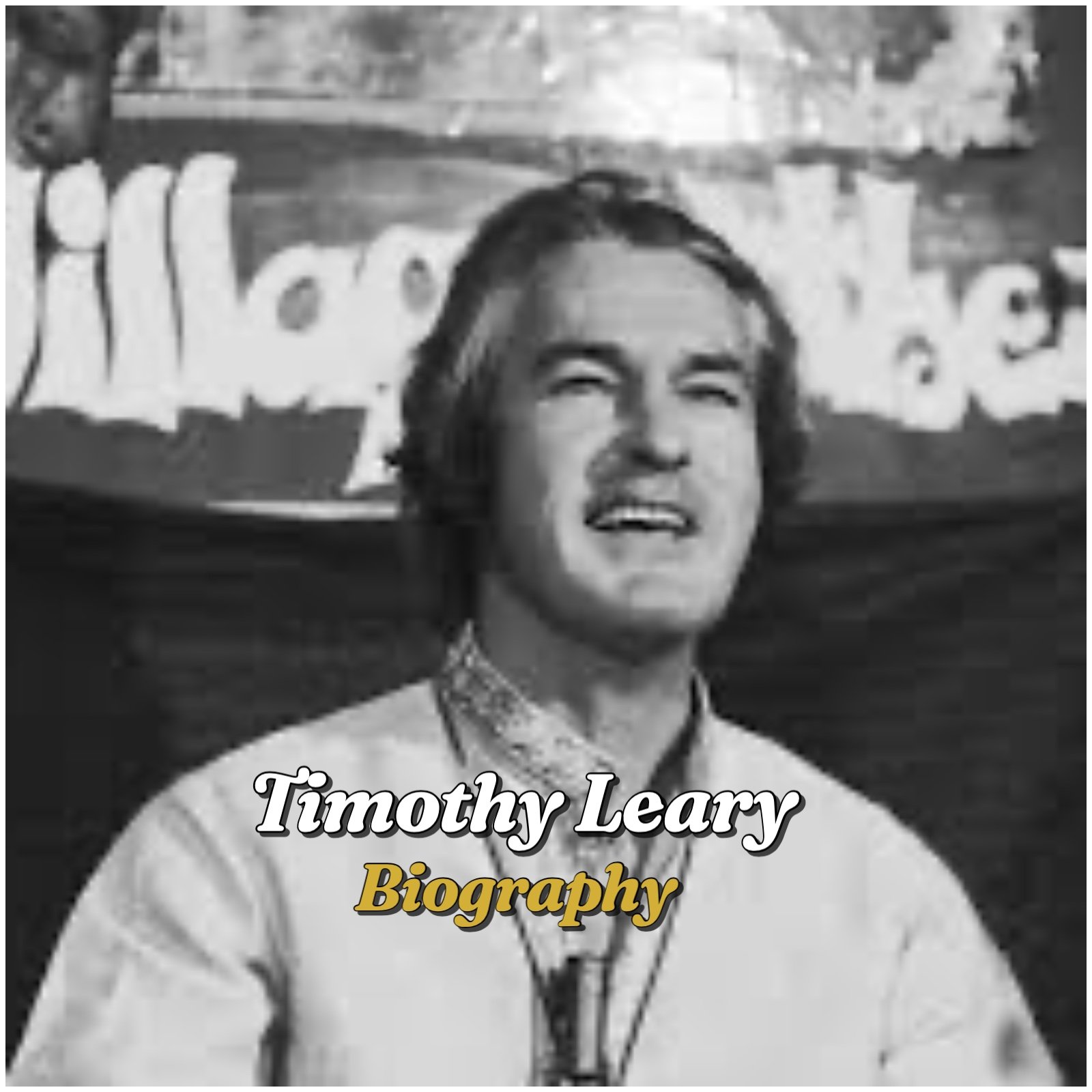
Who was Timothy Leary?
Timothy Francis Leary was an American psychologist, writer, lecturer, and one of the most influential figures of the twentieth-century counterculture movement. Born on October 22, 1920, in Springfield, Massachusetts, he gained international recognition for his pioneering research into psychedelic substances such as LSD and psilocybin. As a former Harvard University psychologist, Leary challenged conventional views on consciousness, human potential, and mental health, becoming a leading voice in the movement that sought to explore altered states of awareness through scientific experimentation and personal experience.
Leary rose to prominence during the 1960s when his advocacy for psychedelic drugs sparked widespread public debate and cultural transformation. His famous slogan, “Turn on, tune in, drop out,” became a defining phrase of the counterculture era and symbolized a generation’s desire to question traditional social structures and explore new ways of thinking. While his work attracted both passionate supporters and fierce critics, there is no doubt that he played a significant role in shaping discussions about psychology, spirituality, personal freedom, and human consciousness.
Today, Timothy Leary remains a fascinating and controversial historical figure whose influence extends far beyond the psychedelic movement. His ideas continue to be examined by psychologists, neuroscientists, philosophers, and researchers studying consciousness and psychedelic-assisted therapy. Decades after his death in 1996, Leary’s legacy endures as modern scientific research revisits many of the subjects that first brought him fame and controversy.
Timothy Leary Early Life and Background
Timothy Francis Leary was born on October 22, 1920, in Springfield, Massachusetts, United States. He grew up in a middle-class Irish Catholic family during a period marked by economic hardship and social change in America. His father, Timothy “Tote” Leary, was a dentist who later left the family, an event that had a significant impact on Leary’s childhood and personal development. Raised primarily by his mother, Abigail Ferris Leary, he learned resilience and independence from an early age.
As a young boy, Leary displayed a curious and adventurous personality. He was known for questioning authority, challenging established ideas, and showing a strong interest in understanding human behavior. These traits would later become defining characteristics of his career and public life. Growing up in Springfield exposed him to a traditional environment, but he often sought intellectual stimulation beyond the expectations of his community.
Throughout his childhood and teenage years, Leary developed a fascination with psychology, philosophy, and the complexities of the human mind. He was an intelligent student who enjoyed reading and exploring new ideas, although he occasionally struggled with discipline and authority figures. His independent nature often placed him at odds with conventional expectations, foreshadowing the unconventional path he would later follow as a psychologist and cultural icon.
The challenges he experienced during his formative years helped shape his lifelong interest in personality, consciousness, and human potential. These early experiences laid the foundation for his future academic pursuits and eventually inspired the groundbreaking—and controversial—research that would make him one of the most recognized figures in modern psychological history. At the time of his death in 1996, Timothy Leary was 75 years old, leaving behind a legacy that continues to influence discussions about psychology, consciousness, and personal freedom.
Timothy Leary Education
Timothy Leary’s educational journey was marked by both academic achievement and personal challenges. He attended several institutions during his early years, reflecting his restless and independent nature. After graduating from high school, he enrolled at the College of the Holy Cross, where he pursued higher education before continuing his studies elsewhere. His academic path was not always straightforward, but his strong intellectual curiosity kept him focused on learning and self-improvement.
Leary later attended the United States Military Academy at West Point. However, his time there was short-lived, and he eventually left the institution. He subsequently studied at the University of Alabama, where he continued developing his interest in psychology and human behavior. These experiences exposed him to different educational environments and helped shape his understanding of society, authority, and individual development.
His most significant academic achievement came at the University of California, Berkeley, where he earned a Ph.D. in Psychology in 1950. The rigorous training he received at Berkeley provided him with a strong foundation in psychological research, personality studies, and human behavior. His academic success later led to teaching and research opportunities at Harvard University, where he would gain international attention for his groundbreaking work on consciousness and psychedelic research.
Timothy Leary Career
Timothy Leary began his professional career as a psychologist and researcher shortly after earning his Ph.D. in Psychology from the University of California, Berkeley, in 1950. During the 1950s, he built a reputation as a talented academic who specialized in personality assessment, psychotherapy, and interpersonal behavior. His early research focused on understanding how people relate to one another, and his work earned recognition within the psychological community. Before becoming a cultural icon, Leary was regarded as a serious scholar with a promising future in academic psychology.
A major turning point in his career came in 1959 when he joined Harvard University as a lecturer and researcher in psychology. While at Harvard, Leary became interested in the effects of psychedelic substances on human consciousness. Alongside colleagues and graduate students, he launched research projects involving psilocybin and later LSD. He believed these substances could help individuals gain deeper self-awareness, enhance creativity, and experience profound spiritual insights. His work quickly attracted both public attention and academic controversy.
As his psychedelic research expanded, Leary became one of the most outspoken advocates for the exploration of altered states of consciousness. His experiments and public statements challenged traditional views on psychology and mental health, generating widespread debate. Harvard eventually dismissed him in 1963 amid concerns about his research methods and growing public activism. Rather than retreating from public life, Leary embraced his role as a spokesperson for the emerging counterculture movement and continued promoting his ideas through lectures, books, and media appearances.
During the 1960s and 1970s, Leary became one of the most recognizable figures in American popular culture. His famous slogan, “Turn on, tune in, drop out,” became closely associated with the youth counterculture movement. He traveled extensively, spoke at public events, published influential books, and encouraged people to rethink conventional assumptions about society, education, and consciousness. However, his career was also marked by legal troubles, arrests, imprisonment, and periods of exile, all of which further increased his public profile and notoriety.
In the later stages of his career, Leary shifted his focus from psychedelics to emerging technologies and futurism. He became interested in computers, virtual reality, life extension, and space exploration, arguing that technology could play a major role in expanding human potential. Through his writings, lectures, and media appearances, he remained an influential public thinker until his death in 1996. Although controversial, Timothy Leary’s career left a lasting impact on psychology, consciousness studies, counterculture history, and the modern revival of psychedelic research.
Timothy Leary Personal Life
Timothy Leary’s personal life was as eventful and unconventional as his professional career. He was married several times throughout his life and had children from his relationships. His marriages reflected the changing phases of his life, from his years as a young academic and psychologist to his later role as a counterculture icon. Family relationships remained an important part of his life, although the demands of his public career and legal troubles often created challenges and periods of personal upheaval.
Beyond his family life, Leary was known for his adventurous personality, intellectual curiosity, and willingness to challenge social norms. He developed friendships with many influential writers, artists, musicians, psychologists, and activists of his era. His interests extended beyond psychology and psychedelics to include philosophy, spirituality, science, technology, and futurism. These passions shaped both his personal identity and his public image, making him one of the most recognizable cultural figures of the twentieth century.
In his later years, Leary embraced a positive and philosophical approach to life, even after being diagnosed with prostate cancer. He openly discussed aging, mortality, and the future of humanity, remaining active in public discussions until his final days. He spent much of his time writing, lecturing, and exploring new ideas related to technology and consciousness. His personal life reflected his lifelong belief in exploration, self-discovery, and the pursuit of knowledge, values that continued to define him until his death on May 31, 1996, at the age of 75.
Timothy Leary Age, Religion, Ethnicity, Height and Physical Appearance
Timothy Francis Leary was born on October 22, 1920, in Springfield, Massachusetts, United States. He was 75 years old at the time of his death on May 31, 1996. As an American of Irish descent, Leary came from a family with strong Irish roots and was raised in a Roman Catholic household during his childhood. Although he was brought up within the Catholic faith, his views evolved significantly as he grew older, and he became widely known for exploring spirituality, consciousness, philosophy, and alternative belief systems throughout his life.
Ethnically, Leary belonged to the Irish-American community, which formed an important part of his family heritage. His upbringing in a traditional Catholic environment exposed him to religious teachings and moral values from an early age. However, his later experiences as a psychologist and consciousness researcher led him to question conventional institutions and seek broader perspectives on spirituality and human existence. This intellectual curiosity became one of the defining characteristics of both his personal and professional life.
In terms of physical appearance, Timothy Leary stood at approximately 5 feet 11 inches (180 cm) tall. He had a medium build, expressive facial features, and a distinctive presence that made him easily recognizable. During his younger years, he often appeared clean-shaven and professionally dressed as an academic, while in later decades he became known for his casual style, white hair, and charismatic smile. His confident demeanor, energetic personality, and ability to captivate audiences contributed greatly to his public image as one of the most influential and controversial figures of the twentieth century.
Timothy Leary Death
Timothy Leary spent the final years of his life continuing to write, give interviews, and engage in discussions about technology, consciousness, and the future of humanity. In the mid-1990s, he was diagnosed with prostate cancer, a condition that gradually affected his health. Rather than withdrawing from public life, Leary openly discussed his illness and approached his diagnosis with the same curiosity and philosophical outlook that had characterized much of his life. He frequently shared his thoughts on mortality, viewing death as another stage of human experience rather than something to be feared.
Leary died on May 31, 1996, at his home in Beverly Hills, California, at the age of 75. His passing attracted widespread media attention because of his status as a cultural icon and his unconventional approach to life. Friends, family members, and admirers remembered him as a bold thinker who consistently challenged traditional ideas and encouraged people to explore new ways of understanding themselves and the world around them.
In keeping with his fascination with science and the future, a portion of Leary’s ashes was later sent into space aboard a memorial spaceflight. This unusual tribute reflected his lifelong interest in technology, exploration, and pushing beyond traditional boundaries. His death marked the end of a remarkable and controversial life, but it did not diminish the influence of his ideas.
Timothy Leary Legacy and Influence
Timothy Leary remains one of the most influential and debated figures in modern psychology and cultural history. Supporters regard him as a visionary who helped bring public attention to the study of consciousness, personal growth, and the potential therapeutic uses of psychedelic substances. His work inspired generations of researchers, writers, artists, and thinkers who sought to better understand the human mind and its possibilities.
Although many of his methods and public campaigns generated controversy, Leary’s impact on popular culture is undeniable. His advocacy played a significant role in shaping the counterculture movement of the 1960s and influenced discussions about individual freedom, spirituality, and social change. His famous slogan, “Turn on, tune in, drop out,” remains one of the most recognizable phrases associated with that era.
Today, Leary’s legacy is particularly visible in the renewed scientific interest in psychedelic-assisted therapy. Researchers studying treatments for depression, anxiety, post-traumatic stress disorder, and other mental health conditions often acknowledge the historical role he played in bringing attention to psychedelic substances. More than two decades after his death, Timothy Leary continues to be remembered as a groundbreaking psychologist, controversial public figure, and influential advocate for exploring the limits of human consciousness.
Conclusion
Timothy Leary was a pioneering psychologist, author, and cultural figure whose life was dedicated to exploring the nature of human consciousness and personal transformation. From his early academic achievements and groundbreaking research at Harvard University to his role as a leading voice of the 1960s counterculture movement, he left a lasting mark on psychology, philosophy, and popular culture. Although his ideas and methods often sparked controversy, his influence continues to be felt in modern discussions about mental health, psychedelic research, spirituality, and human potential. Decades after his death, Timothy Leary remains a fascinating and influential figure whose legacy continues to inspire debate, curiosity, and scientific exploration around the world.
Frequently Asked Questions (FAQs) About Timothy Leary
1. Who was Timothy Leary?
Timothy Leary was an American psychologist, author, and counterculture figure best known for his advocacy of psychedelic substances such as LSD and psilocybin. He became one of the most influential and controversial public intellectuals of the 1960s and remains a significant figure in the history of psychology and consciousness studies.
2. When and where was Timothy Leary born?
Timothy Leary was born on October 22, 1920, in Springfield, Massachusetts, United States. He grew up in a Catholic Irish-American family and developed an early interest in understanding human behavior, psychology, and the complexities of the human mind.
3. How old was Timothy Leary when he died?
Timothy Leary was 75 years old when he died on May 31, 1996. He spent his final years writing, giving interviews, and discussing topics such as technology, consciousness, and the future of humanity despite battling prostate cancer.
4. What was Timothy Leary famous for?
Timothy Leary was famous for promoting the exploration of consciousness through psychedelic substances, particularly LSD and psilocybin. His research, public lectures, books, and cultural influence helped shape the counterculture movement of the 1960s and sparked ongoing debates about psychology and personal freedom.
5. What was Timothy Leary’s famous quote?
Timothy Leary’s most famous quote was, “Turn on, tune in, drop out.” The phrase became a defining slogan of the 1960s counterculture movement and encouraged people to question conventional social structures and explore alternative ways of thinking.
6. What did Timothy Leary study in college?
Leary studied psychology and related fields throughout his academic journey. He attended the College of the Holy Cross, the United States Military Academy, and the University of Alabama before earning a Ph.D. in Psychology from the University of California, Berkeley.
7. Why was Timothy Leary controversial?
Timothy Leary was controversial because of his public advocacy for psychedelic drug use and his belief that such substances could expand human consciousness. Critics argued that his methods and public campaigns were irresponsible, while supporters viewed him as a visionary who challenged traditional thinking.
8. Did Timothy Leary work at Harvard University?
Yes. Timothy Leary worked as a lecturer and researcher at Harvard University beginning in 1959. During his time there, he conducted research involving psilocybin and LSD, which eventually led to controversy and his dismissal from the university.
9. Was Timothy Leary married?
Yes. Timothy Leary was married multiple times during his life and had children. His personal life was often intertwined with his public career, and he maintained relationships with many influential writers, artists, researchers, and cultural figures.
10. What is Timothy Leary’s legacy today?
Timothy Leary’s legacy lives on through his influence on psychology, consciousness research, and the modern revival of psychedelic-assisted therapy. While opinions about him remain divided, he is widely recognized as a figure who helped bring discussions about the human mind, spirituality, and personal transformation into mainstream culture.