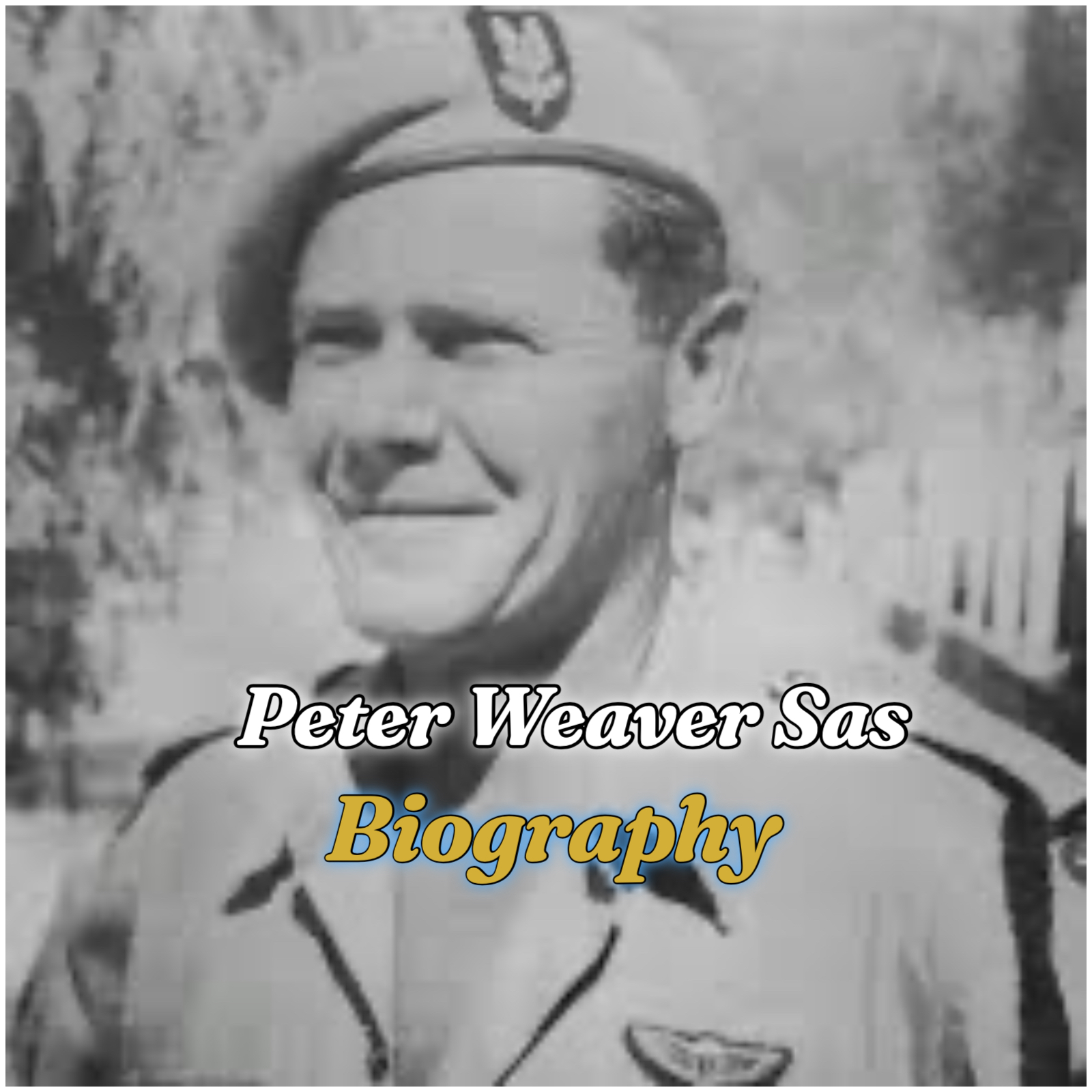
Introduction To Peter Weaver SAS Biography
Peter Weaver, also known as Philip Humphrey Peter Weaver, was a respected British Army officer and member of the Special Air Service during World War II. He became widely recognized for his courage, survival skills, and participation in dangerous covert military operations behind enemy lines across occupied Europe. Peter Weaver’s story has continued to attract global attention due to renewed interest in SAS history through documentaries, books, and television dramas such as SAS: Rogue Heroes.
Born on March 12, 1912, in Kalimpong, British India, Peter Weaver lived during one of the most turbulent periods in world history. From humble beginnings and struggles in formal education, he eventually transformed into one of the courageous wartime officers trusted with elite special operations. His military experiences during missions in Nazi-occupied France and his involvement in the liberation of Bergen-Belsen concentration camp made his life story both heroic and historically significant.
Today, Peter Weaver is remembered as one of the brave SAS soldiers whose service reflected resilience, discipline, leadership, and sacrifice during World War II. His legacy continues to inspire military historians, researchers, and audiences fascinated by the extraordinary lives of wartime special forces operatives.
Early Life and Background of Peter Weaver
Peter Weaver was born as Philip Humphrey Peter Weaver on March 12, 1912, in Kalimpong, British India. He spent part of his childhood between India and England during the era of the British Empire. Growing up within a colonial environment exposed him to British traditions, discipline, and structured education from an early age. Despite this background, his younger years were not without challenges, as he reportedly struggled academically during his school days.
Peter Weaver attended school in England but found it difficult to excel in formal academic settings. Rather than being recognized for classroom achievements, he became more interested in physical activities and adventure. He developed a passion for sports such as cricket and hockey, where his competitive spirit, endurance, and teamwork abilities became more visible. These qualities would later become important in shaping his future military career within elite wartime units.
Before entering military service full-time, Weaver explored different career paths and worked in various business roles. His early adult years reflected determination and resilience as he searched for direction and purpose. When World War II began, he answered the call to serve Britain, eventually becoming part of the secretive and dangerous world of special operations that would define the rest of his life.
Peter Weaver Education and Academic Background
Peter Weaver received his early education in England after spending part of his childhood in British India. Although detailed records about his schools and academic qualifications remain limited, historical accounts suggest that he attended traditional British schools during his formative years. His education occurred during a period when discipline, physical training, and personal character were strongly emphasized within British educational systems.
Despite having access to formal education, Peter Weaver reportedly struggled academically and was not considered a top-performing student in the classroom. He appeared more suited to practical activities, sports, and outdoor experiences rather than conventional academic studies. His strengths became more noticeable through physical competition and teamwork instead of scholarly achievements.
During his youth, Weaver became heavily involved in sports such as cricket and hockey. These activities played a major role in building his confidence, resilience, endurance, and discipline. The physical and mental toughness developed through sports later helped prepare him for the harsh realities of military service and the demanding conditions faced by SAS operatives during World War II.
Although his academic accomplishments were not widely documented, Peter Weaver’s life later demonstrated that courage, adaptability, practical intelligence, and leadership skills could become just as valuable as formal educational achievements. His success in military operations showed his ability to perform effectively under pressure in life-threatening environments.
Peter Weaver SAS Career and Military Service
Special Air Service officer Peter Weaver built a remarkable military career during World War II and became known for his bravery, leadership, and survival in some of the war’s most dangerous covert missions. Before joining elite special forces, Weaver initially served within Britain’s secretive Auxiliary Units, organizations created to resist a possible German invasion of Britain during the early years of the war. These units specialized in sabotage, intelligence gathering, and guerrilla-style warfare.
As the war intensified, Weaver volunteered for the expanding Special Air Service, better known as the SAS. The SAS had been formed to carry out high-risk operations behind enemy lines, including sabotage missions, intelligence gathering, and attacks on German supply networks. Weaver quickly adapted to the dangerous demands of special operations and became respected for his calmness under pressure and ability to lead men in extreme situations.
One of the most important moments in his military career came during Operation Bulbasket in 1944. The mission involved supporting the French Resistance and disrupting German reinforcements after the Allied invasion of Normandy. Weaver and his fellow SAS soldiers were dropped into occupied France to sabotage railway lines, gather intelligence, and attack enemy communications. The operation became extremely dangerous after German forces discovered their location and launched brutal attacks against the SAS teams.
Many SAS soldiers involved in Operation Bulbasket were captured or killed by German troops. Weaver narrowly escaped death during these operations, surviving intense enemy pursuit and deadly combat situations that wiped out several of his comrades. His survival during the mission later became one of the defining chapters of his military story and contributed to his reputation as one of the fortunate yet highly skilled SAS officers of the war.
Weaver later continued serving in Europe as Allied forces advanced into German territory. In 1945, he was among the British forces involved in the liberation of Bergen-Belsen concentration camp. Witnessing the horrifying conditions inside the camp left a lasting impact on many soldiers, including Weaver, as they encountered thousands of starving prisoners and evidence of Nazi war crimes.
Throughout his career, Peter Weaver became known as a loyal teammate, disciplined officer, and fearless operative capable of functioning in dangerous environments where survival was never guaranteed. His wartime experiences reflected both the heroism and harsh realities faced by SAS soldiers during World War II. In recent years, renewed public interest in the history of the SAS has brought greater attention to Weaver’s contributions and legacy within British military history.
Peter Weaver Personal Life
Peter Weaver was known by friends and fellow soldiers as a disciplined, adventurous, and courageous man whose personality matched the dangerous world of special operations. Despite serving in some of the most brutal missions of World War II, Weaver was remembered as loyal to his comrades and deeply committed to his responsibilities within the military. His experiences during the war shaped much of his personal outlook and character throughout his life.
Outside military service, Peter Weaver had a strong interest in sports during his younger years. He enjoyed cricket and hockey and was considered physically active and competitive from an early age. These sporting interests helped build the endurance, teamwork, and confidence that later became important qualities in his SAS career.
Weaver also experienced a life filled with constant movement and adaptation. Having been born in British India and later educated in England, he grew up within the environment of the British Empire during a rapidly changing historical period. His military service took him across Europe and into dangerous wartime territories where survival often depended on courage, quick thinking, and trust among fellow soldiers.
Although much of Peter Weaver’s public legacy focuses on his military achievements, accounts from historians and wartime researchers often describe him as more than simply a soldier. He was viewed as someone who carried the emotional and psychological weight of war while still maintaining loyalty, discipline, and resilience. His experiences during missions in occupied France and later at Bergen-Belsen concentration camp exposed him to some of the darkest realities of World War II.
In later years, Weaver remained connected to the legacy of the SAS and World War II history. His life story continues to attract attention from military historians, documentary researchers, and audiences interested in elite wartime operations. Renewed media interest in the SAS has helped preserve his memory as one of the courageous officers who operated behind enemy lines during one of history’s most dangerous conflicts.
Peter Weaver Age, Religion, Tribe, Height & Physical Appearance
Peter Weaver was born on March 12, 1912, in Kalimpong, British India. Based on available historical records, he lived through some of the most important events of the twentieth century, especially World War II, where he became known for his service in the Special Air Service. Although the exact date of his death is not widely documented in public records, his legacy remains strongly connected to British military history and elite wartime operations.
Peter Weaver was British by nationality and came from a background connected to the British colonial system during the era of the British Empire. In terms of ethnicity or tribe, there is no public record linking him to any tribal affiliation, as the concept of tribe is not commonly associated with British society in the same way it is in some African cultures. He was ethnically British and identified with British culture and military tradition throughout his life.
Regarding religion, detailed public information about Peter Weaver’s personal religious beliefs is limited. However, many British military officers of his era were commonly associated with Christianity, particularly the Church of England. There is no major public record suggesting that he practiced another religion during his lifetime.
Peter Weaver was often described as physically fit, disciplined, and athletic. His involvement in sports such as cricket and hockey during his youth contributed to his strong physical condition and endurance. As an SAS officer, he maintained the tough appearance expected of elite wartime soldiers who regularly operated in dangerous and physically demanding environments. Historical photographs and military descriptions portray him as tall, lean, and rugged, with the confident bearing and hardened expression commonly associated with special forces personnel of World War II.
His overall appearance reflected the life he lived as a soldier involved in covert warfare, survival missions, and frontline combat operations. Combined with his calm personality and disciplined nature, Peter Weaver projected the image of a courageous and determined military officer whose physical presence matched the dangerous responsibilities he carried throughout the war.
Peter Weaver Legacy and Historical Impact
Peter Weaver left behind a legacy closely tied to courage, resilience, and elite military service during World War II. As a member of the Special Air Service, he became part of one of the most respected special forces units in military history. His involvement in dangerous covert operations behind enemy lines demonstrated the bravery and discipline required of SAS soldiers during some of the war’s most critical moments. His survival during deadly missions, especially Operation Bulbasket in occupied France, helped establish his reputation as a determined and highly skilled wartime operative.
Peter Weaver’s legacy also lives through the historical importance of the missions he participated in during the war. His contributions to sabotage operations, resistance support, and intelligence activities played a role in weakening German military operations during the Allied advance across Europe. Beyond combat, his participation in the liberation of Bergen-Belsen concentration camp connected his story to one of the darkest chapters of World War II. Witnessing the suffering inside the camp gave deeper meaning to the sacrifices made by Allied soldiers fighting against Nazi Germany.
In recent years, renewed interest in SAS history through books, documentaries, and television dramas such as SAS: Rogue Heroes has introduced Peter Weaver’s story to a new generation. Historians and military enthusiasts continue to study his experiences as part of the broader history of British special forces operations. Today, he is remembered not only as a brave soldier but also as a symbol of endurance, loyalty, and the extraordinary risks taken by SAS officers during wartime missions that shaped modern military history.
Conclusion
Peter Weaver remains remembered as one of the courageous figures who helped shape the legacy of the Special Air Service during World War II. From his early life in British India to his dangerous covert missions across occupied Europe, Weaver’s journey reflected bravery, discipline, resilience, and loyalty under extreme conditions. His survival through deadly operations, contributions to Allied military efforts, and role in witnessing historic events such as the liberation of Bergen-Belsen continue to make his story significant in military history. Today, his legacy lives on through historical research, documentaries, and renewed public interest in the remarkable stories of SAS soldiers who risked everything during one of history’s greatest conflicts.
Frequently Asked Questions About Peter Weaver SAS Biography
1. Who was Peter Weaver?
Peter Weaver was a British Army officer and member of the Special Air Service during World War II. He became known for participating in dangerous covert missions behind enemy lines in occupied Europe.
2. What was Peter Weaver’s full name?
Peter Weaver’s full name was Philip Humphrey Peter Weaver. He was born on March 12, 1912, in Kalimpong, British India, during the period of British colonial rule.
3. What military unit did Peter Weaver serve in?
Peter Weaver served in the Special Air Service, commonly known as the SAS. The unit specialized in sabotage, intelligence gathering, and covert wartime operations.
4. What was Operation Bulbasket?
Operation Bulbasket was a secret SAS mission carried out in Nazi-occupied France during 1944. The operation aimed to disrupt German transport and support the French Resistance after D-Day.
5. Did Peter Weaver survive World War II?
Yes. Peter Weaver survived several deadly wartime operations during World War II, including dangerous missions where many fellow SAS soldiers were captured or killed by German forces.
6. What role did Peter Weaver play at Bergen-Belsen?
Peter Weaver was among British forces involved in the liberation of Liberation of Bergen-Belsen concentration camp in 1945, where Allied soldiers witnessed the horrific conditions inside the Nazi concentration camp.
7. Where was Peter Weaver born?
Peter Weaver was born in Kalimpong, British India, which was part of the British Empire during the early twentieth century before India gained independence.
8. Why is Peter Weaver becoming popular again?
Interest in Peter Weaver has increased due to documentaries, military history research, and television dramas such as SAS: Rogue Heroes, which explore the history of the SAS during World War II.
9. What sports did Peter Weaver enjoy?
During his younger years, Peter Weaver enjoyed sports including cricket and hockey. These activities helped develop the physical strength and teamwork skills that later supported his military career.
10. What is Peter Weaver’s legacy?
Peter Weaver’s legacy is remembered through his bravery, survival, and contributions to elite wartime operations within the SAS. His story continues to inspire military historians and people interested in World War II history.