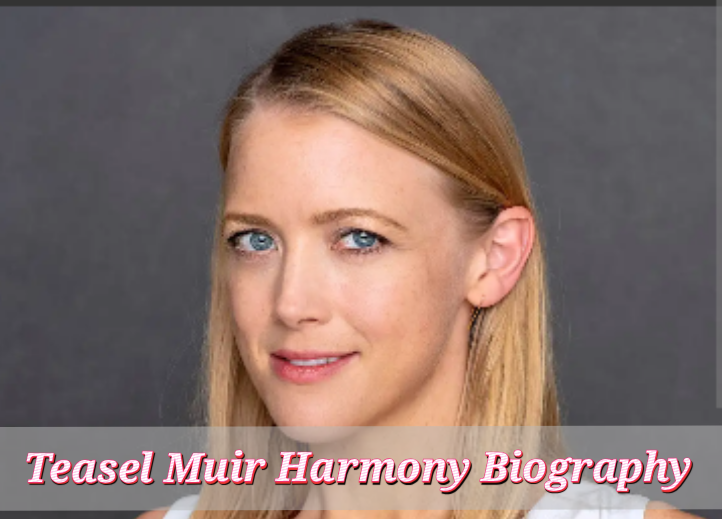
Teasel Muir Harmony Biography
Dr. Teasel E. Muir-Harmony, born in the United States, is an American historian of science and technology. She serves as the curator of the Apollo Collection at the Smithsonian National Air and Space Museum in Washington, DC. Her work explores the political, cultural, and diplomatic dimensions of space exploration, particularly Project Apollo. Through her research, exhibitions, and books, she shows how lunar missions shaped international relations during the Cold War and continue to influence public understanding of science today.
Muir-Harmony stands out among space historians for her focus on material culture and soft power. She manages thousands of artifacts and creates exhibits that connect technical achievements to broader themes of globalization and diplomacy. Her scholarship has appeared in major media outlets and academic publications, making complex historical topics accessible to wide audiences. As an educator and public speaker, she inspires new generations to view space history through fresh perspectives.
Teasel Muir Harmony Early Life
Her date of birth is not publicly available, though she is estimated to be in her early to mid-forties as of 2026 based on her academic timeline. Muir-Harmony grew up in the United States with a deep fascination for ancient myths about the stars. As a child, she preferred studying the history of astronomy over becoming an astronomer herself. This early interest in the human stories behind scientific discovery stayed with her throughout her life.
She attended Deerfield Academy, graduating in the class of 2000. There she built a strong foundation in the liberal arts. Her passion for history and science led her to explore the stories of exploration and innovation. These formative years prepared her for a career that combines rigorous scholarship with public engagement. She developed a lifelong curiosity about how societies interpret and use scientific achievements, a theme that later defined her professional work.
Teasel Muir Harmony Education
Muir-Harmony earned her Bachelor of Arts degree from St. John’s College in Annapolis, Maryland, as part of the class of 2004 (often noted as A04). The college’s Great Books program immersed her in classic texts by thinkers such as Ptolemy, Copernicus, and Kepler. She also worked in the college’s planetarium and observatory, blending hands-on experience with philosophical inquiry. This unique education taught her to analyze primary sources critically and to appreciate the broader cultural context of scientific ideas.
She next pursued a Master of Arts in the history and philosophy of science at the University of Notre Dame, completing the degree around 2009. Her studies deepened her understanding of how science intersects with society and policy. She then enrolled at the Massachusetts Institute of Technology, where she earned a Ph.D. in the history of science and technology in 2014. Her doctoral dissertation examined the political dimensions of Project Apollo and later formed the basis for her award-winning book. Fellowships from the MIT Presidential Fellowship and the Smithsonian Institution Graduate Research Fellowship supported her graduate research. Additional funding came from the Daniel and Florence Guggenheim Foundation, the Consortium for the History of Science, Technology, and Medicine, NASA, and the National Science Foundation.
Teasel Muir Harmony Career
Muir-Harmony began her professional journey with roles that combined curation, research, and public outreach. She served as a curator at the Adler Planetarium and Astronomy Museum in Chicago. There she gained practical experience in managing historical artifacts and designing educational displays. She also worked as an Associate Historian at the American Institute of Physics, focusing on the Center for History of Physics. In addition, she held a position as a visiting scholar at the Royal Institute of Technology in Sweden.
In 2016 she joined the Smithsonian National Air and Space Museum as curator of the Apollo Collection. The collection includes roughly three thousand spacecraft and related items from the Apollo program, Skylab, and the Apollo-Soyuz Test Project. She oversees preservation, research, and interpretation of these artifacts. As lead curator, she developed the “One World Connected” gallery and contributes to “Destination Moon” and the Allan and Shelley Holt Innovations Gallery. Her exhibits highlight connections between spaceflight, politics, culture, and society. She emphasizes how lunar exploration reflected and influenced global events.
Muir-Harmony also teaches in Georgetown University’s Edmund A. Walsh School of Foreign Service, including the course “Space Flight and Globalization” in the Science, Technology, and International Affairs program. She co-organizes the Space Policy and History Forum and participates in the U.S. State Department’s Speakers Program, delivering lectures in countries such as Germany, Israel, and Slovenia. Her work regularly appears in media outlets including CBS, The New York Times, NPR, The Wall Street Journal, and The Washington Post. She has appeared on C-SPAN and various podcasts to discuss space history.
Teasel Muir Harmony Publications and Achievements
Muir-Harmony has written two major books that showcase her expertise. Her first book, Apollo to the Moon: A History in 50 Objects, published by National Geographic in 2018, presents the Apollo Collection through carefully chosen artifacts. Readers encounter items ranging from a sliver of fabric and wood from the Wright Brothers’ plane (carried to the Moon by Neil Armstrong) to everyday objects used by astronauts. The book brings the human side of spaceflight to life and helps general audiences understand the engineering and cultural significance of the missions.
Her second book, Operation Moonglow: A Political History of Project Apollo, appeared from Basic Books in 2020. It grew directly from her doctoral research. The book examines how the United States used the Apollo program as a tool of soft power and public diplomacy during the Cold War. It details astronaut goodwill tours, international exhibitions, and efforts to promote American values abroad. Reviewers praised the work for revealing the diplomatic strategies behind the lunar landings. It received the Emme Award for Astronautical Literature and established her as a leading voice in space history.
Beyond books, Muir-Harmony contributed as an advisor and creator to the six-part Smithsonian television series Apollo’s Moon Shot. She helped develop a companion augmented-reality app that lets users interact with artifacts. She has authored chapters and articles on topics such as space diplomacy, lunar governance debates, and the material culture of spaceflight. One example is her contribution to the Oxford Research Encyclopedia of American History. Her scholarship appears in peer-reviewed journals and popular publications alike.
She has held leadership roles in professional organizations. She served on the Executive Council of the Society for the History of Technology and currently sits on the History Committee of the American Astronautical Society. She is also a corresponding member of the International Academy of Astronautics. These positions reflect her influence in the field and her commitment to advancing the study of technology and society.
Teasel Muir Harmony Personal Life
Muir-Harmony keeps much of her personal life private. She lives in Washington, DC, where she balances her demanding curatorial and teaching responsibilities. She is married and has children. Public references from her alumni network note that her family grew in the early 2020s. She occasionally shares personal reflections tied to her work, such as a visit to Antarctica that reminded her of the fragility of Earth as seen from space. Like many historians, she values time on the ground studying the past while appreciating the wonder of space exploration from afar.
Teasel Muir Harmony Achievements
Muir-Harmony’s achievements span curation, scholarship, education, and public service. Her management of the Apollo Collection preserves irreplaceable artifacts for future generations. The exhibits she leads have reached millions of visitors and connected space history to contemporary issues such as climate and globalization. Her books have won critical acclaim and awards, expanding public knowledge of space diplomacy.
She has received support from prestigious institutions including NASA and the National Science Foundation. Her media contributions and international lectures have amplified the reach of her research. Memberships in key professional societies and her role in shaping museum displays underscore her standing as an authority on the history of spaceflight. Through these accomplishments she has helped redefine how the public and scholars view the Apollo era.
Conclusion
Dr. Teasel E. Muir-Harmony has made significant contributions to the understanding of space exploration as both a technical and a political endeavor. Her careful stewardship of the Apollo Collection, insightful publications, and engaging teaching continue to bridge the gap between expert knowledge and public interest. As humanity prepares for new missions to the Moon and beyond, her work reminds us that spaceflight has always been about more than rockets and landing sites. It reflects our values, ambitions, and shared future on Earth. Her ongoing research and outreach ensure that the lessons of Project Apollo remain relevant for years to come.
FAQs
What is Teasel Muir-Harmony’s role at the Smithsonian National Air and Space Museum?
She serves as curator of the Apollo Collection. In this position she cares for thousands of artifacts from the Apollo, Skylab, and Apollo-Soyuz programs. She also leads major exhibitions and conducts research on the political history of lunar exploration.
What are Teasel Muir-Harmony’s most important books?
Her two primary books are Apollo to the Moon: A History in 50 Objects published in 2018 and Operation Moonglow: A Political History of Project Apollo published in 2020. The first uses artifacts to tell the story of the missions while the second explores the diplomatic uses of the space program.
Where did Teasel Muir-Harmony receive her education?
She earned a BA from St. John’s College, an MA from the University of Notre Dame, and a PhD from the Massachusetts Institute of Technology. Her graduate studies focused on the history of science and technology.
Does Teasel Muir-Harmony teach classes?
Yes, she teaches at Georgetown University in the Science, Technology, and International Affairs program. One of her courses is titled “Space Flight and Globalization.”
What awards has Teasel Muir-Harmony received for her work?
Her book Operation Moonglow won the Emme Award for Astronautical Literature. She has also received research fellowships and grants from NASA, the National Science Foundation, and other organizations that support her scholarship.
How does Teasel Muir-Harmony approach the history of space exploration?
She combines the study of physical artifacts with analysis of political and cultural contexts. Her work highlights how space programs served diplomatic goals and shaped international relations while making these ideas accessible through books, exhibits, and public talks.