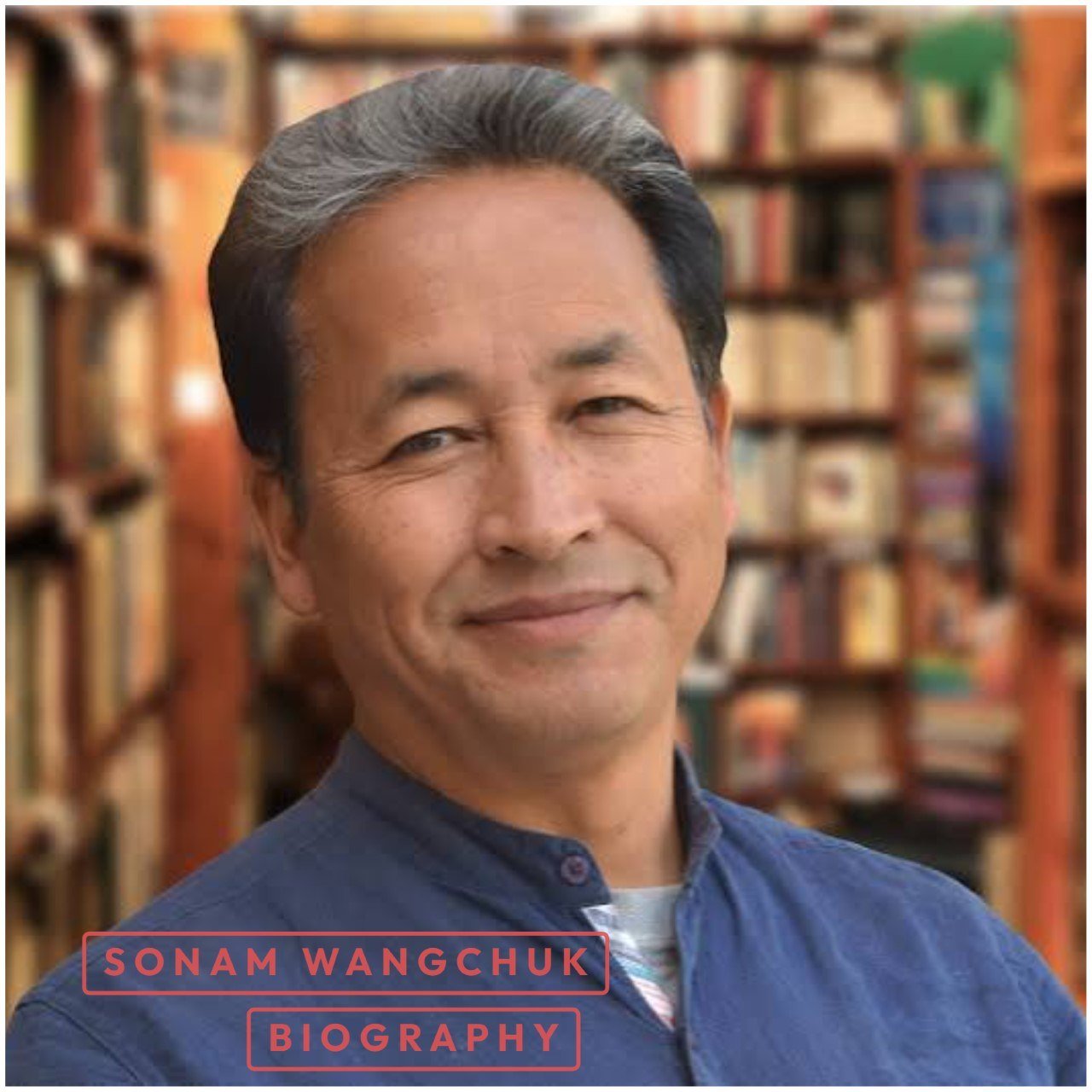
Introduction Sonam Wangchuk is an Indian engineer, education reformer, innovator, and environmental activist whose work has transformed lives across the Himalayan region of Ladakh. Best known for developing practical, sustainable solutions to local challenges, he has earned global recognition for combining science, traditional knowledge, and community participation. His innovative approach to education and environmental conservation has made him one of India’s most respected public figures and an influential voice on climate resilience.Wangchuk first rose to international prominence through his groundbreaking efforts to improve education in Ladakh, where he co-founded the Students’ Educational and Cultural Movement of Ladakh (SECMOL). The organization introduced student-centered learning methods that significantly improved academic outcomes for children in remote mountain communities. He later gained worldwide acclaim for creating the Ice Stupa project, an ingenious artificial glacier system that stores winter water for agricultural use during the dry spring season, helping communities adapt to the growing impacts of climate change. In recent years, Sonam Wangchuk has expanded his role beyond engineering and education to become a leading advocate for environmental protection, sustainable development, and responsible public policy. Through peaceful campaigns, public lectures, and grassroots initiatives, he continues to inspire millions of people in India and around the world. His lifelong commitment to innovation, education, and ecological sustainability has established him as a symbol of creative problem-solving and social change in the 21st century
Early Life
Sonam Wangchuk was born on September 1, 1966, in the village of Uleytokpo near Alchi in Ladakh, India. Growing up in one of the country’s most remote Himalayan regions, he experienced a childhood surrounded by breathtaking mountains, traditional Ladakhi culture, and a close-knit community. His early years were shaped by the harsh climate and limited access to modern educational facilities, experiences that would later influence his passion for finding practical solutions to local challenges.During his childhood, there was no formal school in his village, so his mother personally taught him at home until he was about nine years old. This unique beginning gave him a strong foundation in learning while allowing him to develop curiosity, creativity, and independent thinking. When he later attended schools outside Ladakh, he struggled with language barriers because the education system was not designed for students from his region. These challenges inspired him to dream of creating a better educational system for future generations.Despite the difficulties he faced, Wangchuk remained determined to pursue knowledge and use it to improve the lives of others. His upbringing in Ladakh helped him understand the importance of preserving local traditions while embracing scientific innovation. These early experiences laid the foundation for his future work as an engineer, inventor, education reformer, and environmental activist, making his childhood an essential part of the remarkable journey that followed
Education
Sonam Wangchuk’s educational journey began under unusual circumstances in the remote village of Alchi in Ladakh, where formal schooling was not readily available during his early childhood. Until the age of nine, he was taught at home by his mother, who laid the foundation for his curiosity and love of learning. Growing up in a region with limited educational resources gave him firsthand experience of the challenges faced by children in rural communities, an experience that would later shape his lifelong mission to improve education.After leaving his village, Wangchuk attended school in Srinagar, where he encountered significant difficulties because the education system was conducted in languages that were unfamiliar to him. Like many students from Ladakh, he struggled to adapt to a curriculum that did not reflect his cultural or linguistic background. Despite these obstacles, he persevered and successfully completed his schooling before enrolling at the National Institute of Technology (NIT) Srinagar, where he earned a Bachelor of Technology (B.Tech.) degree in Mechanical Engineering.Rather than pursuing a conventional engineering career, Sonam Wangchuk chose to apply his education to solving real-world problems affecting his home region. His academic training, combined with his personal experiences as a student, inspired him to co-found the Students’ Educational and Cultural Movement of Ladakh (SECMOL), an organization dedicated to transforming education through practical, student-centered learning. His educational philosophy emphasizes creativity, critical thinking, hands-on experience, and local relevance, making him an internationally respected advocate for educational reform and innovation.
Career
Sonam Wangchuk began his professional career with a vision of improving education and creating practical solutions for the unique challenges faced by people living in the Himalayan region of Ladakh. In 1988, he co-founded the Students’ Educational and Cultural Movement of Ladakh (SECMOL), a nonprofit organization dedicated to reforming the region’s education system. Through SECMOL, he introduced innovative teaching methods that emphasized hands-on learning, critical thinking, and practical life skills instead of rote memorization. The organization helped thousands of students who had struggled in the conventional school system rediscover confidence and achieve academic success.As an engineer and innovator, Wangchuk gained international recognition for developing the Ice Stupa project, an artificial glacier technology designed to conserve water in cold desert regions. The cone-shaped ice structures store water during the winter and gradually release it in the spring, providing irrigation for farmers when natural water supplies are scarce. This environmentally friendly solution has been adopted and studied in several countries facing water shortages and has become one of the world’s most celebrated examples of climate adaptation through local innovation. In addition to the Ice Stupa initiative, he has promoted sustainable architecture, renewable energy, and environmentally responsible technologies suited to high-altitude communities.Beyond engineering and education, Sonam Wangchuk has established himself as a respected public speaker, environmental advocate, and social reformer. He regularly collaborates with government agencies, educational institutions, researchers, and international organizations to promote sustainable development and climate resilience. His work has earned prestigious honors, including the Ramon Magsaysay Award, the Rolex Award for Enterprise, and the Global Award for Sustainable Architecture. In recent years, he has continued to campaign for environmental protection, educational reform, and policies that support the sustainable future of Ladakh, further strengthening his reputation as one of India’s leading innovators and public intellectuals
Why Sonam Wangchuk Is Trending Today
Sonam Wangchuk is making headlines across India today because of his high-profile hunger strike and his campaign demanding greater accountability in the country’s education system following alleged examination paper leak controversies. His peaceful protest has attracted widespread public attention, particularly among students and young people, who have rallied behind his call for reforms and transparency. The movement has sparked nationwide discussions about the integrity of competitive examinations and the need for stronger educational governance.The renowned engineer and environmental activist has also drawn attention after calling for a major march to India’s Parliament while continuing his fast. Wangchuk has stated that he would end his hunger strike only if meaningful action is taken to address the issues he has raised, including government accountability and assurances that the concerns will be discussed in Parliament. His determination has generated significant media coverage and public debate across the country.In addition to the political and educational discussions, supporters from several Indian cities have organized peaceful demonstrations in solidarity with Wangchuk. His campaign has further strengthened his reputation as a respected education reformer and social activist who continues to advocate for democratic participation, environmental sustainability, and meaningful reforms through nonviolent action. As a result, Sonam Wangchuk remains one of the most searched and talked-about public figures in India today.
Personal Life and Family
Sonam Wangchuk is known for maintaining a private personal life despite his national and international recognition. Unlike many public figures, he prefers to keep the focus on his work in education, environmental conservation, and sustainable development rather than on his family. He was born into a traditional Ladakhi family in the village of Uleytokpo near Alchi, where his parents encouraged learning, self-reliance, and respect for nature. His early upbringing in the Himalayan region played a crucial role in shaping his passion for innovation and community service.Sonam Wangchuk is married to Gitanjali J. Angmo, an educator, social entrepreneur, and environmental advocate. Gitanjali has actively supported several educational and community-based initiatives in Ladakh and has occasionally appeared alongside her husband during public campaigns and awareness programs. The couple shares a commitment to improving education, promoting sustainable living, and empowering local communities through practical solutions. Although they generally keep their family life away from the public eye, they are widely respected for their shared dedication to social development.There is no verified public information indicating that Sonam Wangchuk has ever been engaged to anyone other than his wife, Gitanjali J. Angmo, and he has not publicly discussed details about his children or extended family. Instead, he has consistently emphasized service to society, environmental stewardship, and youth empowerment as his life’s priorities. Friends, colleagues, and supporters often describe him as a humble and thoughtful individual whose personal values of simplicity, compassion, and integrity are reflected in both his family life and his lifelong commitment to creating positive change.
Age, Religion, Nationality, Height and Physical Appearance
As of 2026, Sonam Wangchuk is 59 years old, having been born on September 1, 1966, in the Ladakh region of India. Throughout his career, he has remained active in education, environmental conservation, and social advocacy, demonstrating remarkable energy and commitment. His decades of experience as an engineer, innovator, and reformer have earned him recognition both in India and internationally.Sonam Wangchuk is an Indian national and belongs to the culturally rich Himalayan region of Ladakh. He practices Buddhism, a faith that has influenced his values of compassion, simplicity, mindfulness, and respect for nature. These principles are reflected in his work promoting sustainable living, peaceful activism, and community-centered development. His deep connection to Ladakhi traditions and Buddhist philosophy continues to inspire many of his educational and environmental initiatives.Standing at approximately 5 feet 7 inches (170 cm) tall, Sonam Wangchuk has a modest and approachable appearance that reflects his simple lifestyle. He has black hair, which has gradually turned gray with age, dark brown eyes, and a calm, thoughtful expression. He is often seen wearing traditional Ladakhi clothing or practical outdoor attire suited to the mountainous climate, reinforcing his close connection to his heritage and his hands-on approach to innovation and environmental conservation.
Social Media Presence
Sonam Wangchuk maintains a strong presence on social media, where he uses his platforms to educate the public about environmental conservation, climate change, sustainable innovation, and educational reform. Rather than focusing on personal lifestyle content, he shares updates on his projects, public campaigns, speeches, and community initiatives in Ladakh. His posts regularly reach millions of people and have helped build a global audience interested in sustainability and social change.On Instagram, Sonam Wangchuk is active under the handle @wangchuksworld, where he posts photos and videos highlighting initiatives such as the Ice Stupa project, SECMOL, environmental campaigns, and life in the Himalayan region. He also maintains an active presence on X (formerly Twitter) with the handle @Wangchuk66, using the platform to share updates on public issues, climate advocacy, and educational reforms. During his recent nationwide campaign, these accounts became major channels for communicating directly with supporters and the public.In addition to Instagram and X, Wangchuk also engages with audiences through his official YouTube channel, where he publishes educational talks, innovation demonstrations, documentaries, and updates on his ongoing projects. His social media platforms have become powerful tools for inspiring students, educators, policymakers, and environmental advocates worldwide, reinforcing his reputation as one of India’s leading voices for sustainable development and meaningful educational reform.
Net Worth
As of 2026, Sonam Wangchuk’s exact net worth has not been publicly disclosed or verified by any reliable source. Based on his long career as an engineer, inventor, education reformer, author, public speaker, and founder of several social enterprises and nonprofit initiatives, his estimated net worth is believed to be between $1 million and $3 million. This estimate reflects income from speaking engagements, consulting, awards, book royalties, innovation projects, and other professional activities rather than personal business ventures or commercial enterprises.Unlike many public figures, Wangchuk has devoted much of his career to nonprofit work and sustainable development instead of building personal wealth. Through organizations such as the Students’ Educational and Cultural Movement of Ladakh (SECMOL) and his environmental initiatives, he has focused on creating long-term social impact rather than financial gain. Many of the grants, donations, and awards associated with his projects are directed toward educational programs, research, and community development rather than personal income.Although his estimated financial wealth is modest compared to many entrepreneurs and celebrities, Sonam Wangchuk’s greatest legacy lies in the value of his innovations and their impact on society. His pioneering Ice Stupa technology, educational reforms, and advocacy for sustainable development have benefited thousands of people in Ladakh and inspired communities around the world. As a result, he is widely regarded as one of India’s most influential social innovators, with a legacy that extends far beyond monetary success.
Legacy
Sonam Wangchuk’s legacy is defined by his extraordinary contributions to education, environmental conservation, and sustainable innovation. Through the co-founding of the Students’ Educational and Cultural Movement of Ladakh (SECMOL), he transformed the learning experience for thousands of students by promoting practical, student-centered education that encourages creativity, critical thinking, and problem-solving. His efforts have inspired educators and policymakers to rethink traditional teaching methods and develop education systems that better serve local communities.Beyond education, Wangchuk has earned international recognition for developing the Ice Stupa project, an innovative artificial glacier technology that helps address water shortages in cold desert regions. This groundbreaking solution has become a global example of climate adaptation, demonstrating how local knowledge and engineering can work together to solve environmental challenges. His work has influenced researchers, environmental organizations, and governments seeking sustainable solutions to the growing effects of climate change.In addition to his technological innovations, Sonam Wangchuk’s peaceful activism and dedication to public service have established him as one of India’s most respected social reformers. His advocacy for environmental protection, educational reform, and responsible governance continues to inspire millions of people around the world. Through his vision, humility, and unwavering commitment to improving society, he has built a lasting legacy that will continue to influence future generations of innovators, educators, and environmental leaders.
Conclusion
Sonam Wangchuk’s remarkable journey from a young boy growing up in the remote mountains of Ladakh to becoming an internationally respected engineer, innovator, education reformer, and environmental activist is a powerful example of how determination and creativity can transform society. His groundbreaking innovations, commitment to quality education, and advocacy for sustainable development have earned him global recognition while positively impacting countless lives. As he continues to champion environmental conservation, educational excellence, and social responsibility, Sonam Wangchuk remains an enduring symbol of innovation, compassion, and meaningful change in India and around the world.
Frequently Asked Questions (FAQs)
1.Who is Sonam Wangchuk?
Sonam Wangchuk is an Indian engineer, innovator, education reformer, and environmental activist from Ladakh. He is best known for co-founding the Students’ Educational and Cultural Movement of Ladakh (SECMOL), developing the Ice Stupa artificial glacier project, and advocating for sustainable development and educational reform.
2.How old is Sonam Wangchuk?
As of 2026, Sonam Wangchuk is 59 years old. He was born on September 1, 1966, in the Ladakh region of India.
3.What is Sonam Wangchuk famous for?
Sonam Wangchuk is famous for creating the Ice Stupa project, reforming education through SECMOL, promoting sustainable technologies for Himalayan communities, and inspiring the character Phunsukh Wangdu in the Bollywood film 3 Idiots.
4.What is Sonam Wangchuk’s educational qualification?
Sonam Wangchuk earned a Bachelor of Technology (B.Tech.) in Mechanical Engineering from the National Institute of Technology (NIT) Srinagar.
5.Is Sonam Wangchuk married?
Yes. Sonam Wangchuk is married to Gitanjali J. Angmo, an educator and social entrepreneur who has supported several educational and community development initiatives in Ladakh.
6.What is Sonam Wangchuk’s religion?
Sonam Wangchuk practices Buddhism, and its principles of compassion, simplicity, and harmony with nature have greatly influenced his work and philosophy.
7.What is Sonam Wangchuk’s estimated net worth?
As of 2026, Sonam Wangchuk’s net worth is estimated to be between $1 million and $3 million. This is an estimate based on his career as an engineer, inventor, author, public speaker, and social entrepreneur, as no official figure has been publicly disclosed.
8.What is the Ice Stupa project?
The Ice Stupa project is an innovative artificial glacier system developed by Sonam Wangchuk to store water during winter and gradually release it in spring for irrigation. The project helps farmers in cold desert regions cope with water shortages caused by climate change.
9.Why is Sonam Wangchuk trending in 2026?
Sonam Wangchuk is trending in 2026 because of his public campaign and hunger strike advocating for educational reforms, transparency, environmental protection, and issues affecting Ladakh. His peaceful activism has received widespread national attention.
10.What are Sonam Wangchuk’s official social media handles?
- Sonam Wangchuk is active on Instagram as @wangchuksworld and on X (formerly Twitter) as @Wangchuk66, where he shares updates about education, environmental conservation, climate action, and his ongoing initiatives.