Introduction
José Rizal was one of the most influential figures in Philippine history, celebrated as a national hero whose intellect, courage, and writings inspired generations of Filipinos. A physician, novelist, poet, educator, and reformist, Rizal dedicated his life to advocating for peaceful reforms during the Spanish colonial era. Through his remarkable literary works and unwavering commitment to justice, he became a powerful voice against oppression and inequality, leaving an enduring mark on the nation’s history.
Born on June 19, 1861, in Calamba, Laguna, José Rizal displayed exceptional intelligence from an early age. His passion for learning led him to pursue higher education in the Philippines before continuing his studies in Europe, where he earned a medical degree and specialized in ophthalmology. Beyond medicine, Rizal developed extraordinary skills as a linguist, artist, scientist, and writer, mastering numerous languages and earning recognition as one of the greatest intellectuals of the 19th century.
Rizal is best known for his groundbreaking novels Noli Me Tangere (1887) and El Filibusterismo (1891), which exposed the injustices and abuses committed under Spanish colonial rule. Although he advocated peaceful reform rather than violent revolution, his ideas inspired the growing movement for Philippine independence. Following his execution on December 30, 1896, Rizal became a symbol of patriotism, freedom, and national pride. Today, his life and legacy continue to influence millions of people in the Philippines and around the world, making his biography an enduring source of inspiration and historical significance.
Early Life
José Protasio Rizal Mercado y Alonso Realonda was born on June 19, 1861, in the prosperous town of Calamba, Laguna, in the Philippines. He was the seventh of eleven children born to Francisco Rizal Mercado and Teodora Alonso Realonda, a respected and well-educated family known for valuing education, discipline, and hard work. Growing up in a comfortable environment surrounded by books and intellectual discussions, Rizal developed a deep curiosity about the world from a very young age. His parents encouraged learning and moral integrity, laying the foundation for the values that would later define his life and career.
Rizal displayed exceptional intelligence during his childhood and quickly stood out for his remarkable academic abilities. According to historical accounts, he learned the alphabet at the age of three and was already reading and writing while still very young. His mother, Teodora Alonso, played a significant role in his early education by teaching him reading, writing, and religious lessons before he attended formal school. In addition to his academic talents, Rizal developed interests in drawing, sculpture, poetry, and nature, demonstrating a creativity that complemented his intellectual gifts.
As he grew older, Rizal pursued formal education in Biñan, Laguna, where he consistently excelled in his studies despite experiencing discrimination from some classmates and teachers. These early experiences strengthened his determination to pursue knowledge and advocate for fairness and equality. His childhood observations of social injustice, combined with the guidance of his family and mentors, shaped his worldview and inspired his lifelong commitment to peaceful reform. The lessons he learned during his formative years would later influence his writings and transform him into one of the most respected national heroes in Philippine history.
Education
José Rizal received a strong educational foundation from an early age, thanks to his family’s deep appreciation for learning. After completing his initial lessons at home under the guidance of his mother and private tutors, he attended a private school in Biñan, Laguna, where he quickly distinguished himself as one of the brightest students. His academic excellence and eagerness to learn became evident during these formative years, preparing him for more advanced studies in Manila. Rizal’s early education not only developed his intellectual abilities but also strengthened his discipline, curiosity, and passion for knowledge.
In 1872, Rizal enrolled at the Ateneo Municipal de Manila, where he consistently achieved outstanding academic results. He graduated in 1877 with the highest honors, earning a Bachelor of Arts degree and receiving numerous academic awards for his exceptional performance. Following his graduation, he enrolled at the University of Santo Tomas to study Philosophy and Letters before pursuing medicine. Motivated by his desire to cure his mother’s failing eyesight, Rizal chose to specialize in medicine. However, he became dissatisfied with the discrimination experienced by Filipino students under the Spanish colonial educational system, prompting him to continue his studies abroad.
Rizal traveled to Spain in 1882 and enrolled at the Universidad Central de Madrid, where he completed his medical degree and also earned a degree in Philosophy and Letters. His pursuit of knowledge did not end there, as he further specialized in ophthalmology through advanced training in Paris, France, and Heidelberg, Germany, studying under some of Europe’s leading medical experts. During his years overseas, Rizal also mastered numerous languages and expanded his expertise in history, literature, science, agriculture, engineering, and the arts. His extensive education transformed him into one of the most accomplished intellectuals of his era and equipped him with the knowledge and perspective that would shape his influential writings and advocacy for peaceful reform in the Philippines.
Career
José Rizal built an extraordinary career that extended far beyond the field of medicine. After completing his medical studies in Spain and receiving advanced ophthalmology training in Paris and Heidelberg, Germany, he returned to the Philippines and established a medical practice in Calamba, Laguna. As an ophthalmologist, Rizal became well known for successfully treating patients with eye diseases, including performing surgery on his mother’s failing eyesight. His medical expertise earned him respect both in the Philippines and abroad, while his compassionate approach to patient care reflected his commitment to improving the lives of others.
Alongside his work as a physician, Rizal gained international recognition as a writer, scholar, and reformist. His novels Noli Me Tangere (1887) and El Filibusterismo (1891) exposed the social injustices, corruption, and abuses committed during Spanish colonial rule. These literary masterpieces sparked widespread discussion among Filipinos and became powerful symbols of the growing reform movement. Rizal also contributed essays, poems, newspaper articles, and historical research to various publications, advocating peaceful reforms, equal rights, quality education, freedom of expression, and greater representation for Filipinos within the Spanish government.
Throughout his career, Rizal remained committed to achieving change through education, reason, and civic engagement rather than violence. In 1892, he founded La Liga Filipina, a civic organization that sought to unite Filipinos and promote social and economic reforms through lawful means. Although the organization was quickly suppressed by Spanish authorities and Rizal was later exiled to Dapitan in Mindanao, he continued serving the community by practicing medicine, teaching students, conducting scientific research, and introducing agricultural and public health improvements. His professional achievements and unwavering dedication to national progress established him as one of the most influential intellectuals and reformers in Philippine history.
José Rizal Biography: Age, Family, Education, Career, Net Worth, Legacy, and More
Personal Life and Family
José Rizal was born into a well-respected and educated family in Calamba, Laguna. He was the seventh of eleven children of Francisco Rizal Mercado, a prosperous farmer and businessman, and Teodora Alonso Realonda, a highly educated woman who greatly influenced his intellectual development. Rizal shared a close bond with his parents and siblings, including Saturnina, Paciano, Narcisa, Olympia, Lucia, Maria, Concepcion, Josefa, Trinidad, and Soledad. Among them, his older brother Paciano Rizal played a particularly significant role by supporting José’s education and later assisting him in his reformist activities. The strong values of education, integrity, and patriotism instilled by his family became the foundation of his character and future contributions to Philippine society.
Although Rizal never married, he had several significant romantic relationships throughout his life. One of his earliest known sweethearts was Segunda Katigbak, whom he met during his youth, but their relationship did not continue because she was already engaged to another man. During his travels abroad, Rizal also formed close relationships with women such as Leonor Valenzuela, Leonor Rivera, Consuelo Ortiga y Pérez, O-Sei-San (Seiko Usui) in Japan, Gertrude Beckett in England, Nellie Boustead in Europe, and Suzanne Jacoby in Belgium. Among these relationships, Leonor Rivera is widely regarded as the great love of his life. The two maintained a long-distance courtship for several years, but family opposition and circumstances eventually led Rivera to marry another man, a development that deeply affected Rizal.
During his exile in Dapitan, Rizal met Josephine Bracken, an Irish woman who became his lifelong companion. The couple intended to marry, but the Catholic Church refused to grant them a marriage license unless Rizal retracted his published criticisms of the Church. Historical records indicate that they were ultimately married shortly before Rizal’s execution on December 30, 1896, after he reportedly signed a retraction document, although the authenticity and implications of that document remain the subject of scholarly debate. Josephine remained devoted to Rizal until his death and became an important figure in preserving his memory. Despite leaving no surviving children—an infant son, Francisco Rizal Bracken, died shortly after birth—José Rizal’s enduring legacy continues through his writings, ideals, and the profound influence he had on the Philippine nation.
Age, Religion, Tribe, Height, and Physical Appearance
José Rizal was born on June 19, 1861, in Calamba, Laguna, Philippines, and was 35 years old when he was executed on December 30, 1896. He was born into a Roman Catholic family and was raised in the Catholic faith, although his views on the Church became more critical as he opposed the abuses committed by some members of the Spanish colonial clergy. Ethnically, Rizal belonged to the Tagalog people, one of the major ethnolinguistic groups in the Philippines. His family also had a diverse ancestral background that included Tagalog, Chinese, and Spanish heritage, reflecting the multicultural history of the Philippines during the colonial period.
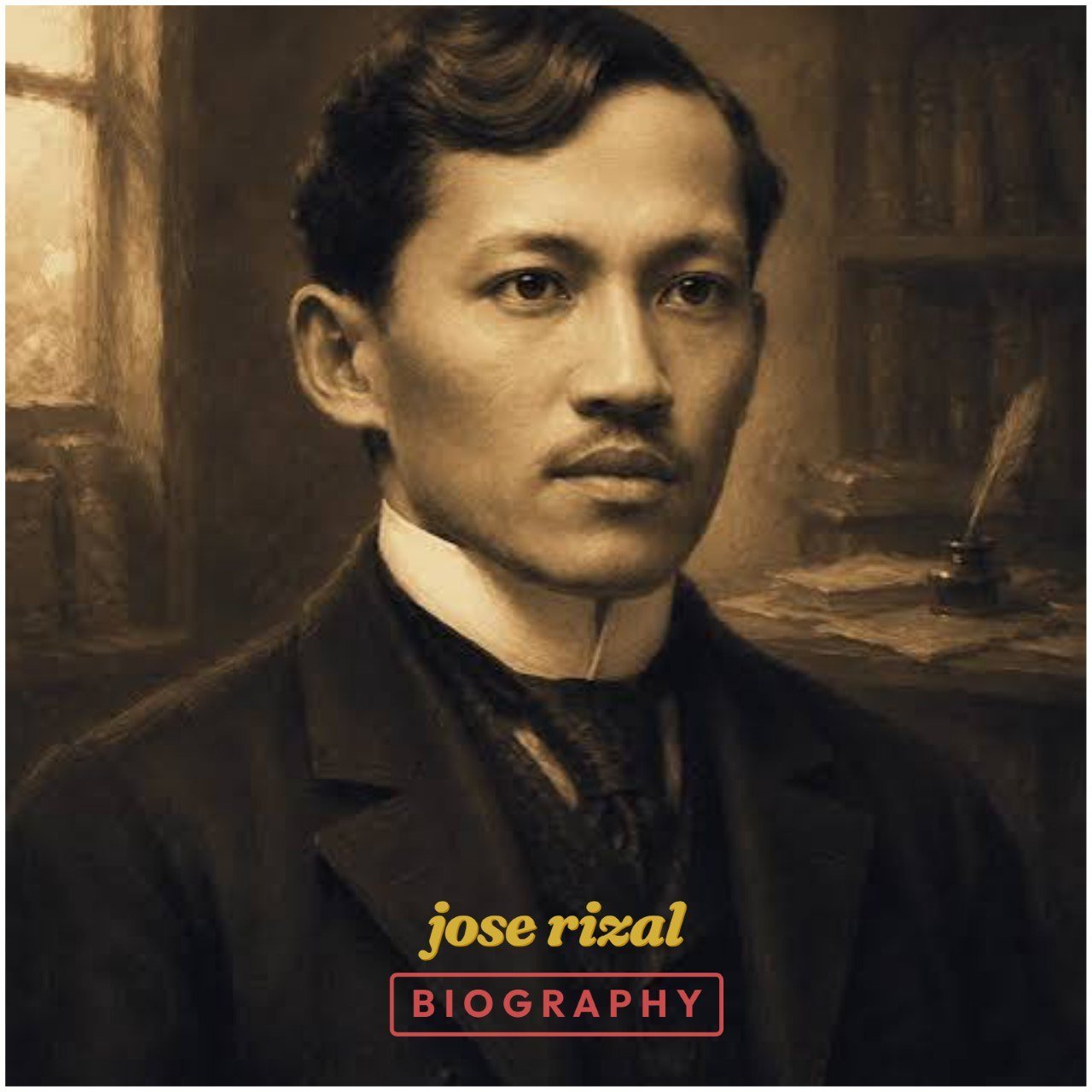
In terms of physical appearance, José Rizal stood at approximately 5 feet 3 inches (160 cm) and weighed around 61 kilograms (134 pounds). He had black hair, dark brown eyes, and a fair-to-medium complexion. Although he was not physically imposing, Rizal was known for his neat appearance, refined manners, and dignified presence. Contemporary accounts described him as intelligent, articulate, and well-groomed, qualities that complemented his reputation as one of the greatest intellectuals and reformers in Philippine history.
Net Worth
There are no official historical records documenting José Rizal’s exact net worth, as the concept of calculating the personal wealth of public figures was not common during the late 19th century. Throughout his life, Rizal earned income primarily as a physician specializing in ophthalmology, while also receiving royalties from his published books and financial support from family and friends during certain periods. Based on his professional career, property ownership, and earning potential as one of the most educated Filipinos of his time, historians generally consider him to have lived a modest but respectable middle-class lifestyle rather than accumulating great wealth.
If José Rizal’s assets and professional earnings were translated into modern economic terms, his estimated net worth would likely have ranged between US$500,000 and US$1 million. This estimate reflects the value of his medical practice, family-owned agricultural properties, personal possessions, and intellectual contributions rather than documented financial records. However, it should be emphasized that this figure is speculative and intended only to provide modern context, as no verified financial statements or estate valuations exist from his lifetime.
For Rizal, financial success was never his primary ambition. He devoted much of his life to serving his patients, advancing education, conducting scientific research, and advocating peaceful reforms for the Filipino people. His greatest legacy lies not in material wealth but in the enduring influence of his writings, ideals, and sacrifices, which continue to inspire millions around the world more than a century after his death. Today, José Rizal is remembered as one of the most influential intellectuals and national heroes in Philippine history, with a legacy that far exceeds any monetary value.
Legacy
José Rizal’s legacy is deeply woven into the history and identity of the Philippines. Although he advocated peaceful reform rather than armed revolution, his writings awakened a strong sense of nationalism among Filipinos and inspired the movement that eventually led to the country’s struggle for independence from Spanish colonial rule. His novels Noli Me Tangere and El Filibusterismo remain among the most influential works in Philippine literature, exposing social injustice, corruption, and inequality while encouraging readers to pursue truth, education, and national unity. Today, Rizal is officially recognized as the national hero of the Philippines, and his life continues to symbolize courage, patriotism, and intellectual excellence.
Beyond his literary achievements, Rizal made lasting contributions to education, science, medicine, and civic responsibility. His belief that education was the foundation of national progress continues to shape the Philippine educational system, where his life and writings are taught in schools and universities across the country. Numerous institutions, cities, provinces, roads, parks, monuments, and public buildings have been named in his honor. Every year on June 19, Filipinos commemorate his birth anniversary, while December 30, known as Rizal Day, is observed as a national holiday to honor his sacrifice and enduring contributions to the nation.
José Rizal’s influence extends far beyond the Philippines, earning him recognition as one of the greatest reformers and intellectuals in Asian history. His ideals of peaceful change, human dignity, equality, and freedom continue to inspire scholars, educators, writers, political leaders, and advocates for social justice around the world. More than a century after his death, Rizal’s vision of an educated, united, and progressive society remains relevant, ensuring that his legacy endures through generations. His remarkable life demonstrates that the power of knowledge, integrity, and the written word can shape the course of history and leave a lasting impact on humanity.
Conclusion
José Rizal remains one of the most revered and influential figures in Philippine history, remembered not only for his brilliance as a physician, writer, and scholar but also for his unwavering commitment to justice, education, and peaceful reform. Through his groundbreaking literary works, courageous advocacy, and personal sacrifices, he inspired generations of Filipinos to strive for freedom, equality, and national unity. Although his life was tragically cut short at the age of 35, his ideas and ideals continue to shape the Philippines and resonate with people around the world. His enduring legacy serves as a timeless reminder that knowledge, integrity, and compassion have the power to transform society and inspire meaningful change for future generations.
Frequently Asked Questions (FAQs)
Who was José Rizal?
José Rizal was a Filipino physician, novelist, poet, and reformist who is widely recognized as the national hero of the Philippines. His writings inspired Filipino nationalism and played a significant role in the country’s struggle for independence from Spanish colonial rule.
When and where was José Rizal born?
José Rizal was born on June 19, 1861, in Calamba, Laguna, Philippines.
How old was José Rizal when he died?
José Rizal was 35 years old when he was executed on December 30, 1896, in Manila, Philippines.
What are José Rizal’s most famous books?
José Rizal’s most famous novels are Noli Me Tangere (1887) and El Filibusterismo (1891). Both works exposed the injustices of Spanish colonial rule and inspired the Philippine reform movement.
What was José Rizal’s profession?
José Rizal was a physician specializing in ophthalmology. He was also a novelist, poet, essayist, educator, scientist, linguist, and reformist.
What was José Rizal’s religion?
José Rizal was born and raised as a Roman Catholic, although he became critical of certain abuses by the colonial clergy during his lifetime.
What tribe did José Rizal belong to?
José Rizal belonged to the Tagalog ethnolinguistic group and came from a family with Tagalog, Chinese, and Spanish ancestry.
Did José Rizal get married?
Historical records indicate that José Rizal married Josephine Bracken shortly before his execution in 1896, although some aspects surrounding the marriage remain the subject of historical debate.
Did José Rizal have children?
Yes. José Rizal and Josephine Bracken had one son, Francisco Rizal Bracken, who sadly died shortly after birth.
What was José Rizal’s estimated net worth?
There is no verified historical record of José Rizal’s wealth. Based on his career as a physician and author, modern estimates place his equivalent net worth at approximately US$500,000 to US$1 million, although this is only an informed estimate.
Why is José Rizal considered a national hero?
José Rizal is considered the national hero of the Philippines because his writings awakened Filipino nationalism, inspired peaceful reform, and influenced the movement that ultimately led to the country’s fight for independence.
What is José Rizal’s legacy?
José Rizal’s legacy lives on through his literary works, advocacy for education and peaceful reform, and his lasting influence on Philippine history. He remains a symbol of patriotism, intellectual excellence, freedom, and national unity.