Introduction
William Shakespeare stands as one of the most celebrated literary figures in human history, renowned for his extraordinary contributions to drama, poetry, and the English language. Often referred to as the “Bard of Avon,” Shakespeare’s works have transcended centuries, cultures, and geographical boundaries, making him a timeless icon of world literature. His plays and poems continue to captivate audiences, influence writers, and inspire countless adaptations in theater, film, and television. More than four centuries after his death, Shakespeare remains a central figure in literary studies and popular culture around the globe.
Born in Stratford-upon-Avon, England, in 1564, Shakespeare rose from relatively modest beginnings to become one of the most successful playwrights of the Elizabethan and Jacobean eras. His remarkable ability to capture the complexities of human emotions, relationships, and societal conflicts set him apart from his contemporaries. Through masterpieces such as Hamlet, Macbeth, Othello, King Lear, and Romeo and Juliet, Shakespeare explored universal themes that continue to resonate with readers and audiences today. His works provide profound insights into human nature, demonstrating an understanding of ambition, love, jealousy, power, and tragedy that remains relevant across generations.
William Shakespeare’s legacy extends far beyond the stage. He enriched the English language with hundreds of words and expressions that are still commonly used in everyday speech. His influence can be seen in literature, education, politics, entertainment, and the arts worldwide. Modern scholars continue to analyze his writings, while theaters across the globe regularly perform his plays to enthusiastic audiences. As one of the most studied and admired writers in history, Shakespeare’s enduring impact highlights the timeless power of storytelling and the lasting significance of his literary achievements.
Early Life and Childhood
William Shakespeare was born in Stratford-upon-Avon, Warwickshire, England, in 1564, during the reign of Queen Elizabeth I. Although the exact date of his birth remains unknown, historical records show that he was baptized on April 26, 1564, leading many historians to believe that he was born a few days earlier, traditionally celebrated on April 23. He was the third child and eldest surviving son of John Shakespeare, a successful glove maker, leather merchant, and local government official, and Mary Arden, who came from a prosperous farming family. Growing up in a household that enjoyed a respectable social standing provided young William with opportunities that would later contribute to his intellectual and creative development.
Shakespeare spent his childhood in Stratford-upon-Avon, a thriving market town located along the River Avon. As the son of a prominent citizen, he likely attended the King’s New School, one of the best grammar schools in the region. There, he would have received a rigorous education focused on Latin grammar, classical literature, rhetoric, history, and philosophy. The works of Roman authors such as Ovid, Virgil, Seneca, and Plautus formed an important part of the curriculum and would later influence Shakespeare’s writing style and storytelling techniques. Although there is no surviving documentation confirming his attendance, most scholars agree that his extensive knowledge of classical literature strongly suggests he received a formal grammar school education.
During his youth, Shakespeare witnessed significant social, religious, and political changes occurring throughout England. The Elizabethan era was marked by growing interest in exploration, literature, and the arts, creating a cultural environment that encouraged intellectual growth and creativity. Stratford’s frequent fairs, traveling performers, and public events exposed him to various forms of entertainment and storytelling from an early age. These experiences, combined with his education and observations of everyday life, helped shape the imagination and understanding of human nature that would later become defining characteristics of his literary masterpieces. By the time he reached adulthood, Shakespeare had developed the foundation that would eventually enable him to become one of the greatest writers the world has ever known.
Education
Although no official school records have survived to confirm William Shakespeare’s education, historians widely believe that he attended the King’s New School in Stratford-upon-Avon. As the son of John Shakespeare, a respected local official and businessman, William would have been eligible to receive a free education at the grammar school. During the sixteenth century, grammar schools in England were highly regarded for providing rigorous academic training, and students were expected to devote long hours to studying language, literature, and classical texts. Shakespeare’s later writings demonstrate a depth of knowledge that strongly suggests he benefited from this type of formal education during his formative years.
At the King’s New School, Shakespeare would have studied Latin extensively, as it was considered the foundation of higher learning at the time. Students were introduced to the works of influential Roman authors such as Ovid, Virgil, Cicero, Seneca, and Plautus. Lessons focused on grammar, rhetoric, logic, history, and moral philosophy, with an emphasis on memorization, translation, and public speaking. These subjects helped students develop strong communication and analytical skills. Many scholars have identified references to classical literature throughout Shakespeare’s plays and poems, indicating that the education he received left a lasting impact on his creative and intellectual development.
Unlike many prominent writers and scholars of his era, Shakespeare did not attend a university. There is no evidence that he studied at Oxford, Cambridge, or any other institution of higher learning. Despite this, he acquired an extraordinary understanding of human behavior, politics, law, history, and literature through independent learning, observation, and practical experience. His ability to transform knowledge from various sources into compelling stories demonstrates that formal university education was not necessary for his success. Shakespeare’s remarkable achievements serve as a testament to the power of curiosity, lifelong learning, and natural talent, helping him become one of the most influential literary figures in world history.
Career
William Shakespeare’s professional career began during the late 1580s and early 1590s when he moved from Stratford-upon-Avon to London, the center of England’s thriving theatrical scene. Although the exact details of his early years in London remain uncertain, historical records indicate that by 1592 he had already gained recognition as an actor and playwright. His growing reputation attracted both admiration and criticism from fellow writers, demonstrating that he had quickly established himself within the competitive world of Elizabethan theater. Shakespeare’s talent for storytelling, character development, and poetic language helped him stand out among his contemporaries and laid the foundation for an extraordinary literary career.
As a playwright, Shakespeare became closely associated with the theatrical company known as the Lord Chamberlain’s Men, one of the most successful acting companies in England. Following the accession of King James I in 1603, the company received royal patronage and was renamed the King’s Men. Shakespeare was not merely a writer for the troupe; he was also a shareholder and performer, allowing him to benefit financially from the company’s success. This business arrangement contributed significantly to his wealth and social status. Through the company’s performances at prestigious venues, including the famous Globe Theatre in London, Shakespeare’s works reached a wide and diverse audience.
During his career, Shakespeare wrote approximately 39 plays, 154 sonnets, and several narrative poems. His early works included historical dramas such as Richard III and Henry VI, as well as comedies like The Comedy of Errors and A Midsummer Night’s Dream. As his career progressed, he produced some of the greatest tragedies in literary history, including Hamlet, Othello, King Lear, Macbeth, and Romeo and Juliet. These plays explored profound themes of love, ambition, jealousy, betrayal, power, and human suffering. His ability to create memorable characters and emotionally compelling stories earned him widespread acclaim and established his reputation as a master dramatist.
In addition to his dramatic works, Shakespeare achieved considerable success as a poet. During a period when London theaters were temporarily closed due to outbreaks of plague, he focused on writing narrative poems such as Venus and Adonis and The Rape of Lucrece. These works were well received and enhanced his literary standing among England’s educated elite. His collection of 154 sonnets, published in 1609, remains one of the most celebrated achievements in English poetry. Through these poems, Shakespeare explored themes of love, beauty, mortality, friendship, and the passage of time with remarkable depth and emotional sensitivity.
Shakespeare’s success extended beyond literature into business and property investment. As his fame and income grew, he purchased valuable properties, including New Place, one of the largest houses in Stratford-upon-Avon. He also invested in real estate and other ventures, demonstrating a keen understanding of financial management. Unlike many artists of his era who struggled financially, Shakespeare accumulated substantial wealth during his lifetime. His ability to combine artistic excellence with business acumen allowed him to enjoy a level of prosperity uncommon among writers and actors of the period.
By the early seventeenth century, Shakespeare had become England’s most celebrated playwright and one of the most influential cultural figures of his time. Around 1613, after decades of remarkable success, he gradually retired from active involvement in London’s theater world and returned to Stratford-upon-Avon. Even after his retirement and death in 1616, his works continued to be performed, published, and admired by generations of readers and audiences. Today, Shakespeare’s career is regarded as one of the greatest achievements in literary history, and his plays remain central to theater, education, and culture throughout the world.
Personal Life and Family
William Shakespeare’s personal life was closely tied to his family in Stratford-upon-Avon, where he was born and eventually returned after achieving success in London. One of the most significant events in his personal life was his marriage to Anne Hathaway, a woman from the nearby village of Shottery. The couple married in November 1582 when Shakespeare was 18 years old and Anne was 26. Their marriage attracted attention because Anne was already pregnant at the time, a situation that was not uncommon but often required special permission for a swift wedding ceremony. Despite spending much of his professional life in London, Shakespeare maintained connections with his wife and family in Stratford throughout his lifetime.
William and Anne Shakespeare had three children together. Their first child, Susanna Shakespeare, was born in 1583, less than a year after their marriage. In 1585, the couple welcomed twins, Hamnet Shakespeare and Judith Shakespeare. The birth of the twins expanded the family, and Shakespeare continued to provide for them while building his career in London’s theater industry. Tragically, Hamnet died in 1596 at the age of eleven, a devastating loss that many scholars believe may have influenced some of Shakespeare’s later works, particularly those dealing with grief, loss, and family relationships. Judith lived into adulthood and later married Thomas Quiney, while Susanna married the respected physician Dr. John Hall.
The wider Shakespeare family also played an important role in his life. His father, John Shakespeare, was a successful businessman, glove maker, and local official who held several civic positions in Stratford-upon-Avon. His mother, Mary Arden, came from a well-established and prosperous farming family, providing Shakespeare with connections to both the town’s commercial and rural communities. Although there is limited information about Shakespeare’s personal relationships beyond his marriage, his dedication to securing financial stability for his family is evident through his property investments and business ventures. By the time of his death in 1616, he had accumulated significant wealth and left much of his estate to his descendants, ensuring that his family would continue to benefit from the success he achieved during his remarkable career.
Age, Religion, Nationality, Height, and Physical Appearance
William Shakespeare was born in 1564 in Stratford-upon-Avon, Warwickshire, England, and died on April 23, 1616. Based on the accepted historical timeline, he was approximately 52 years old at the time of his death. Although his exact birth date is not recorded, historians traditionally recognize April 23, 1564, as his birthday because he was baptized on April 26, 1564, and baptisms were typically conducted within a few days of birth during that period. Despite his relatively short lifespan by modern standards, Shakespeare accomplished more than many writers achieve in a lifetime, producing works that continue to influence literature and culture more than four centuries later.
In terms of religion, Shakespeare is generally believed to have been a Christian and a member of the Church of England, which was the established church in Elizabethan and Jacobean England. Religious themes, biblical references, and moral questions appear throughout his plays and poems, reflecting the religious environment in which he lived. Some scholars have debated whether his family may have had Catholic sympathies during a time of religious tension in England, particularly because certain historical records suggest that members of the Shakespeare family may have maintained ties to older Catholic traditions. However, there is no definitive evidence proving that Shakespeare himself openly practiced Catholicism, and most historians consider him a participant in the Church of England.
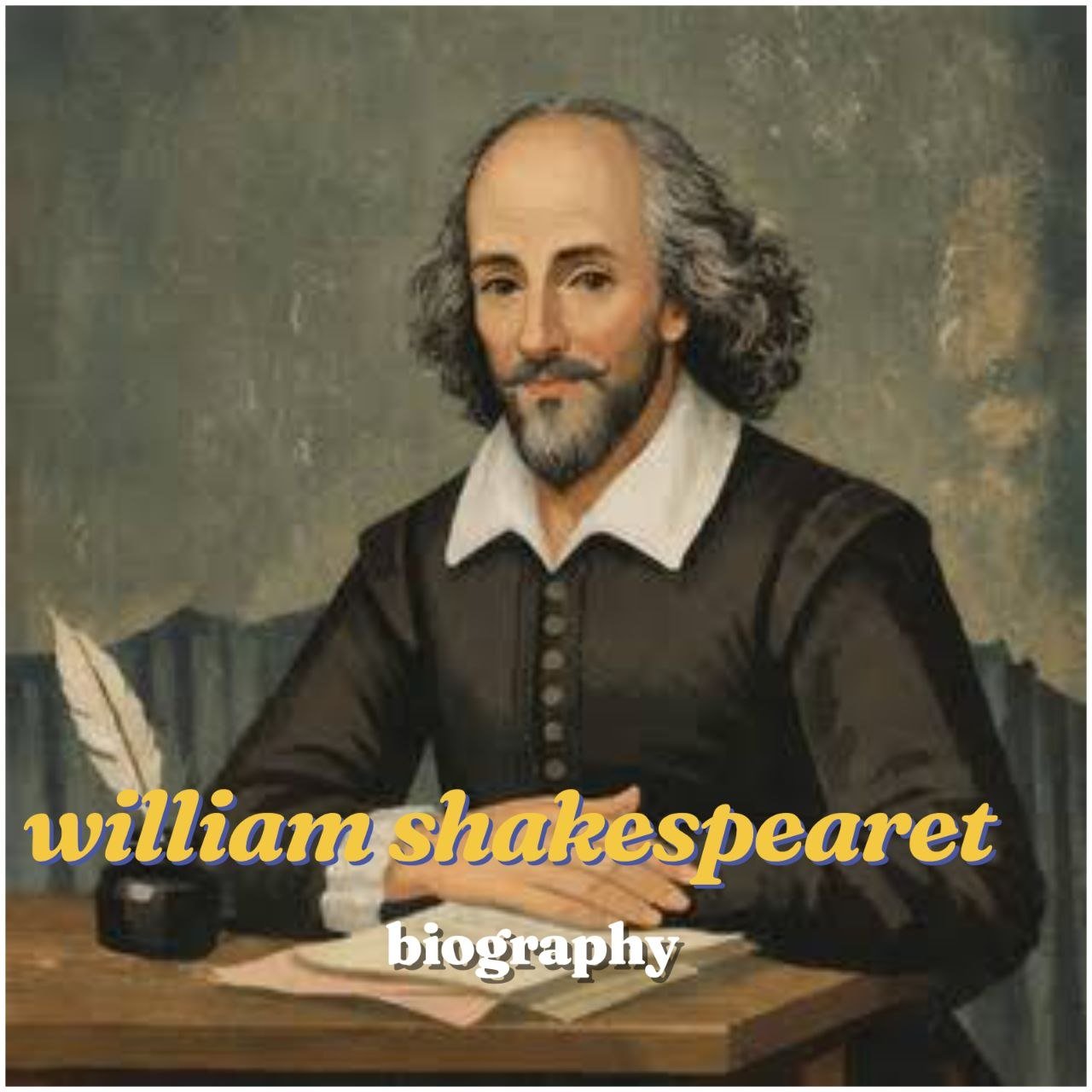
William Shakespeare’s nationality was English, as he was born and lived in England throughout his life. When discussing his physical appearance, historians face challenges because no verified contemporary description of Shakespeare survives. Most knowledge of his appearance comes from portraits and engravings believed to have been created during or shortly after his lifetime. The most famous of these are the Droeshout engraving, which appeared in the First Folio of 1623, and the Chandos portrait. These images depict Shakespeare as a man with a high forehead, receding hairline, dark eyes, a neatly trimmed mustache, and a pointed beard. His facial features suggest a thoughtful and intelligent appearance consistent with his reputation as a writer and scholar.
There are no reliable historical records documenting Shakespeare’s exact height or body measurements. As a result, any specific figure regarding his height would be purely speculative. Based on surviving portraits and the average stature of English men during the sixteenth century, historians generally believe he likely possessed an average build for his era. Contemporary artistic representations portray him wearing the fashionable clothing of a successful gentleman, reflecting the prosperity and social status he achieved through his literary and theatrical career. While many details of his appearance remain uncertain, his image has become one of the most recognizable in literary history, symbolizing the enduring legacy of one of the world’s greatest writers.
Net Worth
Determining William Shakespeare’s exact net worth is impossible because modern financial records and valuation methods did not exist during the Elizabethan era. However, historians generally agree that Shakespeare became a wealthy and financially successful man through his work as a playwright, actor, theater shareholder, and property investor. Unlike many artists of his time who struggled financially, Shakespeare earned income from multiple sources, allowing him to accumulate considerable wealth during his lifetime. Based on historical analyses of his earnings, assets, and investments, some modern economists estimate that his fortune would be worth several million dollars in today’s money, with some estimates ranging between $5 million and $20 million when adjusted for inflation and purchasing power.
A significant portion of Shakespeare’s wealth came from his ownership stake in the theatrical company known as the King’s Men and his investment in the Globe Theatre. As both a shareholder and playwright, he benefited not only from the sale of his plays but also from theater profits generated by performances attended by thousands of London residents. His business interests extended beyond the stage, as he purchased valuable real estate, including New Place, one of the largest and most prestigious homes in Stratford-upon-Avon. He also acquired land, agricultural interests, and other properties that increased his financial security and social standing within the community.
By the time of his death in 1616, Shakespeare had achieved a level of prosperity that was uncommon among writers and actors of his era. His surviving will reveals that he owned substantial assets and was able to leave property and financial resources to members of his family, including his daughters Susanna Hall and Judith Quiney. While no precise figure can be attached to his wealth, historians generally regard him as one of the most financially successful literary figures of the Elizabethan and Jacobean periods. His ability to combine artistic genius with sound business decisions helped create a lasting financial legacy that complemented his enduring cultural and literary influence.
Death and Cause of Death
William Shakespeare died on April 23, 1616, in Stratford-upon-Avon, England, at the age of 52. His death occurred after he had spent several years living a relatively quiet life in his hometown following his successful career in London. Although Shakespeare had achieved immense fame as a playwright, poet, and actor, the final years of his life were largely devoted to managing his family affairs, property holdings, and investments. His passing marked the end of one of the most influential literary careers in history, but it also marked the beginning of a legacy that would continue to grow for centuries.
The exact cause of Shakespeare’s death remains unknown, as no official medical records detailing the circumstances of his final illness have survived. Over the years, historians and biographers have proposed various theories regarding what may have led to his death. One account written by the seventeenth-century clergyman John Ward suggested that Shakespeare may have become ill after spending an evening drinking with fellow writers Ben Jonson and Michael Drayton. However, this story was recorded many years after Shakespeare’s death and is not considered reliable evidence. Other scholars have speculated that he may have died from a fever, an infectious disease, or age-related health complications, but none of these theories can be conclusively proven.
Because medical knowledge during the early seventeenth century was limited and record-keeping was often inconsistent, many details surrounding Shakespeare’s final illness have been lost to history. As a result, historians generally agree that the true cause of his death is likely to remain a mystery. Despite the uncertainty surrounding his passing, there is no doubt about the profound impact he left on literature, theater, and the English language. His works continued to be performed and published after his death, ensuring that his influence would endure far beyond his lifetime.
Following his death, William Shakespeare was buried in the chancel of Holy Trinity Church in Stratford-upon-Avon, a place of honor reserved for respected members of the community. His grave is marked by a famous inscription that warns against disturbing his remains. The epitaph reads: “Good friend, for Jesus’ sake forbear, to dig the dust enclosed here. Blessed be the man that spares these stones, and cursed be he that moves my bones.” This inscription has become one of the most well-known grave inscriptions in the world and has contributed to the enduring fascination surrounding his life and death.
Today, Shakespeare’s burial site remains a major historical and cultural landmark, attracting visitors, scholars, and admirers from across the globe. More than four centuries after his death, people continue to visit Holy Trinity Church to pay tribute to the man whose writings transformed world literature. Although the exact cause of his death may never be known, Shakespeare’s extraordinary achievements ensure that his memory remains alive through his timeless plays, poems, and enduring influence on global culture.
Legacy
William Shakespeare’s legacy is unmatched in the history of English literature and world theater. More than four centuries after his death, he continues to be celebrated as one of the greatest writers who ever lived. His plays and poems have been translated into hundreds of languages and are studied in schools, colleges, and universities across the globe. Works such as Hamlet, Macbeth, Othello, King Lear, and Romeo and Juliet remain among the most performed and analyzed literary creations in history. Through his extraordinary storytelling and deep understanding of human nature, Shakespeare created characters and themes that continue to resonate with audiences of every generation.
One of Shakespeare’s most enduring contributions is his influence on the English language. Scholars credit him with introducing or popularizing hundreds of words and phrases that are still used in everyday communication. Expressions such as “break the ice,” “wild-goose chase,” “heart of gold,” and “all that glitters is not gold” have become a permanent part of modern English. His mastery of language, poetic techniques, and dramatic structure transformed literature and inspired countless writers, playwrights, poets, filmmakers, and artists. From the works of Charles Dickens and Jane Austen to modern novels, films, and television productions, Shakespeare’s influence can be seen throughout the creative world.
Beyond literature and language, Shakespeare’s legacy extends into culture, education, and entertainment on a global scale. His works have been adapted into thousands of stage productions, films, operas, musicals, and television series, ensuring that new audiences continue to discover his stories. Historic sites associated with his life, including his birthplace in Stratford-upon-Avon and the Globe Theatre in London, attract millions of visitors and admirers each year. Shakespeare’s ability to explore universal themes such as love, ambition, jealousy, power, betrayal, and redemption has made his writings timeless. Today, he remains a symbol of artistic excellence and intellectual achievement, and his legacy continues to shape the way people understand literature, drama, and the human experience.
Conclusion
William Shakespeare remains one of the most influential and celebrated figures in literary history, whose remarkable contributions to drama, poetry, and the English language continue to inspire people around the world. From his humble beginnings in Stratford-upon-Avon to his rise as England’s greatest playwright, Shakespeare’s life was marked by extraordinary creativity, intellectual brilliance, and lasting cultural impact. His timeless works explore universal aspects of the human experience, making them relevant across generations and societies. More than four centuries after his death, his plays, sonnets, and literary innovations continue to be studied, performed, and admired globally, securing his place as one of the greatest writers of all time and ensuring that his legacy will endure for centuries to come.
Frequently Asked Questions (FAQs) About William Shakespeare
Who was William Shakespeare?
William Shakespeare was an English playwright, poet, and actor widely regarded as the greatest writer in the English language. He is famous for writing timeless plays such as Hamlet, Macbeth, Othello, King Lear, and Romeo and Juliet.
When was William Shakespeare born?
William Shakespeare was born in 1564 in Stratford-upon-Avon, Warwickshire, England. Although his exact birth date is unknown, he was baptized on April 26, 1564, and his birthday is traditionally celebrated on April 23.
How old was William Shakespeare when he died?
William Shakespeare was approximately 52 years old when he died on April 23, 1616, in Stratford-upon-Avon, England.
What was William Shakespeare’s nationality?
William Shakespeare was English. He was born, lived, and worked in England during the Elizabethan and Jacobean periods.
Who were William Shakespeare’s parents?
William Shakespeare’s parents were John Shakespeare, a successful glove maker and local government official, and Mary Arden, who came from a prosperous farming family.
Who was William Shakespeare’s wife?
William Shakespeare was married to Anne Hathaway in 1582. Their marriage lasted until Shakespeare’s death in 1616.
How many children did William Shakespeare have?
William Shakespeare had three children: Susanna Shakespeare, Hamnet Shakespeare, and Judith Shakespeare. Hamnet and Judith were twins born in 1585.
What religion was William Shakespeare?
William Shakespeare is generally believed to have been a Christian and a member of the Church of England, although some historians have suggested that his family may have had Catholic connections.
What are William Shakespeare’s most famous works?
Some of William Shakespeare’s most famous works include Hamlet, Macbeth, Romeo and Juliet, Othello, King Lear, Julius Caesar, The Tempest, and A Midsummer Night’s Dream.
How many plays did William Shakespeare write?
Most scholars credit William Shakespeare with writing approximately 39 plays, along with 154 sonnets and several narrative poems.
Did William Shakespeare attend university?
No, there is no evidence that William Shakespeare attended a university. However, he likely received a strong education at the King’s New School in Stratford-upon-Avon.
What was William Shakespeare’s net worth?
There is no exact record of Shakespeare’s net worth, but historians believe he became a wealthy man through his work as a playwright, actor, theater shareholder, and property investor. In modern terms, his wealth has been estimated to be worth several million dollars.
What was the cause of William Shakespeare’s death?
The exact cause of William Shakespeare’s death remains unknown. Historians have proposed several theories, but no definitive evidence exists to confirm the reason for his death.
Where is William Shakespeare buried?
William Shakespeare is buried at Holy Trinity Church in Stratford-upon-Avon, England. His grave remains one of the most visited literary landmarks in the world.
Why is William Shakespeare still important today?
William Shakespeare remains important because his works explore universal themes such as love, ambition, power, betrayal, and human nature. His influence on literature, theater, education, and the English language continues to be felt worldwide.
What is William Shakespeare’s legacy?
William Shakespeare’s legacy includes transforming English literature, enriching the English language, creating some of the world’s greatest plays, and influencing generations of writers, artists, filmmakers, and scholars. His works continue to be studied and performed more than 400 years after his death.