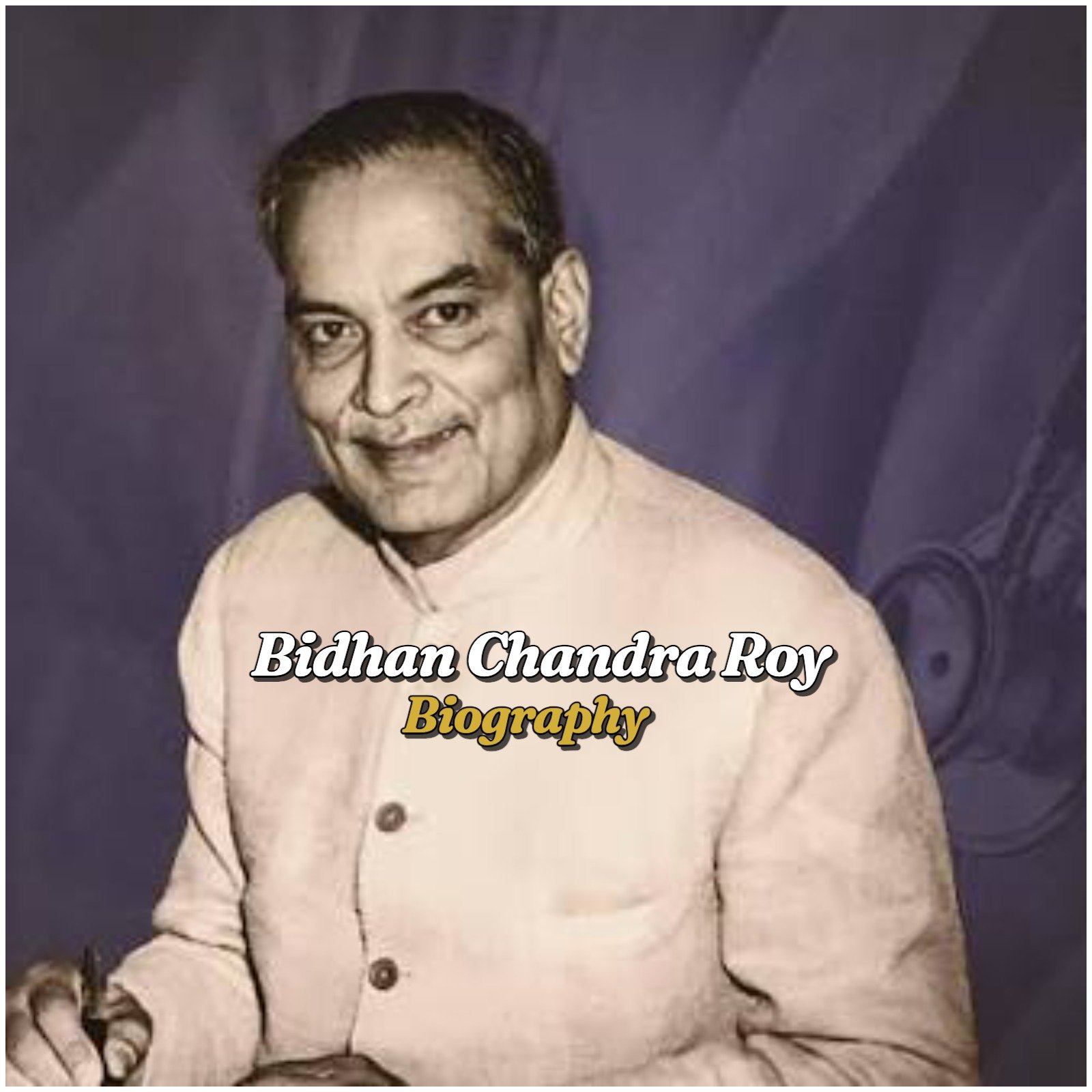
Who was Dr. Bidhan Chandra Roy?
Dr. Bidhan Chandra Roy was an Indian physician, educator, freedom fighter, and politician who made lasting contributions to medicine and public service. He is remembered as one of the greatest doctors in India’s history and played an important role in shaping the country’s healthcare system after independence. Besides his medical achievements, he served as the first Chief Minister of West Bengal and helped guide the state through its early years of development. His dedication to serving people earned him widespread respect and recognition across India.
Throughout his life, Dr. Bidhan Chandra Roy combined medical excellence with visionary leadership. He was known for treating patients with compassion while also working to improve hospitals, medical education, and public health. As a respected statesman, he contributed to the development of modern cities such as Bidhannagar, Durgapur, and Kalyani. His remarkable qualifications and commitment to national progress made him one of the most influential figures in both medicine and politics.
Dr. Bidhan Chandra Roy remains an enduring symbol of selfless service and professional excellence. He received India’s highest civilian honor, the Bharat Ratna, in recognition of his outstanding contributions to the nation. His birth and death both occurred on July 1, a date now observed every year as National Doctors’ Day in India to celebrate his legacy and honor the dedication of medical professionals. His life continues to inspire doctors, students, public servants, and leaders around the world.
Bidhan Chandra Roy Early Life and Background
Dr. Bidhan Chandra Roy was born on July 1, 1882, in Bankipore, Patna, in the Bengal Presidency of British India, now in the Indian state of Bihar. He was born into a respected Bengali family that valued education, discipline, and public service. His father, Prakash Chandra Roy, worked as an excise inspector, while his mother, Aghorkamini Devi, was known for her charitable work and dedication to helping children and people in need. The values of honesty, compassion, and hard work that he learned at home shaped his character from an early age.
Growing up, Roy experienced a modest but supportive family environment where education was considered the key to success. He developed a strong interest in learning and consistently performed well in school. His parents encouraged him to pursue knowledge while also serving society with humility and integrity. The influence of his mother’s humanitarian efforts and his father’s disciplined lifestyle inspired him to develop a deep sense of responsibility toward others, a quality that would define both his medical and political careers.
As a young boy, Bidhan Chandra Roy showed determination, intelligence, and perseverance in overcoming challenges. He believed that education could transform lives and worked tirelessly to achieve academic excellence despite financial and personal difficulties. His early experiences strengthened his desire to become a doctor who could improve the lives of ordinary people. These formative years laid the foundation for a remarkable journey that would see him become one of India’s most respected physicians, public leaders, and nation-builders.
Bidhan Chandra Roy Education and Qualifications
Dr. Bidhan Chandra Roy began his education in Patna, where he attended local schools before pursuing higher studies. He later enrolled at Patna College, where he built a strong academic foundation in science. Determined to pursue a career in medicine, he gained admission to the Medical College and Hospital, Calcutta (now Kolkata), one of the leading medical institutions in India. There, he completed his medical studies and earned the qualification needed to begin his career as a physician. His years in medical school were marked by discipline, dedication, and a commitment to academic excellence.
After completing his medical education in India, Roy traveled to England to further improve his knowledge and professional qualifications. He applied several times before finally being accepted into St Bartholomew’s Hospital Medical College in London, one of the world’s oldest and most respected medical schools. Through determination and hard work, he successfully earned the prestigious Member of the Royal College of Physicians (MRCP) and Fellow of the Royal College of Surgeons (FRCS) qualifications. Achieving both qualifications in a relatively short period was an outstanding accomplishment and established him as one of the best-trained doctors of his generation.
The education and qualifications Dr. Bidhan Chandra Roy obtained shaped every stage of his professional life. His advanced medical training gave him the knowledge and confidence to provide excellent patient care, teach future doctors, and lead important healthcare reforms in India. His commitment to lifelong learning also inspired many young medical students to pursue excellence in their studies. The strong educational foundation he built became one of the key reasons for his success as a renowned physician, medical educator, and public servant.
Bidhan Chandra Roy Career
Dr. Bidhan Chandra Roy began his medical career shortly after completing his studies at the Medical College and Hospital, Calcutta. After furthering his education in England and earning the prestigious MRCP and FRCS qualifications, he returned to India to practice medicine. He served in several hospitals and quickly gained a reputation as a highly skilled physician known for his clinical expertise, compassion, and dedication to his patients. His commitment to providing quality healthcare earned him the trust and respect of both colleagues and the public.
Alongside his medical practice, Roy devoted himself to medical education and played an important role in training future generations of doctors. He taught at leading institutions, including the Medical College and Hospital, Calcutta and Carmichael Medical College, now known as R. G. Kar Medical College and Hospital. He believed that strong medical qualifications, practical experience, and ethical values were essential for building an effective healthcare system. His influence helped improve medical education and encouraged higher professional standards across India.
Dr. Roy also became actively involved in India’s freedom movement and public life. As a member of the Indian National Congress, he worked closely with many national leaders, including Mahatma Gandhi, whom he served as a personal physician. His reputation for honesty, intelligence, and leadership led to his election as the Mayor of Kolkata from 1931 to 1933. During his time as mayor, he promoted improvements in public health, sanitation, education, and civic administration, helping to modernize one of India’s largest cities.
Following India’s independence, Bidhan Chandra Roy emerged as one of the country’s most respected political leaders. He became the Chief Minister of West Bengal on January 26, 1950, and remained in office until his death on July 1, 1962. During his leadership, he focused on rebuilding the state after the challenges of Partition. He supported industrial growth, expanded healthcare services, improved educational institutions, and strengthened public infrastructure. He also played a leading role in developing planned urban centers such as Bidhannagar (Salt Lake), Durgapur, Kalyani, and Ashoknagar-Kalyangarh, which continue to contribute to West Bengal’s economic and social development.
Throughout his career, Dr. Bidhan Chandra Roy successfully combined medicine, education, and public administration in a way that few leaders have achieved. His professional qualifications, leadership abilities, and dedication to public service enabled him to leave a lasting impact on India’s healthcare system and governance. In recognition of his exceptional contributions, he was awarded the Bharat Ratna in 1961, India’s highest civilian honor. His remarkable career continues to inspire doctors, educators, public servants, and political leaders, making him one of the most influential figures in modern Indian history.
Bidhan Chandra Roy Personal Life and Family
Dr. Bidhan Chandra Roy was known for living a simple, disciplined, and service-oriented life. Unlike many public figures of his time, he never married and did not have a wife, fiancée, or children. He chose to dedicate his life entirely to medicine, public service, and the welfare of the people. His decision to remain single allowed him to devote countless hours to treating patients, mentoring young doctors, and serving the state of West Bengal.
Family values played an important role in shaping Dr. Roy’s character. His father, Prakash Chandra Roy, was an excise inspector who believed strongly in education, integrity, and hard work. His mother, Aghorkamini Devi, was known for her charitable work and compassion toward disadvantaged children. The principles he learned from his parents remained with him throughout his life and influenced both his medical practice and his approach to public leadership. He maintained close ties with his family and always acknowledged the role they played in his success.
Outside his professional responsibilities, Dr. Bidhan Chandra Roy was respected for his humility, honesty, and modest lifestyle. He preferred a quiet life centered on service rather than personal recognition or material wealth. He spent much of his time supporting hospitals, educational institutions, and social welfare initiatives. His unwavering commitment to helping others earned him the admiration of colleagues, political leaders, and ordinary citizens. Even decades after his passing, he is remembered not only as a distinguished physician and statesman but also as a man of exceptional character and selfless dedication to humanity.
Bidhan Chandra Roy Age, Religion, Nationality, Height and Physical Appearance
Dr. Bidhan Chandra Roy was born on July 1, 1882, in Bankipore, Patna, in the Bengal Presidency of British India. He passed away on July 1, 1962, on his 80th birthday. If he were alive today, he would be 144 years old. Throughout his life, he was admired for his discipline, intelligence, and unwavering commitment to public service, qualities that made him one of India’s most respected physicians and political leaders.
Dr. Roy was an Indian by nationality and belonged to a Bengali family. He was raised in a household influenced by the principles of the Brahmo Samaj, a reformist movement that emphasized monotheism, social equality, education, and moral values. These beliefs shaped his outlook on life and strengthened his dedication to serving society through medicine, education, and public administration.
There are no verified official records confirming Dr. Bidhan Chandra Roy’s exact height or body measurements. Historical photographs show that he had a medium build and maintained a neat and professional appearance throughout his career. He was usually seen wearing simple traditional Indian attire or formal Western clothing, depending on the occasion. His calm demeanor, dignified presence, and warm smile reflected the humility and compassion for which he was widely respected.
Bidhan Chandra Roy Legacy
Dr. Bidhan Chandra Roy left behind a legacy that continues to shape India’s healthcare system, medical education, and public administration. Throughout his life, he demonstrated that a physician could also be an outstanding leader and nation-builder. His efforts to improve hospitals, medical colleges, and healthcare services helped raise the standard of medical care in India. As Chief Minister of West Bengal, he also promoted industrial development, modern infrastructure, and planned urban growth, creating a foundation that continues to benefit millions of people.
One of Dr. Roy’s greatest legacies is the annual celebration of National Doctors’ Day in India on July 1, the date of both his birth and death. The observance honors his lifelong dedication to medicine and recognizes the contributions of doctors across the country. In addition, the prestigious Dr. B. C. Roy National Award was established in his memory to recognize excellence in the medical profession. His name has also been given to hospitals, educational institutions, roads, parks, and public buildings, ensuring that future generations continue to learn about his remarkable contributions.
Dr. Bidhan Chandra Roy remains an enduring symbol of integrity, compassion, and public service. His achievements in medicine, education, and politics continue to inspire doctors, students, civil servants, and leaders throughout India and beyond. His vision for accessible healthcare, quality education, and responsible governance remains relevant today. More than six decades after his passing, his life stands as a powerful example of how knowledge, dedication, and selfless service can create a lasting impact on a nation.
Conclusion
Dr. Bidhan Chandra Roy was a remarkable physician, educator, freedom fighter, and statesman whose contributions transformed India’s healthcare system and the development of West Bengal. Through his outstanding medical qualifications, visionary leadership, and unwavering commitment to public service, he earned the respect of millions and became one of the country’s most admired national figures. His work in medicine, education, urban planning, and governance continues to influence generations, while the annual observance of National Doctors’ Day on July 1 keeps his memory alive. Dr. Roy’s life remains a lasting example of compassion, integrity, and dedicated service to humanity, ensuring that his legacy will continue to inspire people around the world.
Frequently Asked Questions (FAQs) About Bidhan Chandra Roy
1. Who was Dr. Bidhan Chandra Roy?
Dr. Bidhan Chandra Roy was an Indian physician, educator, freedom fighter, and politician. He was the first Chief Minister of West Bengal and is remembered for his significant contributions to medicine, healthcare, education, and public administration in India.
2. When was Bidhan Chandra Roy born?
Dr. Bidhan Chandra Roy was born on July 1, 1882, in Bankipore, Patna, in the Bengal Presidency of British India, now part of Bihar, India.
3. When did Bidhan Chandra Roy die?
Dr. Bidhan Chandra Roy passed away on July 1, 1962, on his 80th birthday.
4. How old was Bidhan Chandra Roy when he died?
Dr. Bidhan Chandra Roy was 80 years old when he died on July 1, 1962.
5. Why is July 1 celebrated as National Doctors’ Day in India?
India celebrates National Doctors’ Day on July 1 to honor Dr. Bidhan Chandra Roy’s extraordinary contributions to medicine and public service. The date is significant because it marks both his birth and death anniversary.
6. What was Bidhan Chandra Roy famous for?
Dr. Bidhan Chandra Roy was famous for being one of India’s greatest physicians, serving as the first Chief Minister of West Bengal, improving healthcare and medical education, and helping develop planned cities such as Bidhannagar, Durgapur, Kalyani, and Ashoknagar-Kalyangarh.
7. What were Bidhan Chandra Roy’s educational qualifications?
Dr. Bidhan Chandra Roy studied at the Medical College and Hospital, Calcutta, before completing advanced medical training at St Bartholomew’s Hospital Medical College in London. He earned the prestigious MRCP (Member of the Royal College of Physicians) and FRCS (Fellow of the Royal College of Surgeons) qualifications.
8. Did Bidhan Chandra Roy marry?
No. Dr. Bidhan Chandra Roy never married and had no wife, fiancée, or children. He devoted his life to medicine, public service, and the welfare of the people.
9. What religion did Bidhan Chandra Roy follow?
Dr. Bidhan Chandra Roy was raised in a family influenced by the principles of the Brahmo Samaj, a reformist movement that emphasized education, morality, and social equality.
10. What award did Bidhan Chandra Roy receive?
Dr. Bidhan Chandra Roy was awarded the Bharat Ratna, India’s highest civilian honor, in 1961 for his exceptional contributions to medicine and public service.
11. What is the legacy of Bidhan Chandra Roy?
Dr. Bidhan Chandra Roy’s legacy lives on through National Doctors’Day, the Dr. B. C. Roy National Award, and the many hospitals, educational institutions, and public infrastructure named in his honor. He remains an inspiration to doctors, students, and public leaders across India.